
Many Indonesian students dream of being able to work and study in foreign countries. But several Taiwanese universities has been accused of exploiting Indonesian students in their country as part of a student-internship program by forcing them to toil for long hours in factories doing manual labor, among other alleged human rights violations.
The Indonesian Ministry of Foreign Affairs announced late yesterday that it would temporarily suspend the recruitment and sending of any more of the country’s students to Taiwan under the student-internship program while the allegations are being investigated.
The accusations were first reported to the Taiwanese media by a politician named Ko Chih-en, a member of the opposition Nationalist Party of China. Ko claimed to have overseen a covert investigation into the student-internship program that found evidence that six universities participating in the program had been sending students to work in factories as cheap labor.
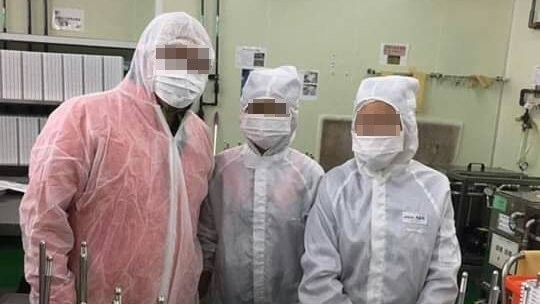
One specific example she gave involved some 300 students studying at Hsing Wu University, who had only been allowed to attend classes for two days out of the week but had also been forced to spend four days a week working in a factory where they packaged contact lenses for 10 hours a day.
“They only study on Thursday and Friday every week. While from Sunday to Wednesday, they are transported in trucks to a lens factory to work together for 10 hours, from 7.30 in the morning until 7:30 pm,” Ko told local reporters as quoted by Indonesian Lantern. “They have two one-hour meal breaks and have to stand up and pack 30,000 contact lenses per day.”
Ko also said there was evidence that the Indonesian students, who are mostly Muslim, were often only provided non-halal food such as pork at meals.
The legislator reported her finding to Taiwan’s Ministry of Education, which in turn contacted the Indonesian Economic and Trade Office in Taipei (IETO) with both bodies investigating the accusations. The Foreign Ministry decided to temporarily halt the program pending the results of the investigation.
Eight Taiwanese universities participate in the student-internship program and the rules of the program do not allow students to work in their first year. Hsing Wu University officials have reportedly denied the allegations, saying they followed all the appropriate and legal procedures in undertaking the program.
Some six thousand Indonesian students are currently studying in Taiwan, including about 1,000 involved in the internship program.
Two months ago, it was also reported that 40 Sri Lankan students at the University of Kang Ning were forced to work in a slaughterhouse in Taipei and Tainan.