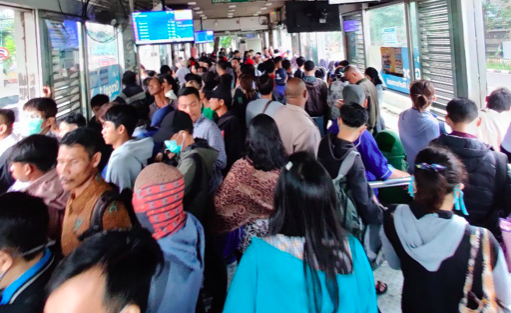

Indonesia is not going to relax partial lockdown measures to allow a certain age demographic to return to work, an official said, after another official publicly announced that the government is mulling the idea.
Yesterday, Doni Monardo, who heads Indonesia’s COVID-19 task force, spoke in broad terms about potentially allowing citizens under 45 to return to work in order to combat the threat of rising unemployment. The former military general argued that people in that age group are less susceptible to COVID-19 and may be called upon to leave their homes to work in order to boost a flailing economy.
Some local media outlets seem to have misinterpreted Doni’s statement and reported that concrete plans are in place to carry out the policy, prompting widespread criticism against the government as allowing people to return to work so soon would lead to further COVID-19 calamity in the country.
Today, Administrative and Bureaucratic Reforms Minister Tjahjo Kumolo clarified that there are no plans to let under 45s go back to work in the near future.
“Legal documents or regulations allowing those under 45 to work do not exist yet. Government regulations regarding PSBB (Large-Scale Social Restrictions) are still in effect,” Tjahjo said in a written statement.
Tjahjo added that should a regulation allowing a certain age group to work were to pass, those in essential services and industries will be given priority. In other words, the government is not looking to relax work from home requirements for the majority of Indonesian workers any time soon.
In mid-April, Indonesia’s COVID-19 task force announced that 1.6 million workers had been laid off or furloughed due to the pandemic, which represented a massive addition to the country’s unemployment numbers. According to August 2019 data, 7 million Indonesian were unemployed, representing 5.28 percent of the country’s labor force.
By May 11, the Indonesian Chamber of Commerce and Industry (Kadin) estimated that the number of workers currently unemployed or furloughed has shot up to at least 6 million, and is likely to rise in the months ahead.