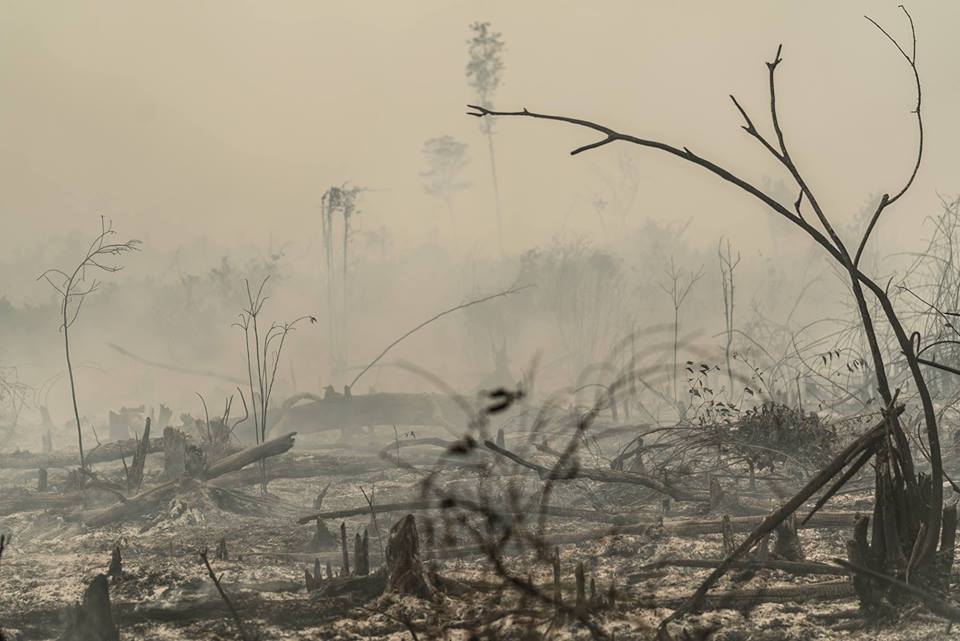

The results of a devastating haze fire in Central Kalimantan. Photo: Coconuts Media
In response to the fires that have hospitalized roughly 500,000 people, polluted skies over a large swathe of Southeast Asia, and released upwards of 1.7 billion tons of carbon, Indonesian president Joko Widodo has formally banned clearance and conversion of carbon-dense peatlands across the archipelago.
The move, announced Tuesday, was immediately welcomed by Greenpeace, which has been pushing for measures to curtail destruction of Indonesia’s peatlands.
“President Jokowi is right to seek to prevent next year’s fires by banning further expansion into peatlands, and requiring peat drainage canals be blocked. It is also just that the government has declared burned areas must be rehabilitated rather than planted,” said Greenpeace Indonesia campaigner Yuyun Indradi in a statement.
“President Jokowi’s landmark decision to ban peatland development is a first step toward a cleaner, brighter future for Indonesia’s people and environment. It sets the bar for meaningful commitments from world leaders to tackle the root causes of climate change at the Paris climate summit.”

The presidential decree bars planting of newly burned areas, instead mandating restoration. It also requires drainage canals to be blocked in order to raise water tables and calls for criminal investigations into fires. Notably the instruction bans clearance of peatlands even in existing concession areas.
But while the move could put Indonesia on a path toward resolving its fire and haze crisis, there are no guarantees that Jokowi’s orders will be obeyed. Indonesia actually has a number of regulations in place that are supposed to protect peatlands, but these have been routinely ignored or circumvented by local officials, companies, and small farmers. Provincial governors, municipal heads, and village chiefs often encourage drainage of peatlands and push for permits to exploit these areas for oil palm and wood fiber plantations, despite the deleterious ecological impacts, including reduction in the availability of clean water, heightened flood and drought cycles, increased vulnerability to fire, and subsidence.
“Companies must work together with the Indonesian government to implement these decrees and ensure they stop doing business with any company that continues forest and peatland destruction.”

This article was originally published on Mongabay. Read the original article here.