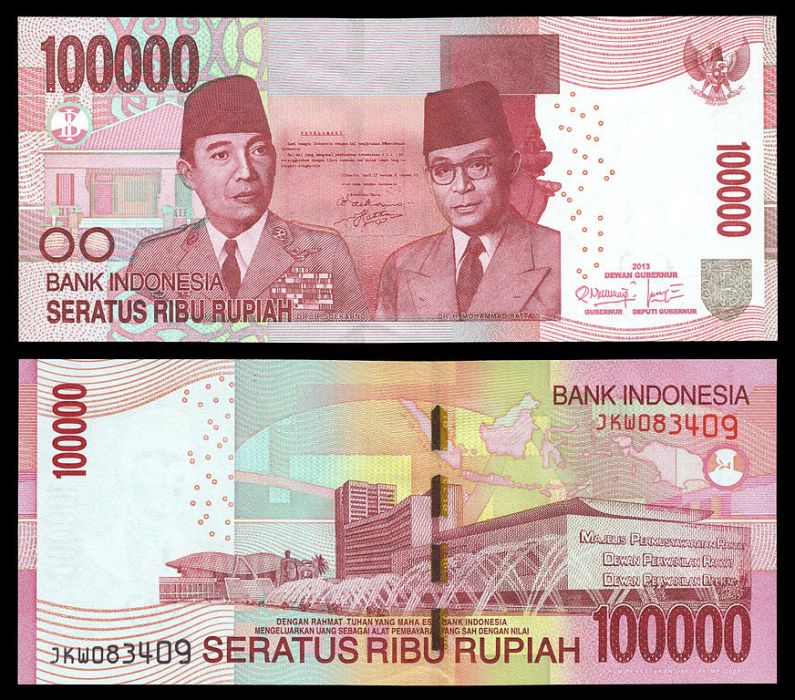

The Bekasi Police Criminal Investigation unit raided a house in South Tambun last week that was being used to print counterfeit money.
Another counterfeiting site was found in Arenjaya, East Jakarta. Because the houses were in two different areas, jurisdiction for the case was handed over to the Jakarta City Police.
The Head of Public Relations for the Jakarta Police, Sr. Cmdr. Rikwanto, said police have arrested 15 suspects in relation to the case. Nine people worked on making the counterfeit money, including a man with the initials AM, who masterminded the plot.
“The other six more were couriers who delivered the fake money to the buyer,” Rikwanto said today as quoted by Vivanews.
This gang had been learning the process of making counterfeit money for 2 years and had only begun production two months ago.
“They had many trials, but always failed. They recently figured out how to produce the the kind of counterfeits they hoped for,” Rikwanto said.
Police said the counterfeit money they produced was close to perfect. They included a water sign, translucent images, and a paper-like feel that felt almost exactly like a normal Rp. 100,000 bill.
“The bills freshly produced in Bekasi were nearly perfect. About 80 percent, similar,” he said.
“If you weren’t looking carefully it would be easy to miss. They even showed the proper images of the number 100,000 when exposed to ultraviolet,” he added.
Based on an interrogation of suspect AM, his group had already sold Rp. 270 million worth of bills to buyers.
“Counterfeit money production is expensive, because the quality is good,” said Rikwanto.
Police, are still chasing after suspects with the initials AR and AN, who are thought to have provided the capital for the counterfeiting operation.
So far, police have not release any information about whether the counterfeit money has made it through to the banking system or not.
The suspects arrested will be subject to Article 244 of the Criminal Code for falsifying paper currency and plus Section 245 of the Criminal Code concerning money laundering. They face potential sentences of 15 to 20 years in prison.