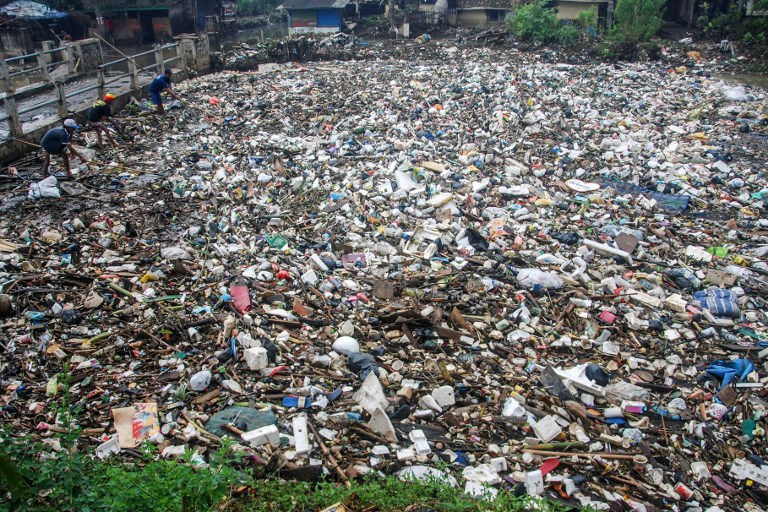

Indonesia has long had a serious problem with plastic waste, as was highlighted once again by this week’s grim discovery of a beached whale whose stomach was filled with the stuff. Minister of Marine Affairs and Fisheries Susi Pudjiastuti yesterday issued a reminder of the catastrophic nature of the problem, particularly its effect on other marine life.
“Indonesia is currently the biggest contributor of plastic waste in the world after China,” Susi said at a press conference held at the ministry’s office yesterday, as quoted by Detik.
“If we continue on like this there will be more plastic than fish in the sea by 2030.”
Susi went on to say that there’s not a lot of time to meet the government’s target of reducing plastic waste by 70% by 2025 if major steps aren’t taken. Her ministry, for one, has been campaigning for ways to reduce plastic waste through means such as placing nets over estuaries so trash can’t enter the sea from rivers.
Even if the Fisheries Ministry doesn’t have the authority to ban plastic use, Susi said she’d still push regional administrations to help reduce its use.
On Sunday, a dead sperm whale washed up on a beach in the Wakatobi Islands in Southeast Sulawesi. What was most shocking was what was found inside its body — the latest disturbing illustration of Indonesia’s huge plastic waste problem.
When local wildlife officials opened up the whale carcass, they found 5.9 kg of plastic waste inside its belly, consisting of plastic ropes, plastic bags, and even a pair of flip flops, among other things. It’s very likely that the plastic waste the whale ingested came from plastic-polluted rivers.
A recent research article, published in the journal Nature Communications, estimates that between 1.15 million and 2.41 million tonnes of plastic enters the oceans every year from rivers. Of this, Indonesia is estimated to emit around 200,000 tonnes of plastic from rivers and streams, mainly from Java and Sumatra.