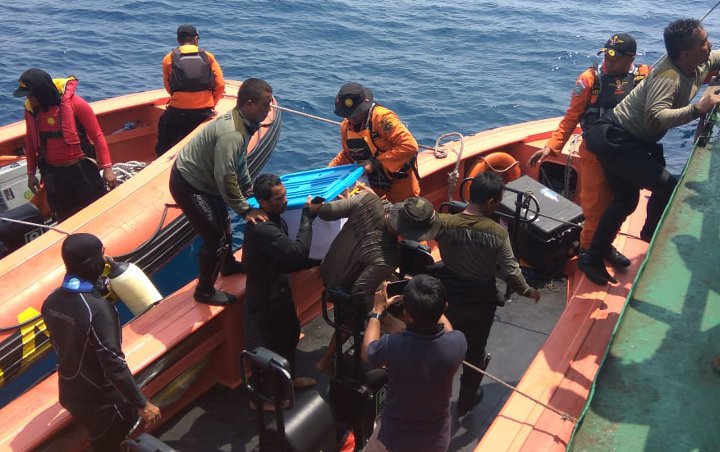

Indonesian investigators are expected Wednesday to release a preliminary report into the Lion Air plane crash last month that saw all 189 on board killed when the nearly new jet slammed into the sea, but an analysis of the black box data that has already been released concluded that the pilots of the doomed flight engaged in a “a deadly game of tag” with the plane’s anti-stall flight control system before hitting the water.
The Boeing 737 MAX vanished from radar about 13 minutes after taking off from Jakarta on October 29, crashing into the ocean off Indonesia’s northern coast moments after it had asked to return to the capital.
The findings are not expected to pinpoint a definitive cause of the accident, but may shed more light on why one of the world’s newest and most advanced commercial passenger planes fell from the sky.
So far, investigators have said the doomed aircraft had problems with its airspeed indicator and angle of attack (AOA) sensors. The theory is that a new anti-stall system installed on Boeing’s newest 737’s which is aimed at preventing the news from getting too high instead kept pushing the plane’s nose down due to the faulty sensors.
The findings prompted Boeing to issue a special bulletin telling operators what to do when they face the same situation.
An AOA sensor provides data about the angle at which air is passing over the wings and tells pilots how much lift a plane is getting. The information can be critical in preventing an aircraft from stalling.
The APA, a US airline pilots union, said that carriers and pilots had not been informed by Boeing of certain changes to the anti-stall system installed on the new MAX variants of the 737.
The Indonesian National Transportation Safety Committee has retrieved one of the plane’s black boxes — the flight data recorder — but is yet to locate the cockpit voice recorder.
Although the report has not yet been released, data from the recovered black box was already included in a briefing to Indonesia’s House of Representatives that has already been posted online. Peter Lemme, a former Boeing engineer, analyzed that data in a post on his blog in which he concluded that there during JT-610s short flight, there were over two dozen instances of its pilots battling the anti-stall system’s commands to pull the nose down.
Concerns have been raised by news that Lion Air kept putting the plane back into service despite repeatedly failing to fix the problem in the days leading up to the fatal flight.
While Boeing has come under fire for possible glitches on the 737 MAX — which entered service just last year — the accident has also resurrected concerns about Indonesia’s poor air safety record, which until recently saw its carriers facing years-long bans from European Union and US airspace.
Lion Air Flight JT610 plunged into the Java Sea less than half an hour after taking off on a routine flight to Pangkal Pinang city.
Authorities have called off the grim task of identifying victims of the crash, with 125 people officially recognised after testing on human remains that filled some 200 body bags.
-With reporting by Coconuts Media