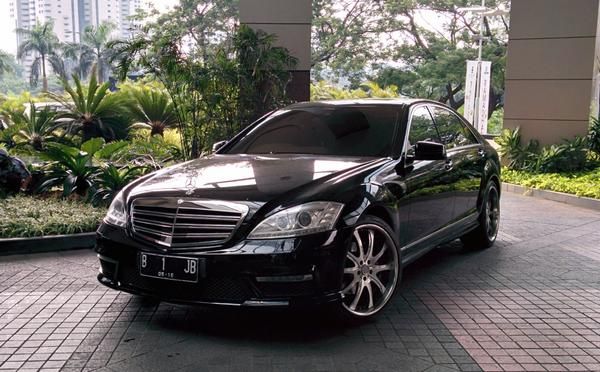

An Uber car in Jakarta. Photo: Uber
Uber has been having a tough time all over the world recently, and Jakarta is no exception. The rapidly growing car hailing app service has consistently faced opposition from the Jakarta Government, and in June five of their drivers were arrested by the police for operating illegally. The driving force behind the arrests was Organda (Organization of Land Transportation Owners), which represents other forms of public transport (including taxis).
Although Uber has always argued that it was not a taxi service, and thus did not need to adhere to local regulations for taxi companies. But after the arrests, Uber said it would incorporate in Indonesia as a technology company to help avoid further legal hurdles.
Whatever steps Uber has taken since then are clearly not yet enough for the government as it is still treating the company and its cars as operating illegally. Last Friday, ten driver working with the company were arrested and had their cars seized by the police and sent to Terminal Pulo Gebang in Cakung. The seizures were the result of an operation conducted by Jakarta Traffic Police and and the Jakarta Transportation Agency.
The Jakarta Police’s head of public relations, Commissioner Mohammad Iqbal, said the cars’ drivers were breaking several laws regarding the use of public vehicles, including a lack of proper documents and licenses.
“Violations of these conditions are subject to criminal sanctions in the form of confinement for two months and a fine of Rp 3 million as stipulated in article 5 of regulation 254,” Iqbal told reporters on Friday as quoted by Tribunnews.
Transportation department head Andri Yansyah said the raid actually targeted both Uber and GrabCar (the car hailing service from GrabTaxi that operates similarly to Uber) and was only organized after they had received reports from the public.
Andre said Uber and GrabCar were not licensed to run public transportation and pose a danger to the public.
“We will continue seizing Uber and similar companies if they are still operating. It is dangerous,” Andri said as quoted by BeritaJakarta.
Apparently representatives of both Uber and GrabCar met with the Transportation Agency and Organda after the arrests. According to Andri, they have agreed to follow the city’s public transportation regulations.
“They will be allowed to operate after complying with seven requirements for public transportation, including the establishment of dedicated pools, undergoing vehicle road worthiness tests (KIR), obtaining tax identification numbers (NPWP), having a minimum of five units in their fleet and obtaining yellow license plates,” Andri said.
The police and the Transport Agency may have legal justification for their arrests, but clearly this is a case of selective enforcement, since motorcycle taxi services like Go-Jek and GrabBike are technically not allowed under current public transportation regulations, but none of their drivers have been arrested.