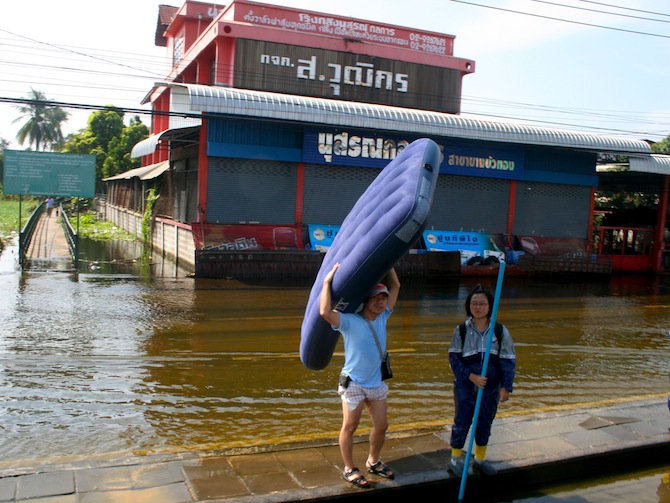

On October 19, residents of Thailand’s Nonthaburi province, located northwest of Bangkok, awoke to the news that flooding had reached critical levels.
On that fateful day, Nonthaburi governor, Wichian Phuttiwinyu, declared all six districts of the province inundated with Bang Bua Thong and Pakkret districts the worst hit.
Earlier huge amounts of water had been pouring into Nonthaburi from neighbouring Ayuthaya and Pathum Thani provinces that had already been under water since August.
The waters surged into the province, catching many residents unaware, leaving thousands stranded in homes without enough food and water supplies. In many areas, the flooding hit depths of 1.5 metres and were only accessible by boats or army trucks
On November 6, our group of volunteers made a trip to the province’s north-westernmost district of Sai Nai to distribute food and care packages to residents.
Driving along the Western Outer Ring Road along the Bang Yai, the devastation was evident, chest-high water covered both inbound and outbound lanes of the roads, inundating everything along it. People used anything that could float to move around, tubs with empty jerry cans lashed to them, large pieces of Styrofoam, air mattresses, canoes, and long-tail boats; some even got onto garbage trucks, lying among the stinking bags of trash, just happy to be able to get to dryer areas.
The two-lane road that led from the turnoff to Sai Noi was mostly under water and the high army truck we were riding in had to move at a snail’s pace, as the waves caused by its wheels could swamp the smaller cars and boats that it passed. We navigated through small villages communities that had been flooded for weeks, the water entering houses, and shops, submerging cars, and swamping fruit plantations. The fields that should have been ripe with grain were glassy sheets of water glinting in the hot tropical sun as far as the eye could see. Life there was almost at a standstill but despite the tragedy, the famous Thai smile remained intact.
Sai Noi was no different. While young boys fished off the small bridges, yelping with joy when they caught something, the elders moved around, acquiescence reflected on their faces, as they tried to bring some sense of normalcy to their water world.
Loading up the supplies we had brought on to long-tails boats, we split up into groups to distribute the packages. Along a meter-wide mud embankment that kept the waters on one side of the road, villagers had made their makeshift homes, hastily constructed from tarpaulin, plastic sheeting, cardboard and other such materials. The more enterprising had rigged up these shelters with electricity from their submerged homes a few metres away, enabling them to watch television that mostly replayed images of the their watery plight or that of their provincial neighbours.
The mayor of the district took a few of us for a boat tour of the area. In some places, stubborn residents continued to inhabit their house, living on the first floor, entering from balconies, or through the top of half of their front doors. Asked why they didn’t move to evacuation centres, many said that the fear of thieves kept them close to their homes.
Here and there orchards of banana trees yellowed in the setting sun as our boat skimmed across what resembled a vast lake that we were told was about 2 meters deep. At one point the mayor stopped the boat to point out where the highway that ran between the fields was; only the road signs poking through the shimmering expanse of water gave evidence of the road that lay beneath.
On the way back, the pervasive blanket of night fell quickly, the water and the lack of lights along the road, slowing our progress back to the dry patch of inner Bangkok that so far had been kept out of harm’s way at the expense of these people. One of the villagers we picked up that night said he was headed our way as more water was on its way from the North. Then in a whisper he told us that in the last two weeks he had seen two corpses float by him.
[[{“type”:”media”,”view_mode”:”media_original”,”fid”:”15784″,”attributes”:{“alt”:””,”class”:”media-image”,”height”:”447″,”typeof”:”foaf:Image”,”width”:”670″}}]]
[[{“type”:”media”,”view_mode”:”media_original”,”fid”:”15786″,”attributes”:{“alt”:””,”class”:”media-image”,”height”:”447″,”typeof”:”foaf:Image”,”width”:”670″}}]]
[[{“type”:”media”,”view_mode”:”media_original”,”fid”:”15788″,”attributes”:{“alt”:””,”class”:”media-image”,”height”:”447″,”typeof”:”foaf:Image”,”width”:”670″}}]]
[[{“type”:”media”,”view_mode”:”media_original”,”fid”:”15789″,”attributes”:{“alt”:””,”class”:”media-image”,”height”:”406″,”typeof”:”foaf:Image”,”width”:”670″}}]]
[[{“type”:”media”,”view_mode”:”media_original”,”fid”:”15790″,”attributes”:{“alt”:””,”class”:”media-image”,”height”:”447″,”typeof”:”foaf:Image”,”width”:”670″}}]]
[[{“type”:”media”,”view_mode”:”media_original”,”fid”:”15791″,”attributes”:{“alt”:””,”class”:”media-image”,”height”:”447″,”typeof”:”foaf:Image”,”width”:”670″}}]]
[[{“type”:”media”,”view_mode”:”media_original”,”fid”:”15792″,”attributes”:{“alt”:””,”class”:”media-image”,”height”:”447″,”typeof”:”foaf:Image”,”width”:”670″}}]]
[[{“type”:”media”,”view_mode”:”media_original”,”fid”:”15793″,”attributes”:{“alt”:””,”class”:”media-image”,”height”:”468″,”typeof”:”foaf:Image”,”width”:”670″}}]]
[[{“type”:”media”,”view_mode”:”media_original”,”fid”:”15794″,”attributes”:{“alt”:””,”class”:”media-image”,”height”:”447″,”typeof”:”foaf:Image”,”width”:”670″}}]]
[[{“type”:”media”,”view_mode”:”media_original”,”fid”:”15795″,”attributes”:{“alt”:””,”class”:”media-image”,”height”:”447″,”typeof”:”foaf:Image”,”width”:”670″}}]]
[[{“type”:”media”,”view_mode”:”media_original”,”fid”:”15796″,”attributes”:{“alt”:””,”class”:”media-image”,”height”:”447″,”typeof”:”foaf:Image”,”width”:”670″}}]]
[[{“type”:”media”,”view_mode”:”media_original”,”fid”:”15797″,”attributes”:{“alt”:””,”class”:”media-image”,”height”:”429″,”typeof”:”foaf:Image”,”width”:”670″}}]]
[[{“type”:”media”,”view_mode”:”media_original”,”fid”:”15798″,”attributes”:{“alt”:””,”class”:”media-image”,”height”:”447″,”typeof”:”foaf:Image”,”width”:”670″}}]]