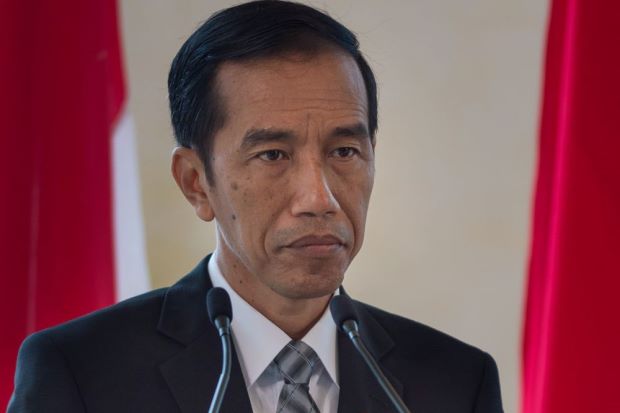

Indonesian President Joko Widodo may have known too little about Andrew Chan and Myuran Sukumaran when he denied them clemency.
A Fairfax Media report says that “a source familiar with the events” claims that the president had a list of drug offenders and not much else when he refused clemency, because of the “chaotic” transition from the former administration. The report says the source wished to remain anonymous due to the highly sensitive nature of this case. No kidding.
“Look, the current President simply takes over all pending applications of the death felons from the previous government, which the latter did not touch at all,” said the anonymous source.
“And there was just a few pieces of papers listing names of people on death row. No documents attached to the lists.”
That means Jokowi did not have a complete understanding of the extraordinary efforts at rehabilitation that Sukumaran and Chan went through, nor did he have the testimony of Kerobokan Prison’s governor Siswanto, who has been a proponent of the pair’s transformation.
Jokowi took office in October and then refused Sukumaran’s clemency in December and Chan’s in January.
Former President Susilo Bambang Yudhoyono did not address the pair’s case before leaving office, but the complete documentation for their clemency bids was not forwarded Jokowi’s staff, Fairfax Media reports.
From Fairfax Media’s understanding, the list of 64 convicts on death row used by Jokowi only had names, nationality, ages when they were arrested and sentenced, the status of their legal appeals, and the province in which they are incarcerated. That’s it.
These allegations that Jokowi did not individually address each case is giving the Bali Nine pair’s attorneys more fire to fight with.
“Without wanting to disrupt the President’s prerogative [to granting clemency], we submitted the lawsuit only due to the lack of clarity of reasons behind the President’s decision to not grant pardon,” said one of their lawyers, Todung Mulya Lubis, as quoted by Fairfax Media.
Photo by AFP