
PRESENTED BY

Balinese culinary history goes back thousands of years. That’s way before a certain Julia Roberts movie cemented Bali’s prime position on the self-discovery trail. Today, though, Bali’s reputation is more world-class dining destination than backpacker route. Chefs are taking traditional ingredients and using them in new, creative ways. At the same time, they’re introducing new ingredients from around the world. Here are just a few of the items you’re guaranteed to find on Bali’s top tables.
 Photo: Pokepoke
Nasi
There’s probably nothing more recognizably Balinese than lush green rice paddies, so it’s no surprise that nasi is first on our list. Rice is one of the most important components of life (and mealtimes) on the Island of the Gods, and agriculture is still the main livelihood. The Subak irrigation system dating from the 9th century is still responsible for watering all those beautiful paddies, even as rice gets a modern makeover in Bali’s kitchens.
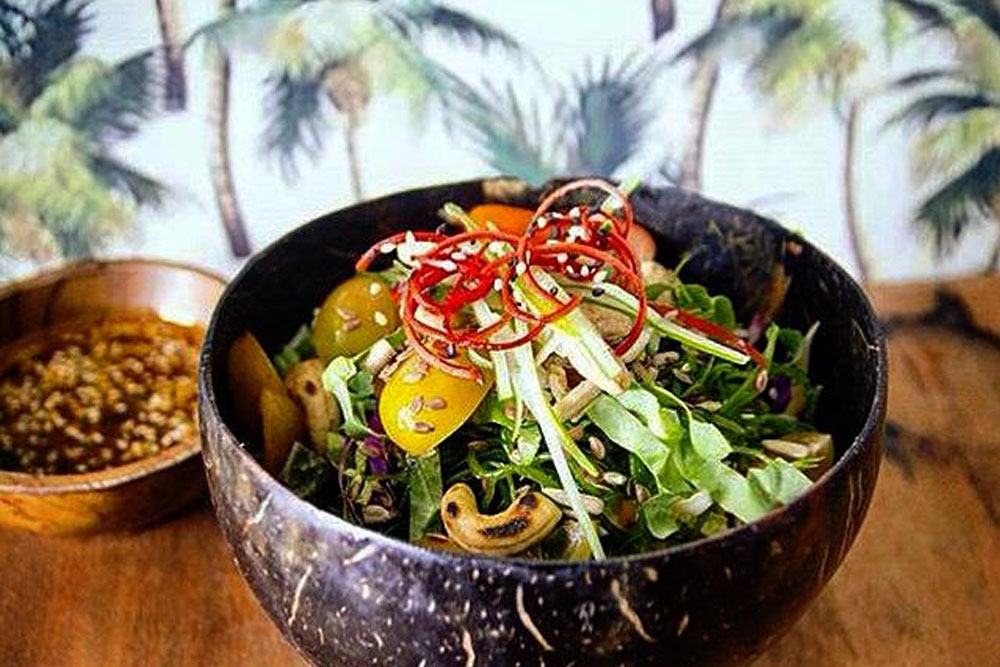
At the Hawaiian restaurant Pokepoke in Canggu the cuisine of one beach paradise is transported to another, with one thing in common – rice. Nasi provides a delicious base for colorful poke bowls of sliced veggies, diced sashimi, tempeh and seafood.
 Photo: Mamasan
Chili
From small and fiery bird’s eyes to larger, sweeter peppers, chefs in Bali rely heavily on the texture and spice of chilies – sweating, mouth-on-fire tourists be damned! Now Bali’s chefs are taking spice a step further by using chili in modern, multi-cultural dishes.
One of Bali’s well-known Asian restaurants, Mamasan, is no stranger to spice. Executive Chef Will Meyrick’s fusion dishes combine Western technique and Eastern ingredients. Take the crispy “confit” pork with spicy Thai sauces of nahm jihm jaew and nam pla prik. While the cooking method might conjure up thoughts of French cuisine, the chili in the dipping sauces will bring you right back home to Asia.
 Photo: Sardine
Duck
Bebek has a long history in Bali. Ducks are still an important part of Balinese agriculture – each morning they sweep rice fields of seeds and other debris. Bebek Betutu, duck marinated in spices, wrapped in coconut husks and smoked over burning rice husks, is a classic that ain’t going anywhere soon. In fact, chefs are just getting more creative with bebek.
The seared Peking duck breast at Sardine, a premier eatery in Kerobokan, is a medley of Chinese, French and Indonesian influences. Ingredients like sweet potato, long beans, Chinese black mushrooms and tamarind combine to create a unique dish.
 Photo: Mozaic Bali
Coconut
Coconuts are grown locally on the island, so no big shocker that it’s in so many of Bali’s most delicious dishes. But you might be surprised to discover just how versatile this ingredient is, from marinades or infused rice to desserts.
One of our favorite ways to indulge in this ingredient is a sweet end to a satisfying meal. Mozaic Bali in Ubud pays tribute to the modest coconut in their scrumptiously sweet dessert menu. The menu features a dessert with every texture of coconut is at play, plated in a modern European style.
 Photo: Betelnut Cafe
Some sort of super food
We couldn’t complete this list without at least one nod to Bali’s (somewhat) new culture of health and wellness. Nowadays, you can’t throw a coconut husk without hitting a yoga teacher in training, and new cafés touting acai bowls, goji berries and spirulina shakes are sprouting up faster than chia seeds. (Wait, do chia seeds even sprout?) Anyway, we’re pretty sure that Balinese chefs won’t be shunning super foods as long as Bali’s health freaks are gobbling them up.
 Photo: Motel Mexicola
Avocado
This mushy ingredient started appearing on Balinese menus years ago and has now become a firm fixture in breakfast, brunch and lunch offerings. At Nebula Room, Kuta’s dining hotspot, the Ultimate Balinese Pork Tacos feature a healthy dose of avocado alongside green chili and roast meat. Motel Mexicola’s cuisine is all about the avocado. Go straight for the smashed avocado guacamole for a delicious dose of healthy fat.
But it’s not just Mexican restaurants that have fallen for this humble green fruit (which is technically a berry); quite a few of Bali’s international restaurants have jumped on the avo-bandwagon. At Kilo Bali in Seminyak, you’ll find avocado on the signature club sandwich and alongside the wasabi tuna tartare.
 Photo: Ginger Moon
Smoked meat
Perhaps not so much an ingredient as the main, mouth-watering act, slow-cooked barbecued meat has a special place on the Balinese menu. You’ll find it everywhere, from traditional Babi Guling at your neighborhood warung to beef brisket and pulled pork at the upscale Smokehouse BBQ Bali. Chefs have even started experimenting with Babi Guling pizza and tacos, making the quest for the best roast pig even more complex.
When it comes to beef, Bali’s chefs can’t seem to live without full, bold flavors. That’s why chefs often choose Knorr as a base to create complex aromas and deep flavors in mere minutes. Using Knorr allows chefs even more time to get creative and inventive with modern dishes. Click here to get free samples of Knorr Demi Glace and take a tour of Knorr World Cuisine.