
An annual US report on human trafficking has placed Myanmar in the second-worst category for the fourth year in a row.
The state department study classifies more than 180 countries as either Tier 1, for those doing the most to combat the crime, Tier 2, or Tier 3, for those doing the least.
Those in the latter category – including Thailand – are subject to sanctions on non-humanitarian aid.
This is the fourth year in a row Myanmar has been placed in the middle ‘warning’ category, on account of its role as a source country for men, women and children subjected to forced labor and sex trafficking.
Next year it will automatically slide into Tier 3 if things haven’t improved.
“Burma was granted a waiver from an otherwise required downgrade to Tier 3 because its government has a written plan that, if implemented, would constitute making significant efforts to bring itself into compliance with minimum standards for the elimination of trafficking,” the report reads.
The authors praised the release of 376 child soldiers during the reporting period – between March 2014 and 2015 – as well as trafficking awareness campaigns and the promotion of a military official to head up an anti-trafficking body, “to better coordinate on combating human trafficking offenses committed by members of the Burmese military”.
However, they also referenced the ongoing instances of horrific crimes like this: “Reports from the UN and former child soldiers indicate army recruiters, including civilian brokers, target orphans and children alone on streets and in railway stations; sometimes recruiters trick children into joining the army and or threaten them with jail or physical abuse if they do not agree to join.”
According to the study, Myanmar prosecuted about 143 traffickers last year in 98 cases of primarily sex trafficking. That’s a drop from the 183 punished in 100 cases in 2013.
Just 18 cases of labor trafficking were recorded, despite reportedly rampant forced labor in Rakhine state – which recorded no cases.
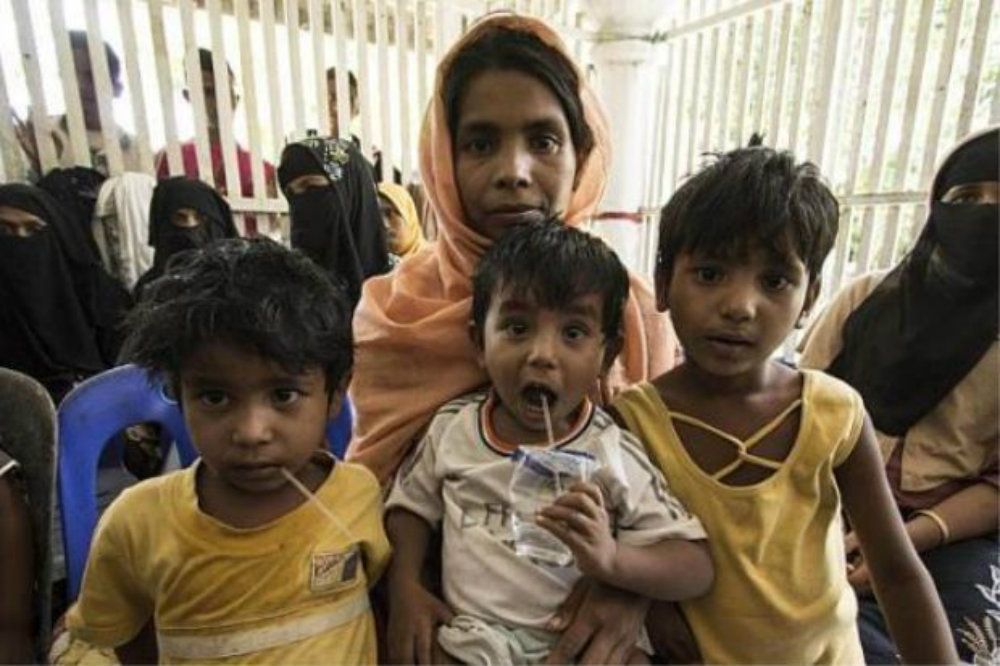
The reporting period pre-dated the ‘boat people’ crisis involving trafficked stateless Rohingya Muslisms earlier this year but the authors did note the vulnerability of Rohingya to trafficking and, especially for women, sex trafficking.
Human rights activists were less than pleased about the ranking, considered a reprieve for the country on the eve of historic elections.
On Twitter, Thomas Pogge, Director of the Global Justice Program and Leitner Professor of Philosophy and International Affairs at Yale University, called it a “passing grade”.
Rohingyas betrayed: US State Dept’s annual Trafficking in Persons report gives passing grades to Myanmar and Malaysia http://t.co/HziXyNXvks
— Thomas Pogge (@ThomasPogge) July 28, 2015
Here’s Matthew Smith from Fortify Rights.
US should’ve downgraded Myanmar in trafficking report, instead brushed aside systematic slave labor: @FortifyRights http://t.co/FVJkivzZwf
— Matthew Smith (@matthewfsmith) July 28, 2015
In a statement, he referred to rampant internal labor trafficking: “With elections on the horizon, D.C. has brushed aside Myanmar’s systematic use of slave labor. Myanmar’s army should immediately stop using forced labor and hold perpetrators accountable, regardless of rank.”
The organization alleges that, in 2014, the military forcibly recruited thousands of Rohingya men, women and children to labor unpaid in Rakhine state.
A Reuters report quoted Rohingya allegedly forced to work as porters, tend fields and maintain infrastructure.
Photo/AFP: Migrant women and children from Myanmar and Bangladesh wait at a shelter in Matang Raya village, Baktya, in northern Aceh on May 10, 2015.