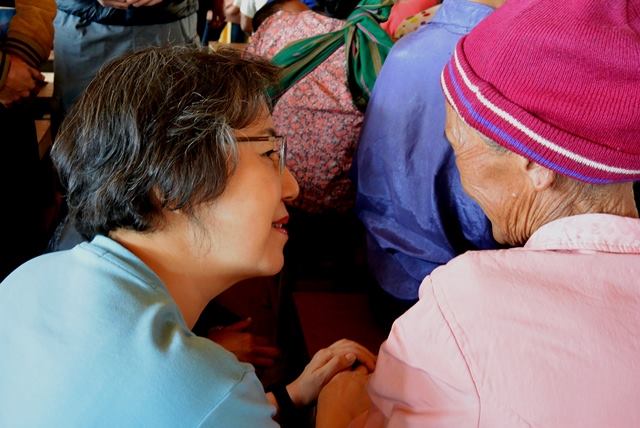

On Friday, Yanghee Lee, the UN’s special rapporteur on Myanmar, wrapped up her 12-day assessment of the country after visiting parts of Rakhine, Mon, and Kachin States, as well as Yangon and Naypyidaw.
At a press conference in Yangon and in a public statement released by the United Nations Information Center, Lee heavily criticized the Myanmar government, noting that “whilst there have been positive developments in Myanmar, there is still a long way to go to achieve a society where individuals are free to share what has happened to them, to speak their mind, and to live peacefully without fear.”
She confirmed that, although she “pushed hard,” she was denied access to the towns of Hpakant and Laiza in Shan State during her trip.
Speaking of the Rohingya crisis in Rakhine, Lee also slammed government reports that villagers had burned down their own houses as part of a “propaganda campaign”.
“I find it quite incredible that these desperate people are willing to burn down their own houses (where they may have lived for generations) to be without a home, potentially displaced, for five years or more like those in Sittwe, just to give the Government a bad name,” she stated.
Lee’s statement not only reflects the mounting criticism from international and independent authorities who have condemned the Myanmar government for attempting to dismiss the regions’ conflicts, but coincidentally, is also a stark contrast to the government’s own reports on the ongoing violence in Kachin and Rakhine states.
Stressing the necessity of “data and evidence,” Lee urged the government to undertake a new strategy when it comes to responding to these problems and discard their current approach, that is, “to defend, dismiss and deny.”