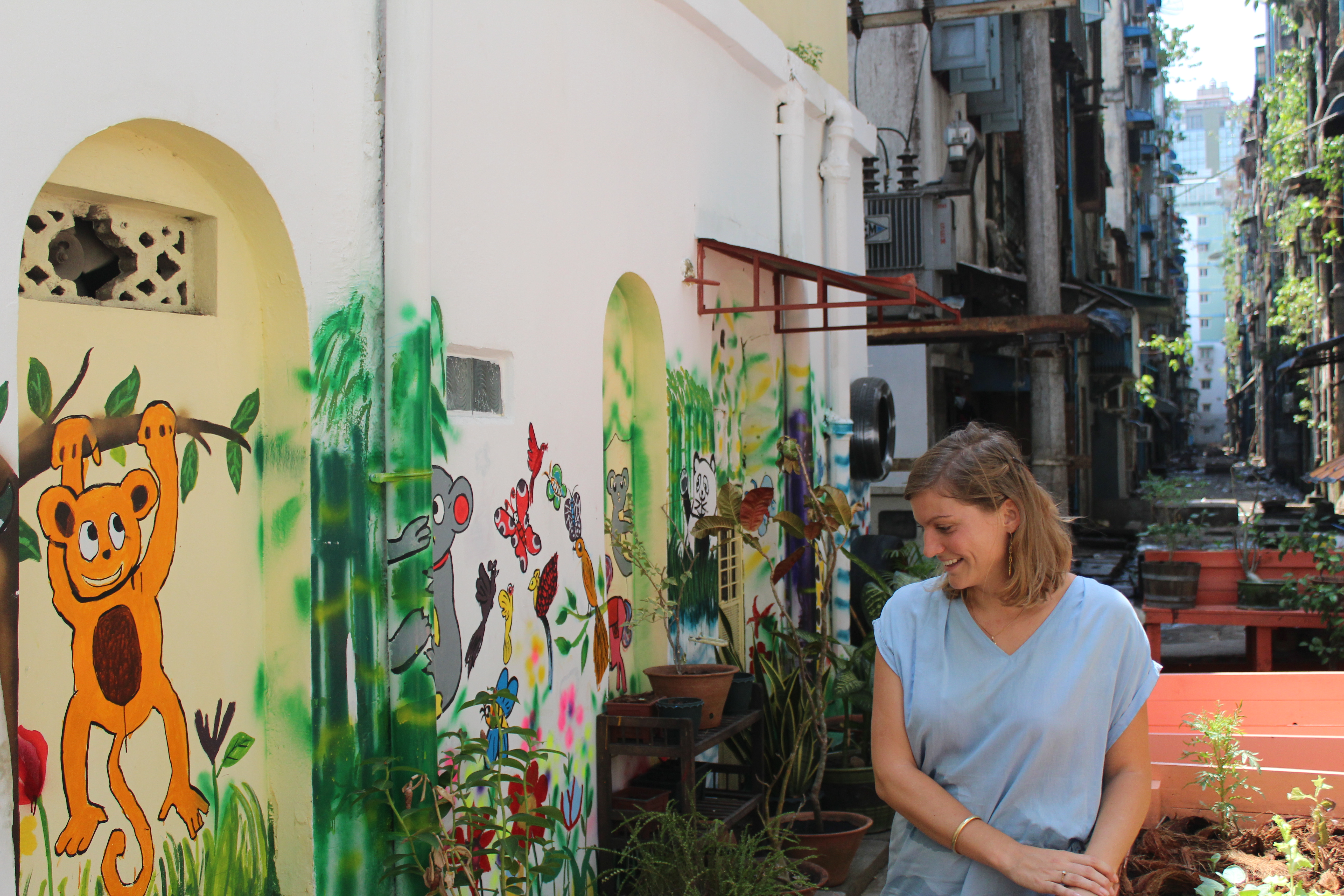
Yangon is a city full of treasures, says development consultant Emilie Röell, but some of these treasures are hidden from sight. Since 2015, she and a team of immigrants and locals have been working to uncover these treasures. Their social enterprise – Doh Eain – renovates heritage buildings to give owners a stable source of income.
Now, Röell is using some of the funds generated by that enterprise to beautify Yangon’s murky back alleys, but they need our help.
The back alleys of downtown Yangon are generally used as rubbish dumps. They attract pests and pose health risks to residents. Doh Eain aims to turn these many miles of forgotten wasteland into “clean and healthy recreational spaces featuring gardens, street, art and children’s play grounds.”
The group has already proven that beautiful Yangon alleys are not a myth. Twenty meters of alley space on lower 27th Street that used to be clogged with rubbish and sludge have recently been converted into a vegetable garden, a children’s playground, and a place for socializing.
The families living along the alley have formed a committee to maintain the garden and expand it further down the length of the block.
City officials have taken note of Röell’s initiative and have come to see gardens as a solution to littering and as an incentive for local residents to keep their environments healthy. Doh Eain has received requests from other communities in Yangon to come in and make wasted space useful and beautiful.
But there are challenges to turning Yangon into a city of gardens. Faulty pipes still spray their contents into back alleys, and rubbish disposal remains cumbersome, especially for people living on higher floors. Fixing these problems requires input from local residents and cooperation from city authorities. It also requires money.
To complete its current alley garden projects and to fulfill requests from other neighborhoods, Doh Eain has launched a campaign to raise $50,000, or $50 per meter for a full kilometer of alley gardens.
While much of this is expected to come from third-party donors, Röell says it’s important that a significant portion of the funding comes from the people who will enjoy these gardens.
“We want to support the initiative that these communities already have,” she told Coconuts.
Doh Eain hopes to raise half of the target amount offline and half online. To contribute offline, donors can deliver cash to #79 27th Street, or Doh Eain will pick up donations of more than K10,000. You can even donate plants, children’s games, and other materials.
Visit this page to donate online.
Before Doh Eain’s alley garden project, the idea of having a pleasant time in a Yangon back alley was unthinkable. Now it’s tantalizingly doable, especially if you contribute.