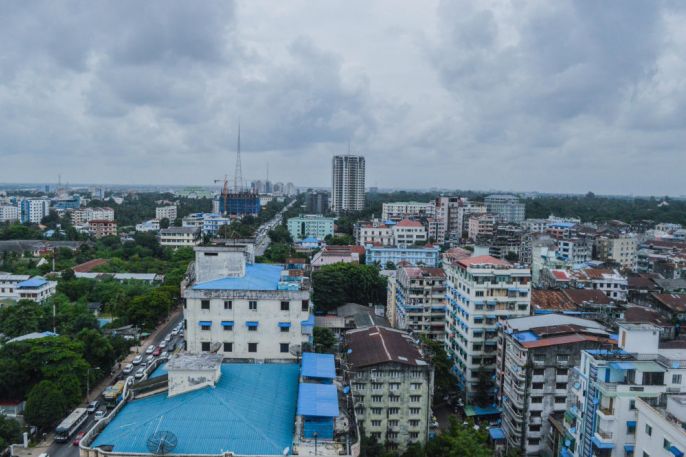

Soft soil in some parts of Yangon may make certain townships more vulnerable to earthquakes than others, new research shows.
The Myanmar Earthquake Committee and UN-Habitat tested soil density and rock level throughout the city as part of a hazard assessment, finishing the analysis in December 2015, according to the Irrawaddy.
It’s yet to be published but recently released snippets suggest that you probably don’t want to be uptown, rather than downtown, if and when a major quake strikes.
Yangon sits close to a fault line, and seismologists have warned that the city is massively underprepared for a strong quake, which would cause “unimaginable” devastation.
Here’s the low-down from one of the committee’s secretaries, Thura Aung:
“Most of the Eastern townships of Yangon and the ones close to the Hlaing River have soft soil. Geologically, the areas along the river were formed from silt and were built on after many years that’s why they have soft soil.
“Some parts of Kyimyindaing Township and downtown townships like Latha and Pabedan also have soft soil. North and South Okkalapa and East Dagon townships were originally farmland and also have soft soil. The distance from the ground level to rock in these areas is also quite large and soft soil areas have a high risk during seismic activity.
“The area around Shwedagon Pagoda is composed of pretty hard rock. Bahan Township and some parts of Sanchaung and Mingaladon townships have the same situation and will be relatively resistant to seismic waves.”
According to the US Geographical Survey, soft soil amplifies ground shaking, making damage to buildings more likely.
Myanmar experts also plan to assess the quality of construction in Yangon, according to Thura Aung.
“We will conduct a pilot project of at least two townships first and collect data on the strength of the buildings there,” he said.
Tall and thin high-rises have less balance than square-shaped ones, he added.
“Generally, buildings that are not built according to national building codes are at risk… Buildings of wooden frames and bricks are the most at risk of collapsing due to earthquake tremors. This type of building is very common. People think the bricks are secured to the wooden frame but actually they are not so they can fall down very easily when an earthquake hits.
“If reinforced concrete buildings, in which steel bars are embedded in the concrete, are built according to regulatory standards we can say they are relatively resistant. Wooden houses and bamboo houses have the least possibility to kill people when there is an earthquake.”