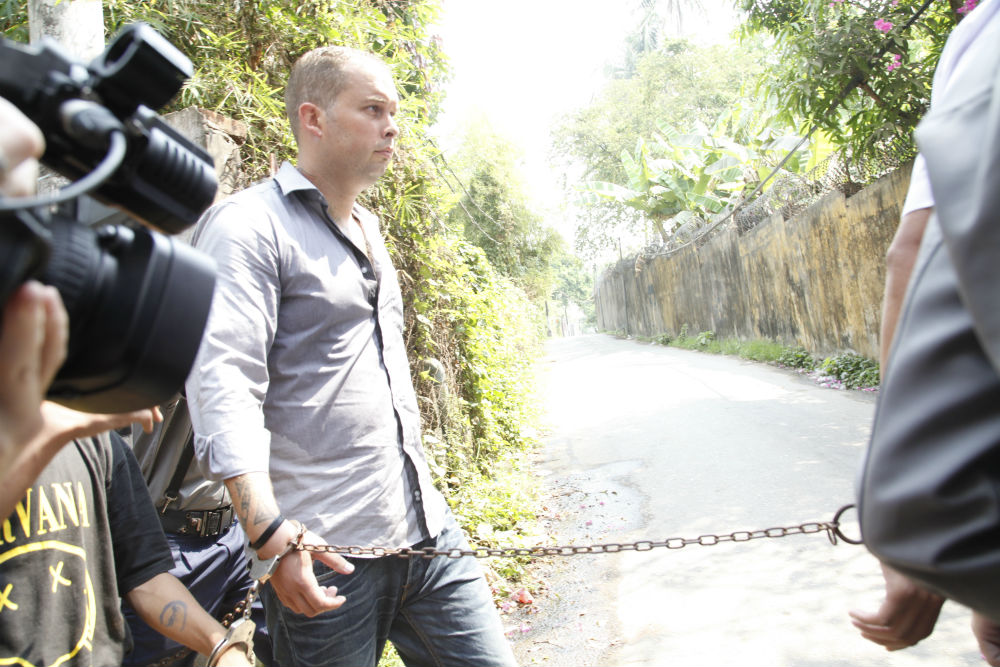

Family members of Philip Blackwood, the New Zealander convicted of ‘insulting religion’ in March, are desperately trying to figure out if he has been released along with nearly 7,000 other prisoners in an amnesty effective today.
But as of early this afternoon the family had heard nothing about Blackwood’s fate, leading to disappointing conclusions. They are trying to get in contact with the New Zealand embassy.
A spokesperson for New Zealand’s Ministry of Foreign Affairs and Trade said that it had “not received formal notification of whether Mr Blackwood is on the Presidential Amnesty list.”
“The NZ Embassy in Myanmar continues to follow up,” the spokesperson added.
The lack of information made one family member, who has declined to be named due to the sensitivity of the case, fear that Blackwood has not been freed, describing the news or lack thereof as “disappointing.”
Blackwood was sentenced to two and a half years in prison in March after he posted an image of the Buddha wearing headphones on the Facebook page of the bar he managed several months earlier. The image was used to promote a cheap drinks night.
Increasingly influential hardline monks stirred up outrage and complained, leading to Blackwood’s arrest days after the post in December.
Two Myanmar nationals who worked at the bar, Tun Thurein and Htut Ko Ko Lwin, were also given the same sentence.
It is unclear if they have been released, though Ko Ko Lwin’s grandmother said today that she believed they were both still in prison.
Blackwood’s father Brian said in an email from New Zealand that they had not been informed about the pardons and that the news was surprising.
“This has come out of the blue and has shaken us somewhat,” he said.
The pardons come months before the November 8 poll and a day before a Buddhist holiday.
While 7,000 may seem high (the actual number is 6,966), Mark Farmaner from the UK-based Burma Campaign said in an email that the number is average and releases of similar size took place annually under the previous military dictatorship that ended in 2011.
“When he came to power President Thein Sein was even more manipulative in the way he released political prisoners, doing so ahead of key summits of visits by Presidents or Prime Ministers,” he said. “These mass releases are more about gaining public favour and good karma than anything to do with justice.”
He added that the number of political prisoners released, so far unknown, was an important indicator.
Among those freed are former intelligence officials and 155 Chinese loggers who were arrested this month and given lengthy prison sentences.
Farmaner said the quick turnaround (some of the loggers were said to be sentenced to life) proves international pressure can work.
“The USA and EU are virtually silent over the growing number of political prisoners. They should take note,” he said.
Photo / Coconuts Media