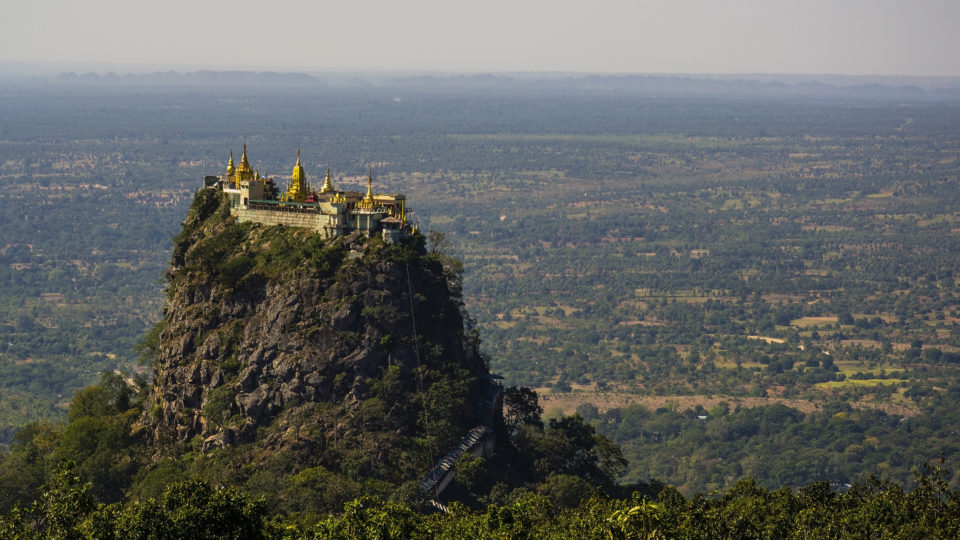

Mount Popa and its surrounding area will become a UNESCO Global Geopark before the end of the current government administration, according to officials working on the application process.
Members of the Myanmar Geosciences Society, local Mount Popa-appreciation groups, Yangon University’s geology department, the Ministry of Hotels and Tourism, and the Forestry Department formed a committee in December 2016 to seek Geopark status for the mountain and 360 square miles around it.
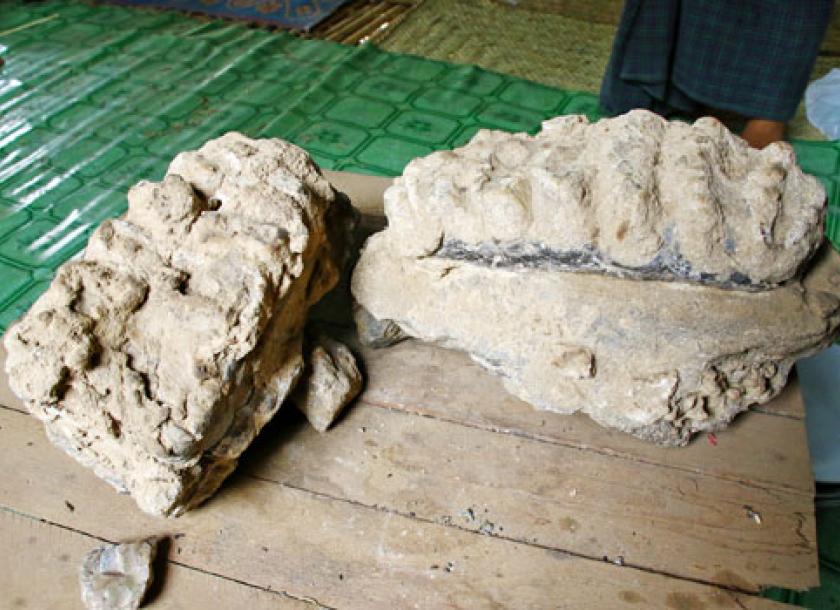
The committee initially planned to submit a proposal to UNESCO by late 2017, but over the past year, it became apparent that the area has more to offer than they expected. For example, in April, while conducting research for the Geopark application, geologists discovered several fossils that are thought to have belonged to elephants that lived between 20 and 25 million years ago.
The area also contains unique rock formations and landscapes, as well as over 200 villages, whose distinct cultures will be highlighted in the Geopark application.
“We started on December 9 with mostly on-site investigations to collect data…on places that will be attractive to tourists. So far, we’ve found around 110 places of interest, and we’re still finding more. We expect a total of 250 places and at least one more year of data collection,” committee leader Than Htun told Eleven.
He estimates that tourists will be able to visit the new sites by the end of next year, and the committee’s data will be submitted to UNESCO within four years.
Since Global Geopark status is meant to highlight an area’s geological heritage, Than Htun has said the project will not cause the relocation of any residents and will involve minimal engineering of sites and experiences. A permanent research station and a museum may be among the few structures built in the eventual Geopark.
According to the UNESCO website, a Global Geopark “uses its geological heritage, in connection with all other aspects of the area’s natural and cultural heritage, to enhance awareness and understanding of key issues facing society, such as using our earth’s resources sustainably, mitigating the effects of climate change, and reducing natural disasters-related risks.”
Than Htun has said that the local residents are committed to the project and are hopeful that it will help their relatively poor area prosper.