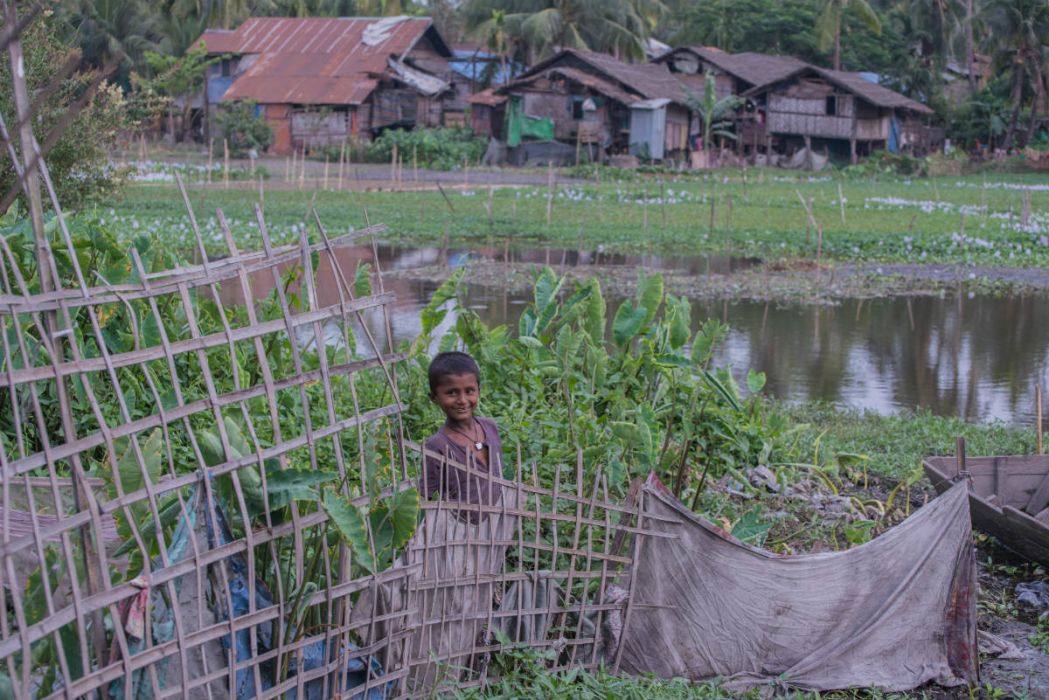

SITTWE, RAKHINE STATE – Residents of Aung Mingalar quarter, a walled-off community of more than 4,500 Rohingya Muslims in downtown Sittwe, have little access to the outside world.
Guarded around the clock by the authorities after Buddhist and Muslim clashes in Sittwe in June of 2012, they need permission to leave, to get food supplies, even to see the doctor.
But they don’t need permission to visit a small – and many would argue, lifesaving – lake.
Surrounded by slum housing, the lake has banana leaves and watercress. Fish, mainly tilapia, dart around in the water.
It may not seem like much, but this nameless body of water is a sanctuary amid 1.5 square miles of destitution.
Residents say it’s the main food source for the more than 4,500 people who live in Aung Mingalar.
“When we were kids, we were happy as we could play in [the water],” Hafiz Zaw Zaw, 40, said in a recent interview. “But now, we have to appreciate this lake because it saved our lives and we are getting food from it.”
“We can’t go outside. So we have no jobs and no money. That’s why we have nothing to eat. It is very difficult to survive here.”
Interviews with residents say the lake formed from a small creek about 30 years ago and has grown over time. It came to play its most important role in 2012, when interreligious violence, sparked by the rape and murder of a Buddhist woman, gripped Sittwe, killing some 200 people and displacing thousands.
At the height of the violence, women, children and the elderly fled to the lake and hid in its marshy embrace.
One woman even gave birth in the water.
Both Buddhists and Muslims were affected by the fighting, but the Rohingya arguably suffered more, with many moving to IDP camps outside of Sittwe.
Aung Mingalar is different in that homeowners did not move. But because of the hostile community around the quarter, it has become a ghetto.
NGOs have not had regular access to Aung Mingalar since 2014, residents say. According to interviews, households receive donated rations from Yangon and one can of rice per day.
The lake adds more.
“Mainly, we get donations from Yangon, otherwise we would starve,” said community leader U Shwe Hla. “But we can also get leaves from the lake.”
On a recent trip to the site, children and women were using plastic bags to gather up food. A cool breeze blew in from the water, which glistened in the sun. It was, strangely, peaceful.
Hafiz Zaw Zaw says the lake has saved “thousands” of lives and the community is thankful for its very existence.
They aren’t sure where they would be without it.
“Everyone from our area appreciates this small lake.”










