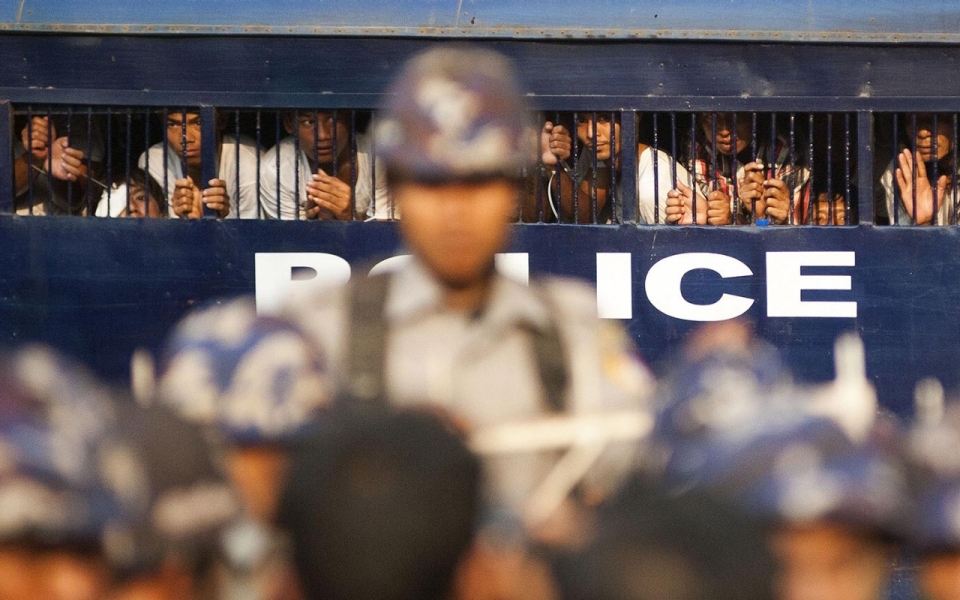

An organization representing former political prisoners in Myanmar is calling on Aung San Suu Kyi’s new government to implement a reparations program to compensate scores of men and women left traumatized by their experiences behind bars.
A report by the Assistance Association for Political Prisoners released yesterday details the gruesome prison conditions endured by thousands of men and women under the former military and military-backed governments.
The study found that many former inmates, some of who spent decades in jail, have struggled to reintegrate into society since their release, with many suffering financial difficulties as they have been unable to return to work.
According to the study, titled After release I had to restart my life from the beginning, one in five former political prisoners are unemployed and many who had well-paid professional jobs before their arrests have been forced to take low-skilled work.
“I am under surveillance all the time,” said one interviewee, who spent five years in prison for singing an anti-government song in 1995. Since her release, she said she has been unable to return to her job as a secretary.
“My main job search [has been] difficult because I had to get a recommendation letter from the police station. I saw other people who came to get the recommendation letter and got it. When I told my name at the police station for the recommendation letter, they changed their mind.”
While Suu Kyi, who spent decades under house arrest in Yangon, has said she does not wish to seek revenge on the country’s former junta, the AAPP is pushing for both material and symbolic reparations – an apology, memorialization efforts and financial reparations.
Currently, civil society organizations have been leading efforts to counsel former political prisoners and aid them financially.
“As our research has revealed, restitution measures are vital for ex-PPs in Burma, as many have been dismissed from their jobs, had their professional licenses revoked, had their land or businesses destroyed or confiscated, and identity cards and other belongings confiscated upon arrest,” the report reads.
“All of these factors contribute to an inability to reintegrate into society, as even when they are released, the ex-PP’s life is dramatically transformed from what it was before imprisonment.
“Regardless of the duration an ex-PP [political prisoner] spends unjustly in detention, they will have incurred financial damages in terms of loss of earnings, lost opportunities and legal and medical costs.
“As such, they are entitled to monetary compensation … ex-PPs in Northern Ireland, South Africa, Chile and the Czech Republic have received financial compensation from their respective governments.”