
A landmark study published last week found that news stories published in Myanmar severely underrepresent women and display almost no awareness of gender issues. Only 16 percent of media sources in Myanmar are women, placing the country well below the global average of 24 percent and the average in Asia of 22 percent.
The study, titled “Gender in Myanmar News: News Content Analysis from a Gender Perspective,” was conducted the Myanmar Women’s Journalist Society (MWJS) and the IMS-Fojo Institute with the aim of “advancing democracy and promoting gender equality.”
“By determining who has a voice in these debates and who is silenced, which issues are discussed and how they are framed, the media have the power to maintain the status quo or challenge the dominant order,” says the study’s final report. “The news media – also known as the watchdogs of society and defenders of the public interest – have a duty to try and reflect the experiences, concerns and opinions of diverse sections of the population, including the female half of the human race.”
The results of the study are based on analyses of over 2,500 news stories from around Myanmar, including TV, radio, print, and online content. Among these media, TV represents women the most (22 percent of sources), while radio does the least (12 percent). The study also found that while women are represented in 35 percent of images in news media – more than twice their level of representation as sources. These findings suggest that “women are more valued for their physical presence than their ideas or experiences as sources,” the report says.
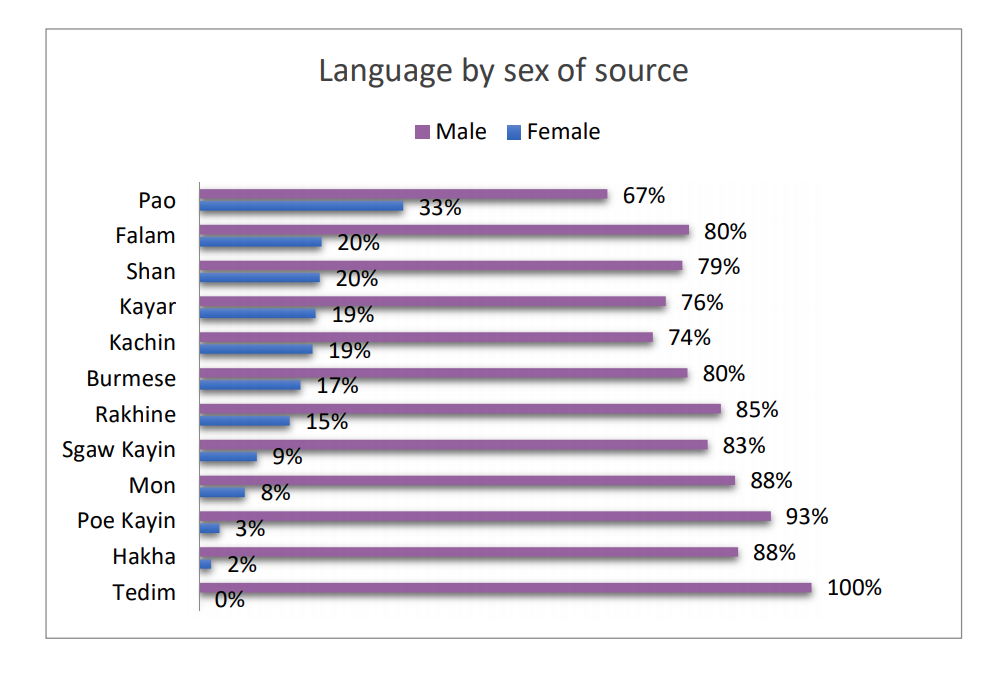
An analysis of regional differences found that stories from Sagaing Region have the highest representation of women (22 percent), while Chine State has the lowest (3 percent). Yangon Region is just above the national average with 17 percent. It also found that Pao-language stories have the highest representation of women (33 percent), while Tedim-language stories have the lowest (0 percent). Burmese-language stories are just above the national average with 17 percent.
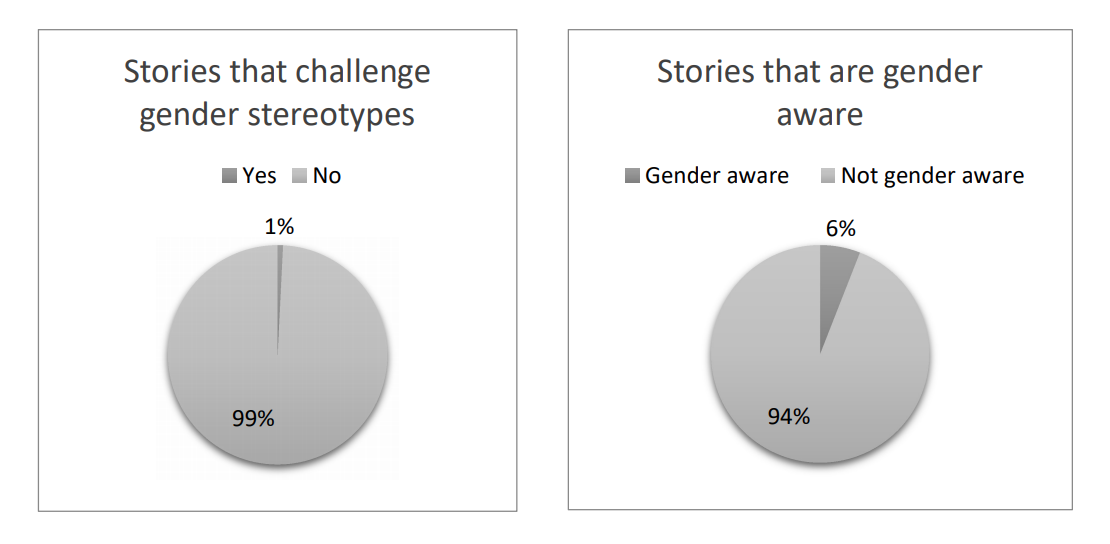
Only 6 percent of stories are “gender aware,” meaning they either have a gender balance in sources, challenge gender stereotypes, or address a gender issue in their content. Less than 1 percent were found to challenge gender stereotypes.
Furthermore, women make up 29 percent of sources quoted for their personal experience but just 7 percent of sources quoted as experts.
The report calls on reporters to be consistent in their quoting of men and women as sources, both in terms of quantity and in how they are identified. (Women are more likely than men to have their ages and family roles included in news stories.) It also asks reporters to include analyses of how an issue might affect men and women differently.
To media houses, the report recommends implementing gender awareness policies and offering trainings and asks for gender quotas for senior posts and board positions.
MWJS spokesperson Zin Mar Lar Htay said upon the release of the report: “As journalists, we have to challenge gender stereotypes in our reporting. We have to challenge the view that women are victims. We need to interview and source more female experts, and thereby balance male and female voices in our reporting.”