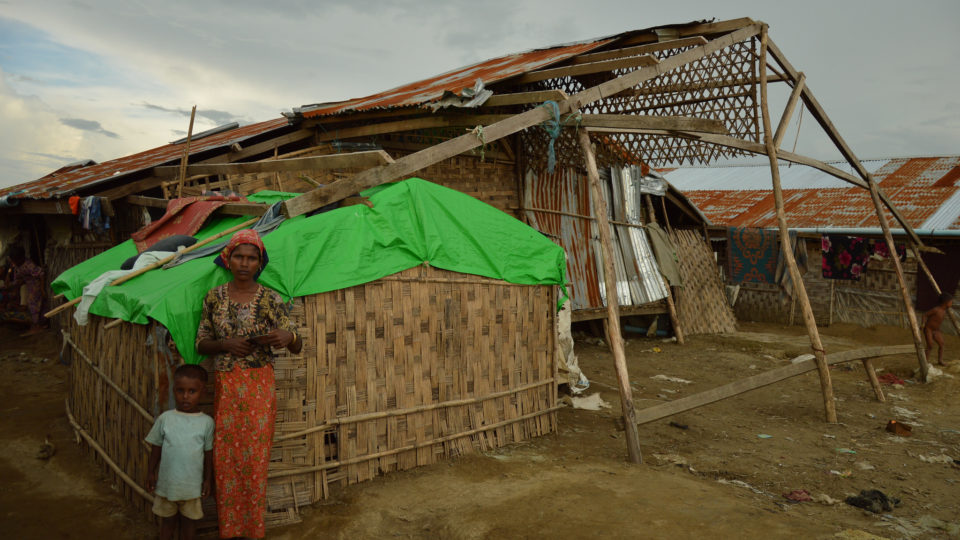

More than a quarter of the population of northern Rakhine State’s Maungdaw District is suffering from hunger after a series of operations by the Myanmar military forced tens of thousands from their homes, forced markets to close, and caused food prices to shoot up, according to a report released yesterday by the World Food Programme (WFP).
In October, Myanmar security forces launched a counter-offensive in northern Rakhine State to root out Rohingya insurgents who killed nine border guards earlier that month. The UN and other organizations have documented the rape, torture, arson, and summary execution committed by Myanmar soldiers against the Rohingya population, largely based on testimonies from victims who fled to Bangladesh.
In the first on-the-ground report on the effects of the violence on life in northern Rakhine State, the WFP interviewed 450 families in 45 villages in Maungdaw District in March and April. The UN agency found that “about one third of the households faced extreme experiences of food insecurity, such as no food of any kind in the household (28 percent), went to bed hungry (34 percent), or went for the whole day and night without eating (28 percent).”
Children under the age of five, who make up nearly 18 percent of the population of Maungdaw District, are particularly vulnerable to the food shortage. According to the WFP report, 80,500 of these children are expected to need treatment for acute malnutrition over the next year. None of the children included in the study have been getting a minimum adequate diet.
Around 90 percent of households fear not having enough food and are employing emergency coping strategies, such as “selling productive assets (7 percent), consuming seeds stocks (11 percent), pawning land (7 percent), begging for food (29 percent), and reducing non-food expenditures such as education or health (72 percent).”
One of the main causes of the hunger afflicting Maungdaw District, whose population is overwhelmingly Rohingya, is restrictions on freedom of movement, which have cut off people’s access to markets, healthcare, and livelihoods – primarily fishing and farming.
Increased transport costs and shorter food supplies have also brought up the prices of pulses and dried fish, which are important sources of protein. The flight of refugees from northern Rakhine, which has left nearly a quarter of households in Maungdaw without any adult men, has exacerbated the lack of food.
WFP recommends that humanitarian interventions promote food production at the household level, especially for families with lots of dependents, families with children under five years old, and families led by single women.
Government spokesman Zaw Htay told Reuters that while Myanmar national aid workers can move freely in northern Rakhine, some areas remain off-limits to foreign aid workers.