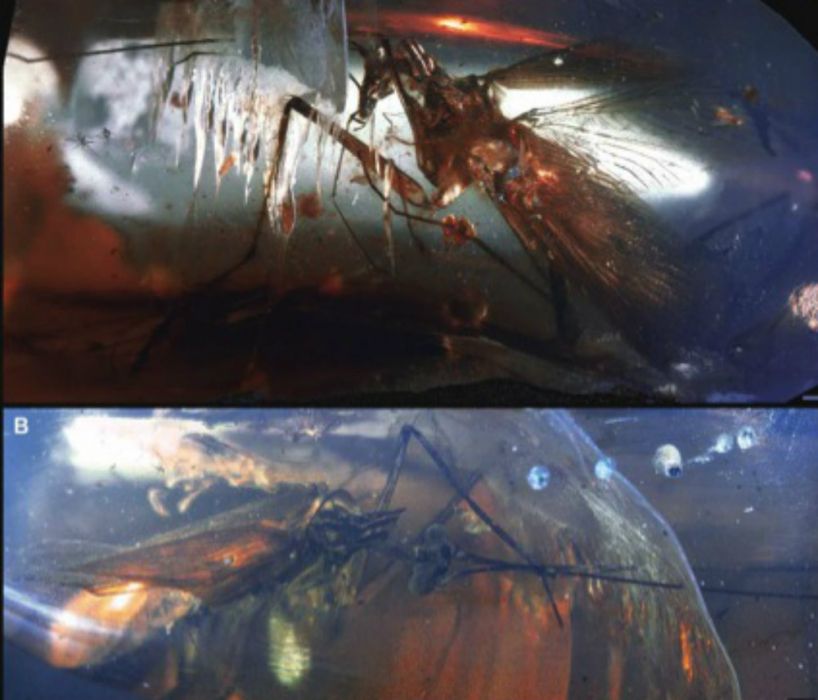

Scientists have discovered a new type of predatory cockroach from the Upper Cretaceous period in the Hukawng Valley of Kachin State.
The insect, which researchers describe in the April edition of Geologica Carpathica as having “elongated extremities and a freely moveable head on a long neck,” resembles nothing so much as the love-child of a praying mantis and a roach, but also has some dragonfly touches to it.
Suffice it to say you wouldn’t want to encounter it after flipping on the bathroom lights one night.
But don’t worry, it’s extinct, having last been seen buzzing around about 100 million years ago.
Scientists have been making some interesting discoveries in Myanmar of late, particularly the time they found that dinosaurs in the area may have been getting high on mushrooms.
Here’s an excerpt from the paper going over the features of the cockroach. Be warned, a lot of it sounds like gibberish to the layman.
“This family differs from all known fossil and living cockroaches by a set of unique autapomorphies, comprising extremely elongated extremities, including semi-raptorial forelegs and extremely long leg-like maxillary palps, modified three basal antennal segments, extremely elongated neck, ocelli with roof-like covering sheaths; elongated saddle-like pronotum; and numerous minute trichoid sensilla (minute hairs). Elongated forewing is unique in having short simply dichotomized at base SC and in dense venation with long A branches within clavus.”
Photo: Geologica Carpathica