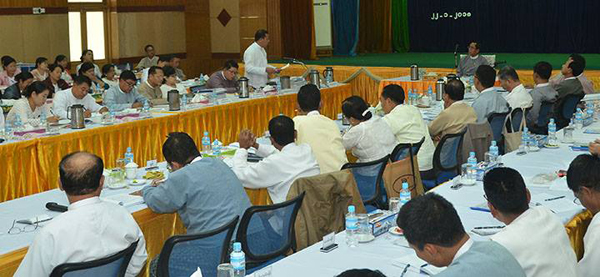

Myanmar’s new deputy minister for information Aung Hla Tun met with government-employed public relations officers in Naypyidaw in Monday to discuss plans to repair the country’s image after months of critical reporting by international media outlets.
“The country is facing many challenges during its transition period, and while the government-owned media has been ineffective in promoting the country’s image on the international stage, the private newspapers have been in existence for only three to five years. Thus, the country’s image is in the hands of the international media,” Aung Hla Tun said, according to state media.
He then instructed the gathered members of Information and Public Relations Departments (IPRDs) to “increase access to information and speed up the flow of information systematically,” adding that “our ministry plays a major role in this.”
IPRDs are branches of state, regional, and local governments that collect information to be reported by state media outlets. They also organize events to promote literacy.
Before he was appointed to the second-highest post in the Ministry of Information, Aung Hla Tun was a long-time critic of foreign media outlets’ coverage of Myanmar’s politics and conflicts, despite having worked as a journalist for Reuters for years.
In Aug. 2017, during his tenure as vice-chair of the Myanmar Press Council – a body that is meant to advocate for the rights of journalists – Aung Hla Tun appeared at a conference in Naypyidaw and said: “The greatest responsibility of media today in Myanmar is safeguarding our national image, which has been badly tarnished by some unethical international media reports. The international media often tends to sensationalize their reports and practice agenda-setting when covering sensitive issues for various reasons.”
He also accused AP reporter Esther Htusan of committing a “purposeful ‘misinterpretation’ with an ulterior motive to hurt [Aung San Suu Kyi’s] image and that of our country among the international [community].” Htusan had already corrected a headline and quote that had misrepresented a comment by State Counsellor Aung San Suu Kyi’s on international conflict and illegal immigration.
Under his leadership, the Myanmar Press Council also refused to assist three journalists and a driver who were arrested for operating a drone near the parliament compound in Naypyidaw. The council was also widely criticized for waiting a week before releasing a statement in support of two Reuters reporters who were arrested last month for investigating a military massacre of Rohingya men in northern Rakhine State.