
What’s going on?
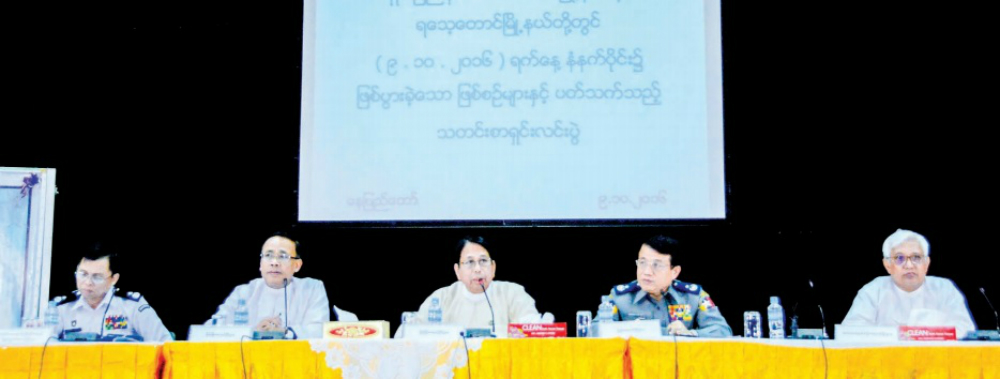
The northern part of Myanmar’s western Rakhine state is on lockdown after armed attackers launched apparently coordinated assaults on three border posts near Maungdaw district in the early hours of Sunday (October 9), killing officers and stealing weapons. At least nine police were killed and five injured, authorities said at a press conference. Another officer was still missing as of Monday morning. Several alleged assailants were slain and two captured.
While the porous border with Bangladesh is notorious for skirmishes, this is by far the deadliest in recent months.
What is the situation there now?
Rakhine state is already a tinderbox, with religious tensions simmering between the Buddhist majority and Rohingya Muslims, a stateless minority denied citizenship by both Myanmar and Bangladesh.
Maungdaw, a majority-Muslim district, is now under intense strain. Authorities have sealed off entrances and imposed a curfew, meaning nobody can leave their houses between the hours of 7pm and 6am.
Muslim groups have circulated unverified images of Rohingya men, mostly in their twenties and thirties, who they say have been killed in retaliation for Saturday’s assault.
A Maungdaw resident, who asked not to be named, told Coconuts Yangon that six men from Myo Thu Gyi village, accused of taking part, were slain.
How did the attacks go down?
According to a detailed account published in the state-backed Global New Light of Myanmar, there were three overlapping attacks on separate offices belonging to the Border Guard Police.
First, a group of about 10 men said to be armed with knives and slingshots attacked the Kyikanpyin border post at around 1am. Six officers fought back, seizing a homemade pistol and other weapons. According to New Light, the assault went on until 4am, when the attackers withdrew. The bodies of six police were then discovered – their weapons had been stolen.
Officers from the Ngakhuya office had been sent to reinforce police in Kyikanpyin, according to New Light. After they left, their own office came under attack by about 50 men armed with swords, spears and homemade weapons. Seven were killed there, along with two police, before hostilities ended at around 5:45am.
The third attack reportedly happened at the outpost in Rathedaung Township at around 3am. One attacker was killed, and two were captured before the fighting ceased at around 3:45am. One officer was killed and another two injured.
A total of 62 assorted weapons, including guns, were stolen by the assailants, in addition to 10,130 rounds of ammunition and a bayonet, police said.
Who’s responsible?
No organization has claimed responsibility for the attacks.
In the hours after the attacks, several possibilities were touted. One of the most active rebel forces in the area is the Arakan Army, a small rebel force involved in skirmishes in the area in recent months.
But in an interview with the Democratic Voice of Burma, the chairman of the nationalist Arakan National Party swiftly laid blame with a militant group that was active in the 1980s and 1990s, the Rohingya Solidarity Organisation (RSO). This was later backed up by Rakhine state government official Tin Maung Swe.
Speaking to reporters in the capital, Naypyitaw, police general Zaw Win said the attackers had shouted that they were Rohingya Muslims, but did not name a specific organization.

A mother and son from the Rohinga Muslim minority stand outside their small hut. Photo / Aung Naing Soe
What’s the RSO?
The RSO was created in the 1980s after the Myanmar army drove hundreds of thousands of Rohingya over the border into Bangladesh. There, a small set of militants trained in bases opposite Myanmar’s Maungdaw district. They were blamed for several deadly attacks inside Rakhine state, including one attack which killed four members of the Border Guard Police.
The group is, however, thought by some experts to have been “essentially defunct” since then. See this Crisis Group report from 2014.
It’s possible that the RSO has regrouped, or formed under a different name. Some say there were attempts to revive it following the violence of 2012, and both Bangladeshi and Myanmar authorities claim the group remains active.
In late July, Bangladeshi authorities claimed they had arrested a former RSO leader who was attempting to “instigate” the Rohingya population.
Bangladesh – a secular but majority Muslim nation – is currently waging a struggle against Islamist militancy within its borders.
In recent years, outlawed militant groups including Ansar al-Islam and Jamaatul Mujahedeen Bangladesh – which has sworn allegiance to the Islamic State – have been involved in dozens of slayings of religious minority citizens.
Desperate to assuage fears of rising radicalism in the country, the Awami League government is launching high-profile raids on the groups.
Is there a broader Islamist militant threat in Rakhine?
Extremist Buddhist nationalist groups like 969 have used the specter of Islamist terror in Myanmar as a boogeyman for years, despite meager evidence of even small-scale militancy on the border.
But the struggle of the Rohingya – rendered stateless and confined to miserable camps and villages – has served as a rallying cry for some international terror groups seeking to unite the Muslim world.
Earlier this year, the so-called Islamic State published an interview with a leader who said he hoped to launch operations in Myanmar once the “jihad front” in Bengal was strengthened. IS claimed a hand in the deadly Dhaka café attack that left dozens dead, mostly foreigners, earlier this year. Bangladeshi authorities have claimed to have found links between the RSO and JMB – which pledges allegiance to IS.
Last year, Al-Shabaab issued a statement calling for them to be saved from “savage Buddhists” and, in 2014, al-Qaeda head Al-Zawahiri called on Myanmar Muslims to rise up against the government.
But, so far at least, there is little sign of that. Most Myanmar Muslims practice a moderate strain of Islam, and signing up to a radical Islamist agenda is unlikely to be in the interests of the persecuted Rohingya, who rely heavily on the work of international humanitarian agencies.
Whoever is responsible for the attack – what’s the motive?
Police said they were investigating links to rebel groups. They also placed special emphasis on a recent massive drug seizure in Maungdaw. More than six million ‘yaba’ pills were uncovered in September at a factory owned by a construction firm.
The Myanmar-Bangladesh border is a hotbed of drug trafficking, with smuggling and sales of the drug “rampant” according to authorities.
Bangladesh says many Rohingya are being used as drug mules, though the scale is debated.
As Jeremy Douglas, Southeast Asia and Pacific regional representative for UNODC in Bangkok, Thailand, told IRIN in 2012: “Drug trafficking networks are well-organized and well-funded, and they use people who don’t have much to lose to operate in dangerous border areas – this is what appears to be happening between Bangladesh and Myanmar.”