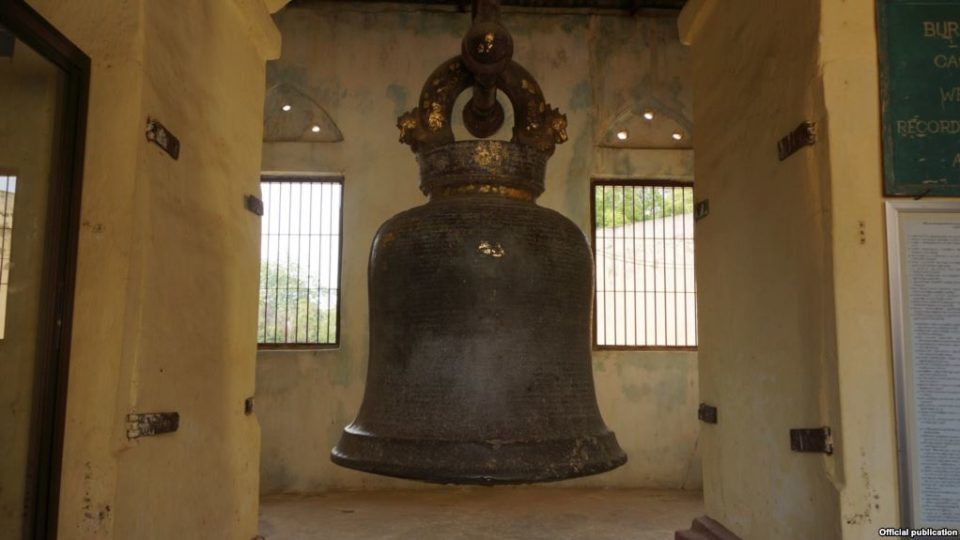

A bell donated by King Bayinnaung to Bagan’s Shwezigone Pagoda in the 16th century was recognized by UNESCO as an item of historical value at the end of last month.
The bell is inscribed with historical information from the first six years of Bayinnaung’s rule, written in Burmese, Mon, and Pali languages.
Bayinnaung, a king of the Taungoo Dynasty, built the largest empire in the history of mainland Southeast Asia during his reign, which lasted from 1550 to 1581. The bell’s inscription contains the only contemporary reference to him as the “Conqueror of the Ten Directions” – a title by which he is widely known in Mon and Thai.
The Myanmar government nominated the bell for UNESCO recognition in May 2016, and it was approved at organization’s meeting in Paris on October 24.
Department of National Museum deputy director Aye Mi Sein explained the cultural value of the bell, telling Eleven: “On it are inscribed his battles and successes and his deeds in spreading Buddhism in these lands with exact dates.”
UNESCO has previously recognized three other items in Myanmar: the 150-year-old Kuthodaw Pagoda, which contains the “world’s largest book”; the 904-year-old Myazedi inscription – the oldest-surviving Burmese inscription; and a golden letter sent by King Alaungphaya to King George II of Britain in 1756.
The Bayinnaung Bell’s recognition is expected to attract new interest from tourists.