
As her party prepares to take power, Aung San Suu Kyi is faced with issues across the spectrum: the environment, healthcare, corruption and the peace process, to name just a few.
But her latest statement adds a new target: the internet.
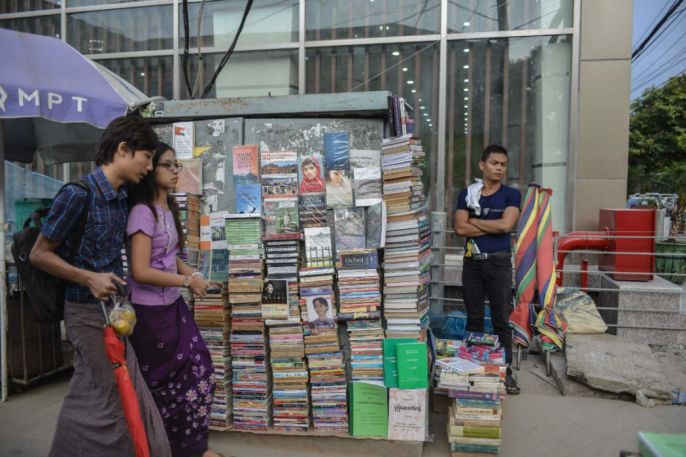
In a letter to a literary festival that was ironically posted online, Suu Kyi lamented what the advent of technology has done to Myanmar’s reading culture.
“Our lifestyles are changing nowadays as technology improves,” she wrote, according to translation in AFP. “Now our children waste a lot of their time on computer games, Internet games and social networks. Children read less because the use of technology has increased.”
“We rarely have libraries in our schools and we have no more time to read books when we are in class,” she added. “Our education system is about learning by heart and answering questions, limiting critical thinking and reading books.”
The introduction of internet access to a broad segment of society in 2014 has been generally applauded, with exceptions of the way it has been used to promote hate speech.
Suu Kyi’s comments pose a new question: Is the web ruining reading in Myanmar, as it has elsewhere? Suu Kyi was locked up for a combined 15 years in her house in Yangon, where she did not have internet access. According to AFP, she had some books and a radio.
It would be a shame if the internet rubs out books in Myanmar, but it also may be inevitable, to an extent. The 70-year-old Nobel laureate is hardly the first person to lament a decline in reading and blame it on the distractions of the web.
But she should be applauded for saying the unpopular, uncool thing and not being afraid of being portrayed as out of touch.
Myanmar (and the rest of the world) need more leaders who stand up for books.