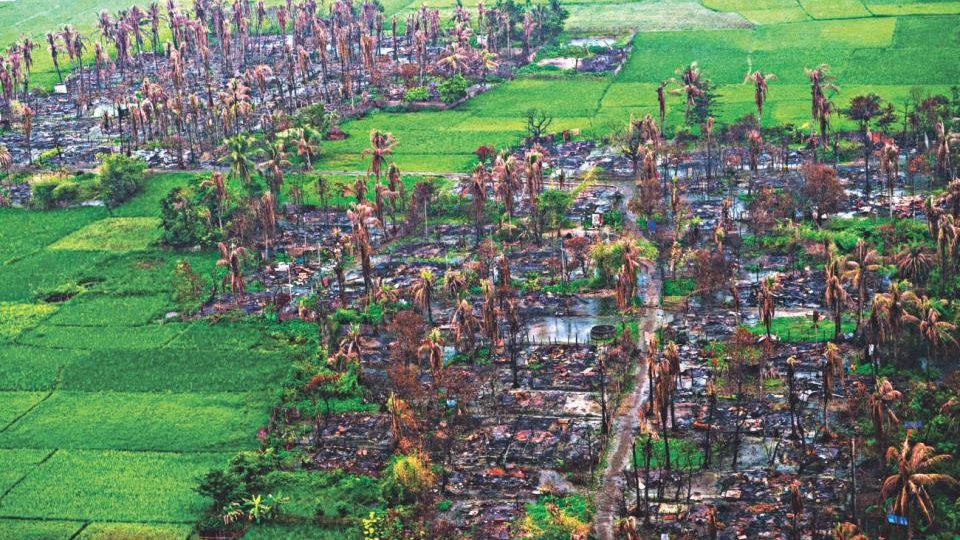
A group of foreign diplomats and UN agency heads participated in a tour of northern Rakhine State yesterday that was billed by State Counsellor Aung San Suu Kyi as an opportunity to learn the “real situation” in the conflict-stricken area. However, rather than coming away with a new understanding, most of the participants offered the same bleak picture of discrimination and displacement that the Myanmar government has labored to dispel.
“We saw on our visit the dire humanitarian need,” wrote 20 senior foreign diplomats in a joint statement released last night. “We call once more for unimpeded humanitarian access to northern Rakhine and resumption of life-saving services without discrimination throughout the state.”
Similarly, they wrote: “The security forces have an obligation to protect all people in Rakhine without discrimination.”
The tour was first suggested during a speech by the state counsellor to a gathering of diplomats in Naypyidaw on September 19. Throughout the speech, she assured her audience that the situation in Rakhine was not as dire as international media portray it to be. She urged the diplomats to shift their attention away from the suffering of the Rohingya – over 500,000 of whom have been displaced to Bangladesh since August 25 – and to focus on the suffering of Rakhine’s other communities, as well as on the Rohingya who have “not joined the exodus.”
“More than 50 percent of the villages of Muslims are intact,” she claimed. “They are as they were before the attacks took place, and we would like to know why.”
Yesterday’s trip offered neither a confirmation nor an explanation for Suu Kyi’s claims. The diplomats wrote: “We saw villages which had been burned to the ground and emptied of inhabitants. The violence must stop.”
Just returned from N #Rakhine Saw villages burned/still smoking. Empty paddy fields. Area looks deserted from above. So sad! pic.twitter.com/2dU8X8zuJ9
— Paul Seger (@spuchatun) October 2, 2017
The participants were under no illusion that the trip would offer clarity about the human rights violations allegedly committed by the Myanmar military and by the Arakan Rohingya Salvation Army. Swiss ambassador to Myanmar Paul Seger, who signed the joint statement, told Coconuts: “Participating in the trip was also a sign of goodwill that we are ready to listen to the position of the government. But the picture obviously still needs to be completed further.”
The joint statement reiterated the need for further inquiry, saying: “This was not an investigation mission and could not be in the circumstances. Investigation of allegations of human rights violations needs to be carried out by experts.”
Aung San Suu Kyi has repeatedly dismissed calls for independent investigations of abuses in Rakhine State, instead referring to internal investigations or the Rakhine State Advisory Commission, which was not mandated to investigate specific allegations of human rights violations.
In June, in her capacity as foreign minister, she banned the members of a UN fact-finding mission from entering Myanmar to investigate military abuses.
The diplomats’ statement confronted Suu Kyi’s ban head-on, saying: “We also urge [Myanmar authorities] to allow the UN Fact-Finding Mission to visit Rakhine.”
Read the full statement below: