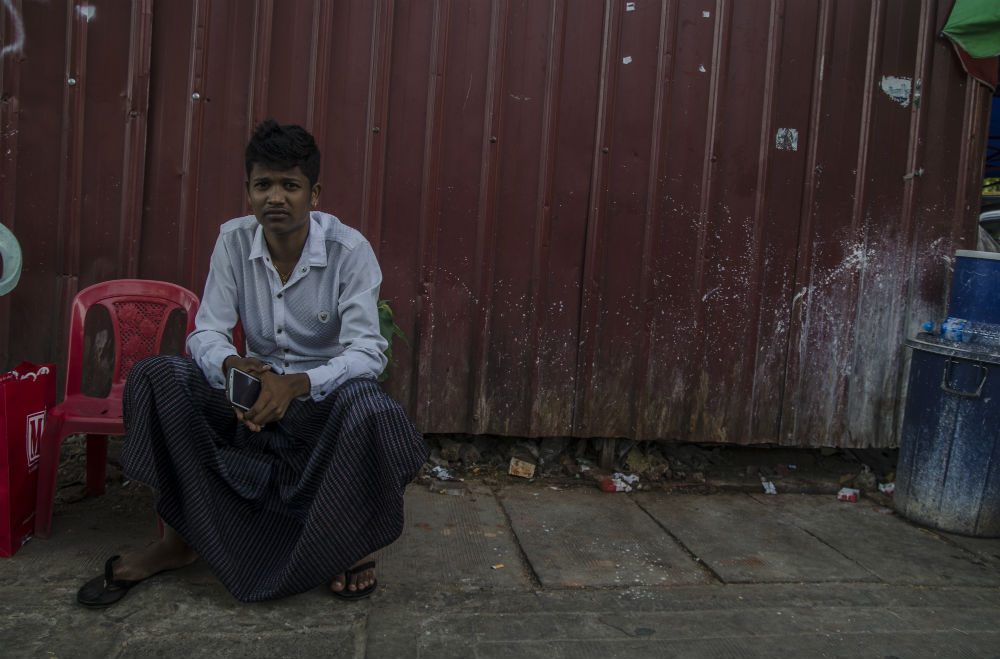

Wai Yan, 20: “God will be with them [the Rohingya], Allah will protect them. If they are from Myanmar, they should come back and the government should accept them.” COCONUTS MEDIA/AUNG NAING SOE
Since the days of British colonialism, Yangon has had a reputation for multiculturalism. There are mosques, Hindu temples, churches, pagodas and a synagogue. In some areas, the Islamic call to prayer can be heard alongside Pali chants.
Myanmar’s biggest city seems a long way from poverty-stricken Rakhine State in the western part of the country, where desperate Rohingya Muslims are taking to ramshackle boats in their thousands to escape persecution, a journey that is becoming ever more perilous.
Joined by migrants from Bangladesh, the Rohingya have now been left adrift in the Andaman Sea and Malacca Straits for weeks and in some cases, months, after being abandoned by human traffickers and pushed away by regional governments. They are starving and dehydrated, with many resorting to drinking their own urine and jumping off of boats to swim for packages of airdropped food.
While their desperate battle for survival is taking place far from Yangon, the highly sensitive issue has ignited passions among some residents who have reacted to the crisis with a mixture of sadness, anger and exasperation.
“This is discrimination against my religion,” Myint Myint Soe, a 31-year-old Muslim woman who makes a living selling betel nut, said sadly. “These people are poor and they were trapped.”
Nearly 150,000 Rohingya have been interred in camps in Rakhine State, one of Myanmar’s poorest areas, since scores were killed during an outbreak of inter-communal violence in 2012. Seeking a better life, thousands have taken to the seas, relying on human traffickers who have left them to fend for themselves in the wake of a recent crackdown on people smuggling.
Human Rights Watch has accused Thailand, Indonesia and Malaysia, who have repelled the boats, of playing ‘human ping pong’. Myanmar, which denies citizenship to the Rohingya and disputes the very term, has said it will boycott a regional meeting about the crisis.
“The situation which Rohingya people are facing in the Andaman Sea is totally unacceptable,” said Shine Win, the Myanmar country-coordinator at the Malaysian Relief Agency. “In my view, all ASEAN government and agencies are inhumane. Even humanitarian agencies and UN agencies failed to take immediate action.
“The Burmese government keeps neglecting to accept Rohingya as their citizens, which is complete nonsense.”
Several of the more than a dozen people whom Coconuts Yangon spoke to – who identified as either Muslim or Buddhist – considered the Rohingya, whom the government insists be called ‘Bengali’, Myanmar citizens.
“We should accept them because they are also Myanmar people,” said Htike Thandar Hlaing, an intern working in the city, and a Buddhist. “Everyone wants to live in their motherland. They just left because they had problems.”
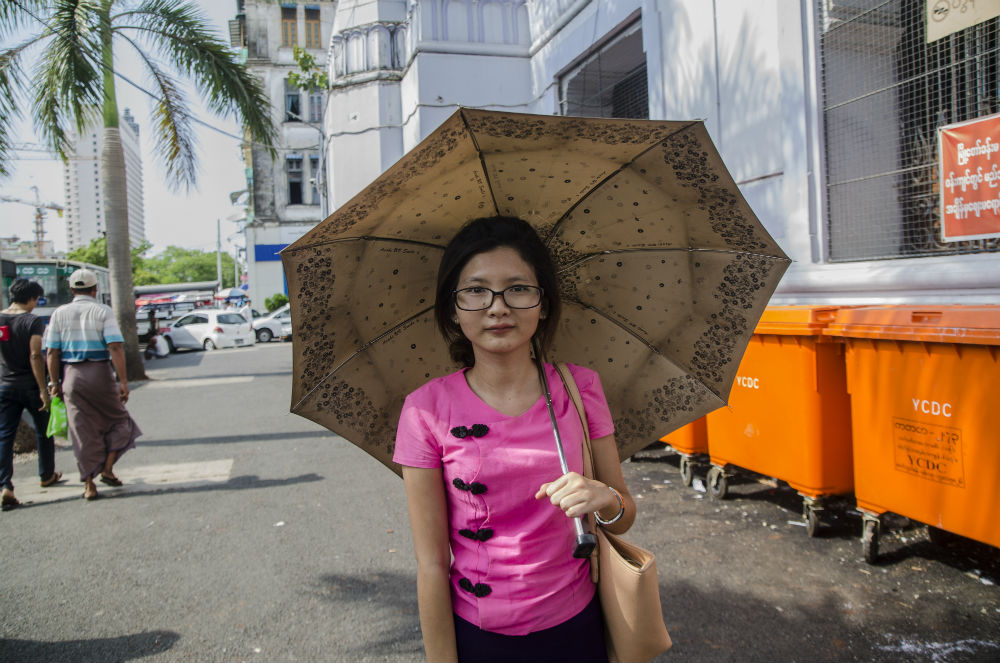
Htike Thandar Hlaing: ‘Everyone wants to live in their motherland.’ COCONUTS MEDIA/AUNG NAING SOE
Yan Shin, who is Muslim, referred to last year’s national census, the first conducted in decades, which barred Rohingya. “This [problem] is related to everyone in the country,” he said. “They couldn’t even mention their name, ‘Rohingya’, in the census – they couldn’t write the word.”
Others among the community reflected widespread confusion over the status of the minority, who are stateless, holding now-invalid ‘white cards’ or special identity documents issued instead of regular papers.
“I don’t know what the real situation is,” said Tun Myint Aung, a Buddhist student in his early twenties. “There is correct information and false information [going around].
“If they are not real citizens, there should be another country for them. We co-existed peacefully for a long time. They can stay here if they are real citizens.”
Few prominent people in Myanmar, even among human rights activists, have spoken up for the minority, which has suffered decades of persecution.
Opposition leader Aung San Suu Kyi has been heavily criticised for her silence, attributed by observers to cautiousness about alienating the Buddhist majority ahead of elections planned for November.
“These kinds of problems are political games – it’s not good,” said Myint Aung, a Muslim restaurant owner in his mid-thirties. “Our Muslim people don’t want to vote for Aung San Suu Kyi because she was silent on the Rakhine issue.”
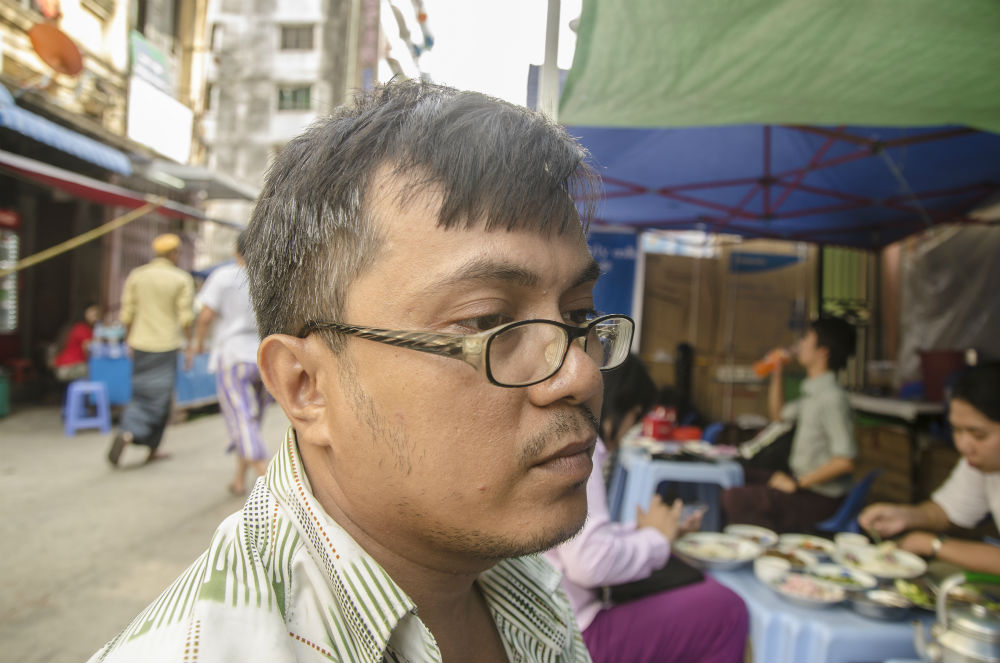
Myint Aung, a Muslim restaurant owner. COCONUTS MEDIA/ AUNG NAING SOE
For most, the question of whether to help the Rohingya is simple. Khin Soe, a 28 year old Buddhist bus attendant, spoke for many when he said: “Everyone is a human being, whatever he or she believes. If someone is in a difficult situation, you can’t keep doing nothing.
“If I saw them, I would help.”
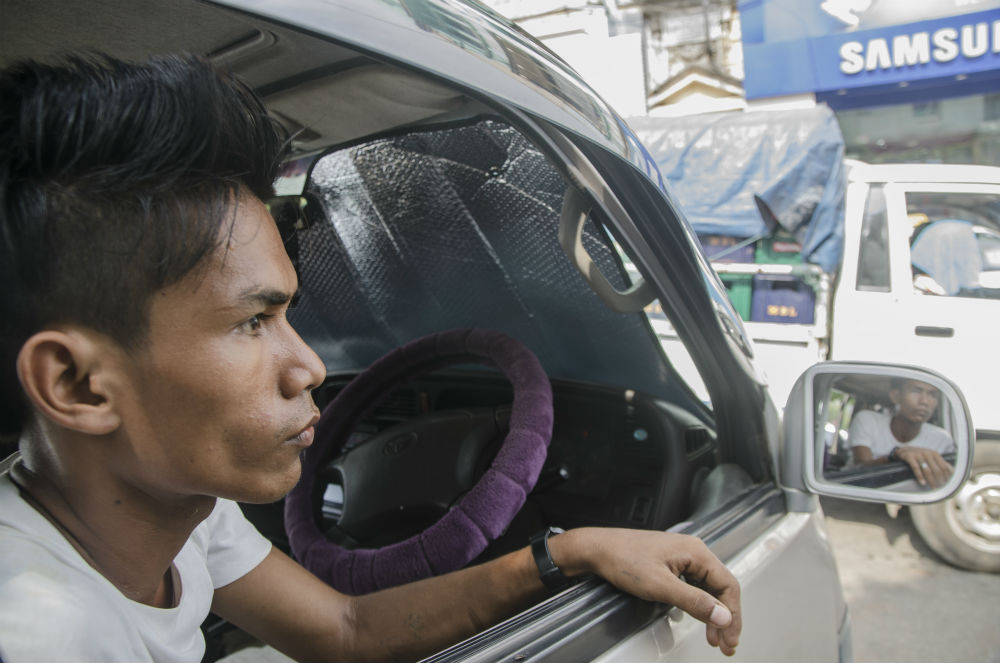 Khin Soe: ‘If I saw them, I would help.’ COCONUTS MEDIA/AUNG NAING SOE