
The grand edifice of the former Reserve Bank of India, built in 1936. PHOTO/COCONUTS MEDIA
With hundreds of buildings that date back to British rule – from intricate wooden homes to grand department stores and government buildings – Yangon’s down town ‘colonial core’ is said to be the last surviving in Asia. But as the city expands and modernises, there are fears that historic architecture and leafy streets will soon give way to high-rises and yet more traffic.
More than 1,000 heritage buildings have been bulldozed in the past 15 years, according to the Yangon Heritage Trust, an organisation working to protect the city’s architectural heritage. Since it was set up in 2012, YHT has blocked the sale of dozens of buildings and construction of high-rises as well as played a crucial role in discussions on urban development.
The founder, historian and author Thant Myint-U, is on the forefront of the struggle to keep the commercial capital both liveable and beautiful. In this Q&A, he talks about tackling corruption, the perils and positives of gentrification and the city’s many hazardous buildings.
Your organisation campaigns to protect heritage buildings. That involves many competing interests – not least the people who live there, many of whom are squatters. What is the solution?
There are many buildings, including the one where I live, where the people who own the actual apartments want to spend their own money to fix the roof, or repair the plumbing, but are prevented from doing so by the landowners whose only hope for making windfall profits is based on the buildings coming down, so that they can sell the land to someone who will use it for high-rise construction. You also have very poor tenants who might want to live in a new construction. You have businessmen who come in who want to preserve these old buildings. There are many different incentives at work, and the trick is to have policies and regulations in place that start to turn those incentive structures in a different direction.
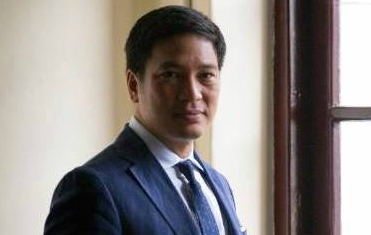
Historian and author Thant Myint-U. PHOTO/ COURTESY OF THANT MYINT-U
It has been reported that the government routinely marks buildings as ‘dangerous’ without doing safety audits, so that they can be pulled down and the land sold.
You have these land owners who no longer own the building, who may be the same people who own small construction companies or have relatives or friends who own the construction companies. They may have paid a bribe to City Hall, or used a friend in City Hall, to have a building declared dangerous which wasn’t, to pressure the tenants to leave. And that’s the mechanism that’s led to thousands of buildings coming down in the last 15 to 20 years. People in YCDC are complicit in this as well. We have to put in new regulations but in this environment it’s very difficult to enforce or monitor. It’s still a very corrupt environment.

The former Pegu Club, an exclusive drinking hole during the colonial era, is now dilapidated. PHOTO/COCONUTS MEDIA
Which are the most dangerous buildings to live in?
The really dangerous buildings are the ones that were built in the 1990s that wouldn’t withstand even a moderate earthquake. Whereas the old buildings, like the one I live in, have gone through an earthquake, cyclone and fire.
Are some of the colonial buildings unsafe?
Maybe but it’s mostly in the periphery of the city. It’s not steel-frame buildings – it’s the buildings that are just built of brick without a proper foundation. Actually, I think about 95 per cent of the old buildings that are more than 50 or 60 years old are actually in sound condition. The problem is the roof, the plumbing and the electricity. There are only a few examples where the steel frame might have been compromised and need really urgent, basic repair.
As the city grows, some residents have been priced out of the downtown area. Do you think that’s an issue?
Maybe. I think that’s not the biggest problem right now. Some degree of gentrification is probably inevitable and not necessarily undesirable. But the last thing I want to see is for the whole down-town to become a sort of Disneyland for tourists. We see that in places in China, even Singapore – it loses a lot of character. We have a huge amount of state-owned property that’s vacant or almost vacant because of the [capital’s] move to Nay Pyi Taw. One can think of a creative scheme where some of those buildings are leased out through a transparent and competitive process and the revenues are used to subsidise housing elsewhere in the old town.
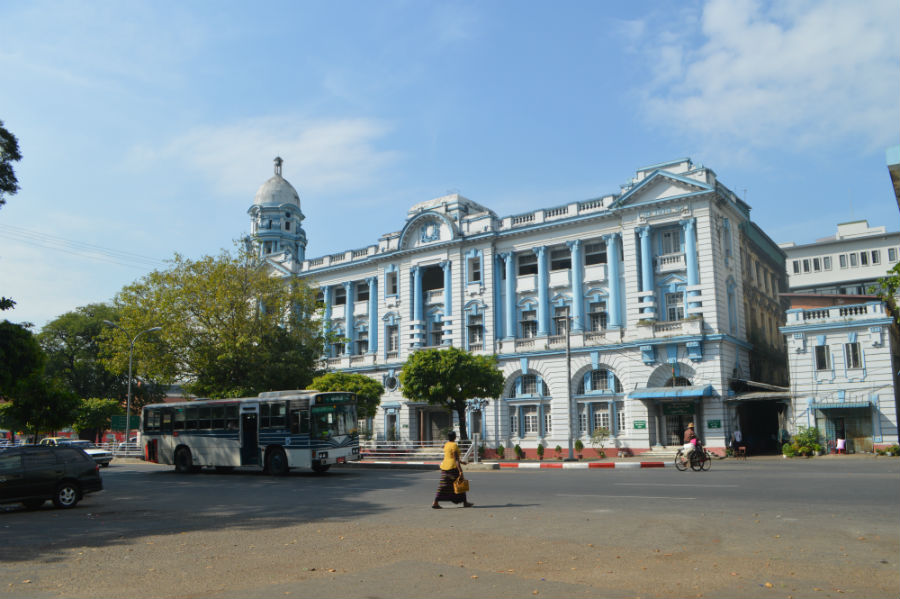
Down town Yangon is home to hundreds of buildings that date back to the colonial era. PHOTO/ COCONUTS YANGON
Do you think Yangon should expand over the river?
I’m much more partial to the idea of a very dense city. It may seem counter-intuitive given that I’m also trying to stop high-rise developments in the old town, but in my vision you would have this protected old town with medium or high-rise developments just adjacent to it. It’s much nicer to live in a city where you can walk or bike or easily use public transport rather than commuting by car. I would rather not have a sprawling city.
Will the city try to narrow the pavements as they have in the past, in an effort to ease traffic?
I don’t think they could narrow it more than they have, and I think it’s been a disaster. It’s more a question of trying to extend the pavements back again, but that could be 10 or 20 years in the future. Cities often go through cycles, where you first knock everything down and prioritise cars and then you regret that, and move back. Maybe it’s inevitable that we have to go through this cycle to some extent, protecting what’s possible, so that when in 14 or 20 years people appreciate the value of the old architecture, it’s not all gone.
Are there any examples of good architecture going up?
No. Not really. Actually that’s a big part of the problem. Even in the old town, the thing to do is not necessarily to prevent new buildings. There are many streets in which there are a lot of buildings built in the past 20 years which are not safe at all and which should come down. Those shouldn’t be replaced by ersatz colonial-style buildings. It could be really nice contemporary architecture and even some of the old colonial buildings, especially if they’re not on special streets, could be replaced. But it has to be part of a plan.
Do you look elsewhere in the region for ideas?
I think we’d want to steer away from almost every example in the region. The default is that the city repeats many of the experiences of Bangkok and Jakarta and grows by five million people without any proper urban planning, and just becomes a much worse place to live. There are bits of Southeast Asia, urban areas, which have been well protected and preserved like George Town, Penang. But that’s a much smaller place, and so in terms of big cities I think we have to look further afield to Europe or North America, for example.
What do you think Yangon should look like in 2030?
For the next 15 years the most important thing for the city will be very cheap public housing, electricity, the port, the road to the port, jobs for unskilled workers. But, in 15 years times, if we can graduate to being a medium-income country, having a unique old town that’s not just for tourists and that’s really beautiful – with bookshops and restaurants – that will be an asset worth a huge amount of money.