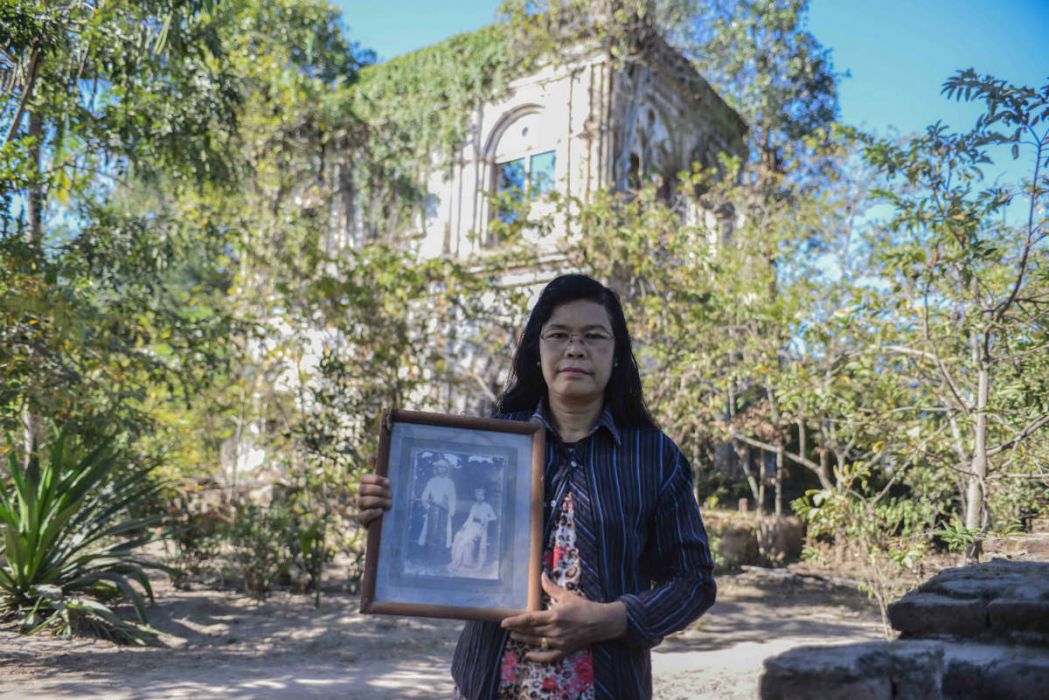

Aye Aye Kyu stands with a portrait of her grandfather in front of his old property in Phyo Kwei village, Naypyitaw. Photo / Aung Naing Soe
Naypyitaw, we are led to believe, is a city without history.
Founded 10 years ago, the capital is full of gargantuan ministries and government buildings. Visitors marvel at the 20-lane highway and chuckle at the gaudy parliament. It is easy to think the whole capital was built from a blank slate.
But of course that’s not true. Naypyitaw’s local residents, who live on the periphery of the big roads and the towering buildings, aren’t newbies. Many lost land when the capital was developed. Some communities have been around for hundreds of years, and a few older examples of architecture have survived.
On a recent trip there we documented some of the buildings that are still standing.
Most were built in the 1920s and 30s and are in Kyi Daung Kan, a cluster of villages in a township that was the battle ground for a recent election fight between a poet and a former general.
The NLD’s Tin Thit, a local businessman, activist and poet who won, ran his campaign out of a cream-colored former residence which still has the date, “1930,” etched into the top.
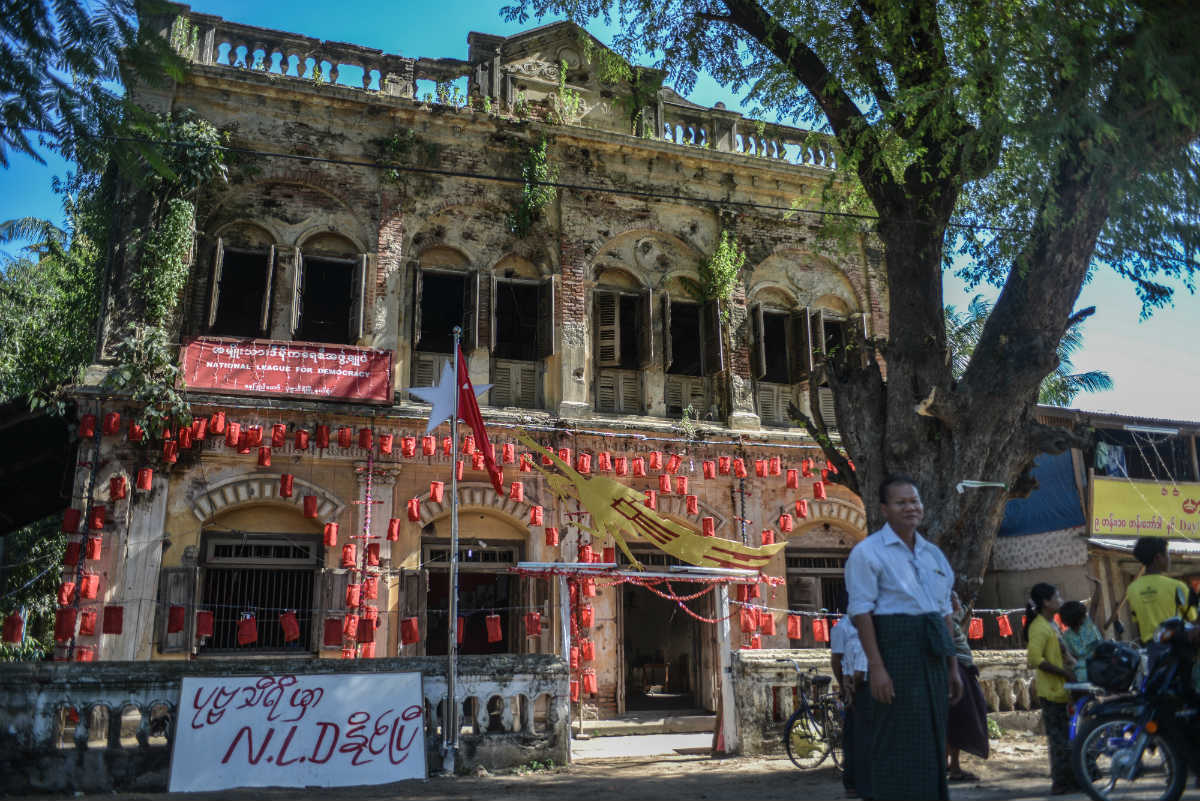
Local residents told us that a succesful trader briefly lived in Kyi Daung Kan, and the buildings date back to his time in the community.
Across the street from the NLD’s campaign office was another residence dated to around the same time.
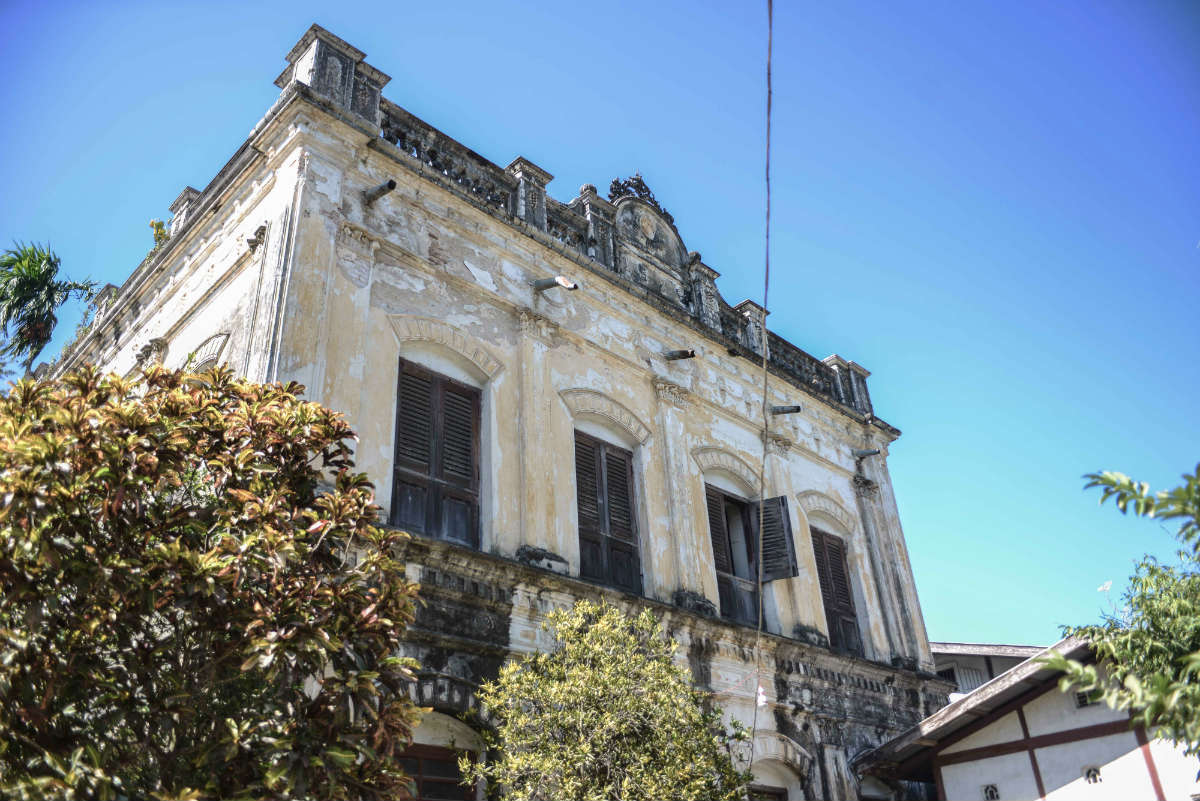
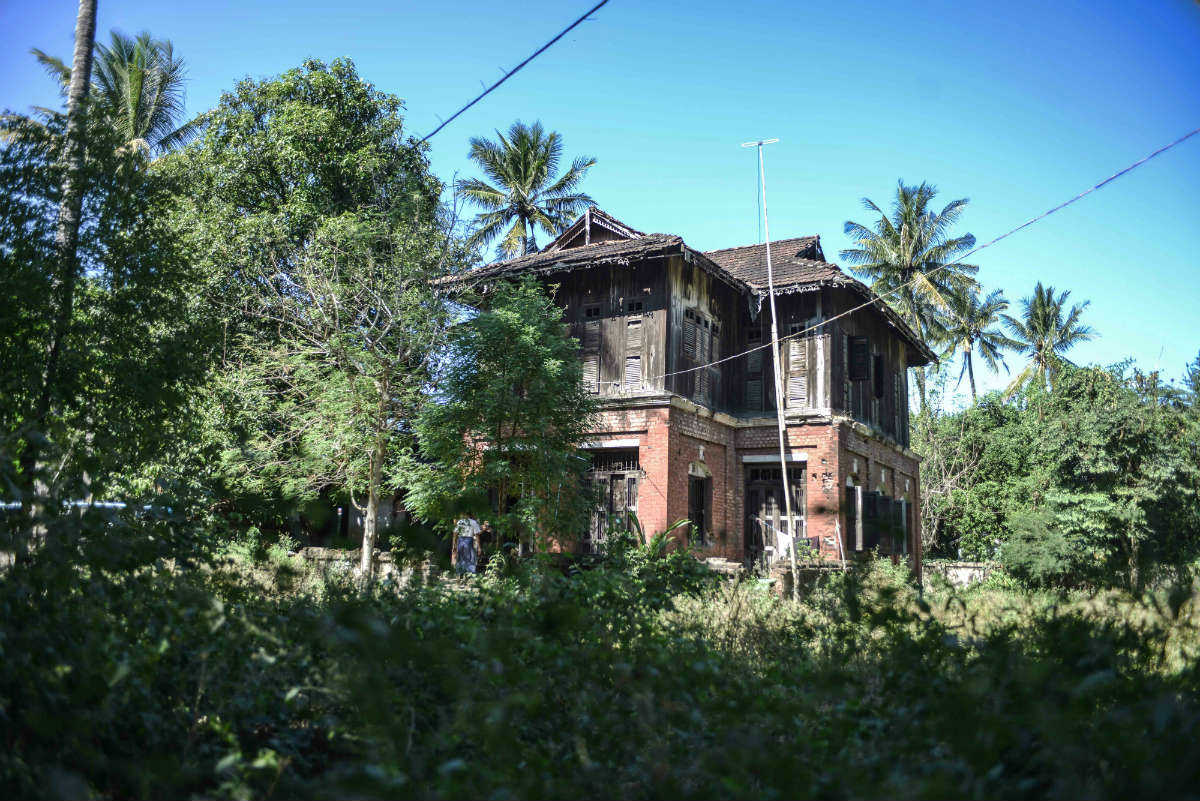
Once word got around that we were interested in the colonial history of the town, we were led to another, possibly older, residence not far away. It was in the middle of a small field and the current occupants were farmers. Cows and pigs were tied up outside.
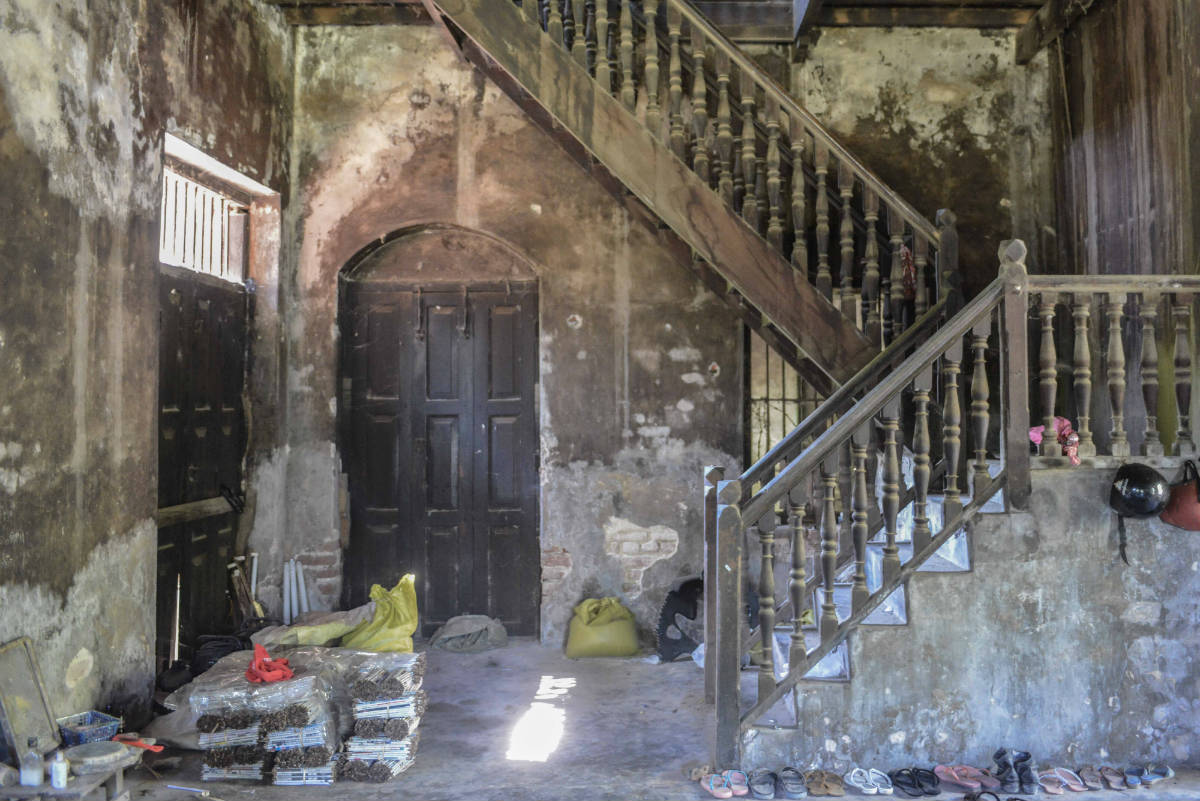
The owner let us in, where we shot this photo of an old wooden staircase.
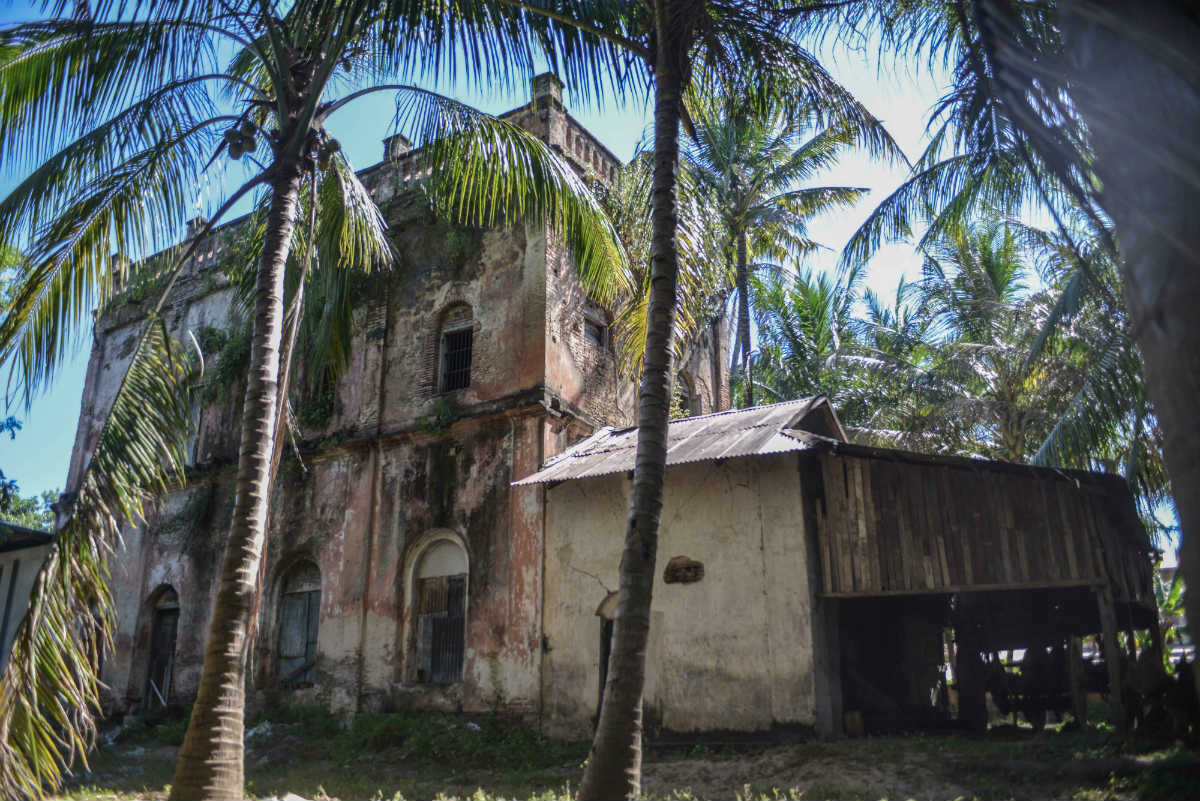
A volunteer hopped on his motorbike and then took us to the residence of the former trader, whose house was now being partly used as a place to store rice. Here is the view from the dilapidated courtyard outside.
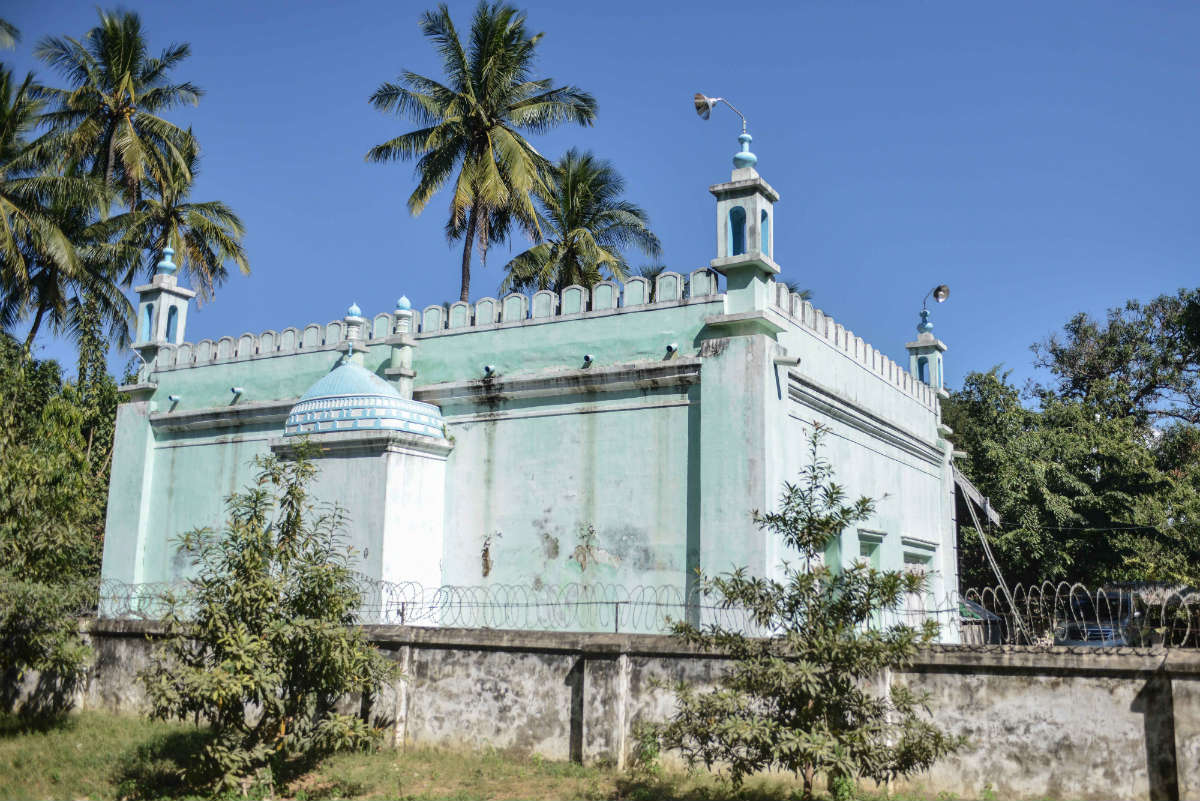
The trader was Muslim, and two mosques dating to the 1930s still stand. The community has about 60 or 70 Muslim residents.
After leaving Kyi Daung Kan, we drove to a village called Phyo Kwei, where we were told some colonial buildings remained.
Not long after arriving in the village, another volunteer brought us to the site.
A wooden house stood between two magnificently decaying structures. Both had no roof or floor and had been almost completely taken over by the environment.
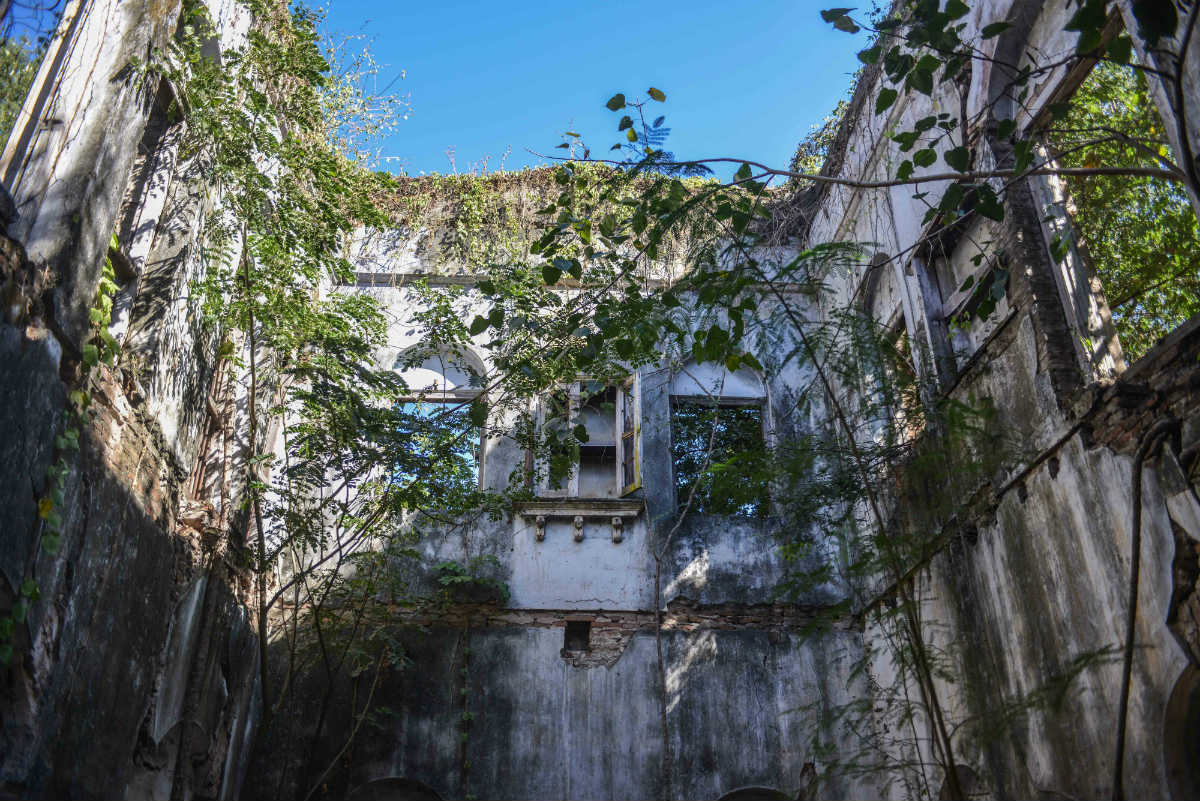
We ventured inside.
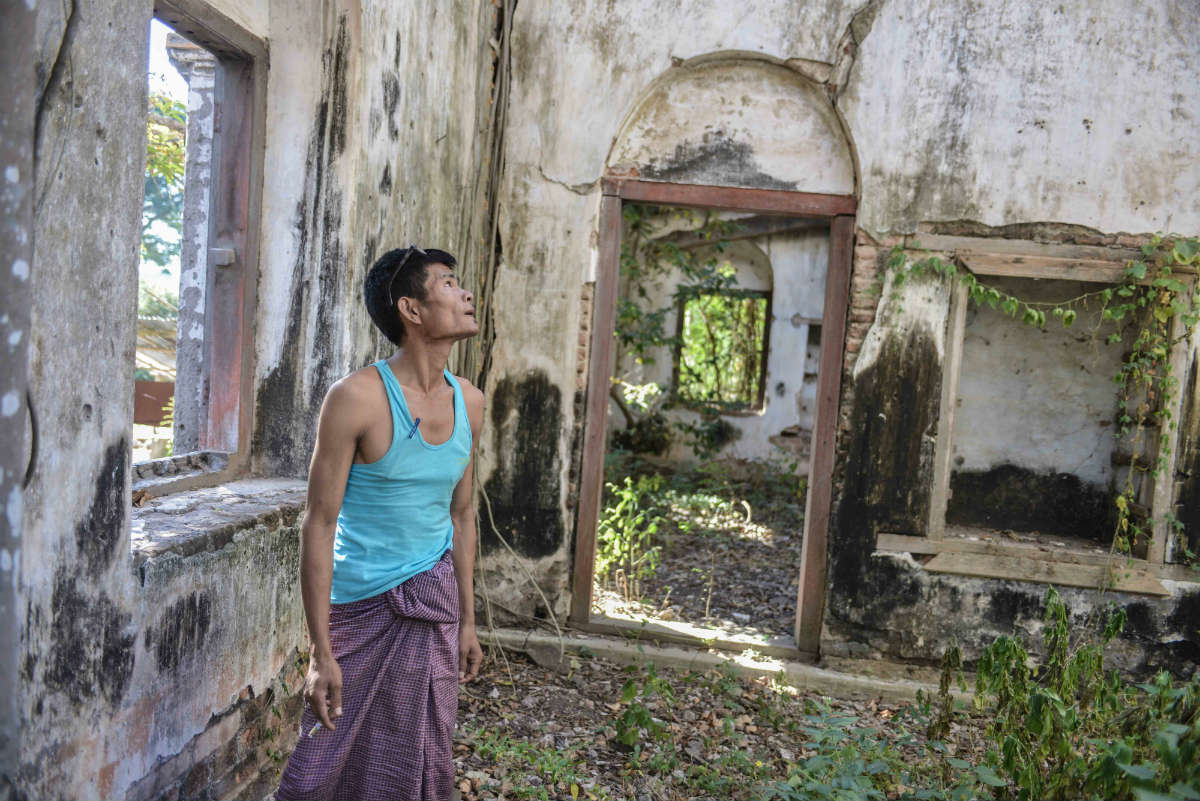
The current residents emerged and told us that the properties belonged to their grandfather, the village chief under the British administration.
Aye Aye Kyu told us she was the granddaughter of the village chief, whose portrait she still had. She stood in front of one of the buildings and posed with the old portrait.
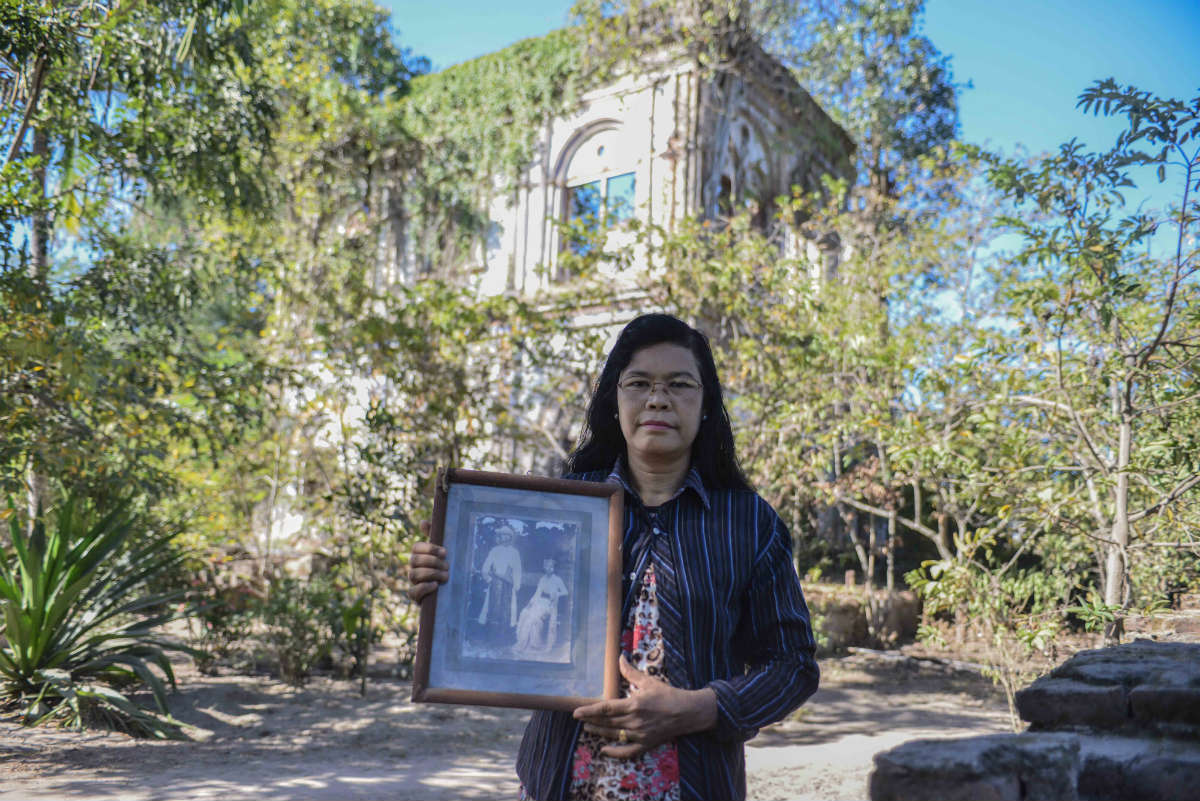
It’s not clear what will happen to these properties. No one spoke of plans for preservation. Aye Aye Kyu said she was talking to her family about what to do.
If anything, they are a reminder that Naypyitaw is not as new as we thought it was. Under the sparklingly clean highways and manicured lawns is a more complicated history waiting to be discovered.
Photos / Aung Naing Soe