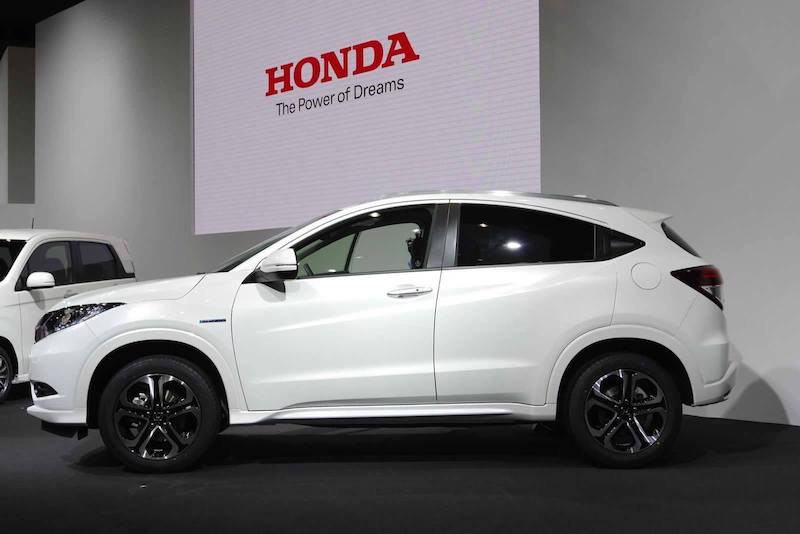

The Wall Street Journal recently acquired internal emails and documents from Uber, and boy did they reveal something disturbing. Those Honda Vezels that make up quite a number of Uber Singapore’s fleet? Yeah… they kinda have a tendency to catch fire.
The ride-hailing company has bought and leased more than 1,000 defective Vezels to its drivers; a car model that was actually recalled in April last year for an electrical component that could overheat and catch fire. In fact, one already did in January this year — local Uber driver Koh Seng Tian had his vehicle bursting into flames after dropping off a passenger. According to the WSJ report, flames burst from the dashboard, melting the car’s interior and cracking his windshield.
Uber’s statement to WSJ was that they took “swift action” to rectify the issue with the help of the Land Transport Authority (LTA) and technical experts. “But we acknowledge we could have done more—and we have done so,” said an Uber spokesman.
Though it was unclear if Uber’s main team in San Francisco knew about the defective Vezels before the incident, internal emails and documents revealed that the company’s managers in Singapore were indeed aware of the Honda recall, and continued to rent them out to drivers without conducting the needed repairs.
WSJ links the episode to Uber’s reckless drive for expansion, a move that sees the company often violating local laws. Struggling to find enough drivers in Singapore — mostly due to the high costs of owning cars — they launched Lion City Rentals Pte Ltd in 2015 to rent Uber-owned cars to drivers. Even after Honda issued a recall for gasoline-powered models of Vezels in April 2016, advising owners to get them serviced ASAP, an internal Uber report showed that the company continued to purchase 1,065 of them. Even more shocking is the fact that the Vezels they bought had the faulty electrical component that could cause overheating. As of January 2017, the cars remained unfixed.
Documents obtained by WSJ further revealed that Chan Park — Uber’s general manager for Southeast Asia, who Coconuts Hong Kong spoke to last month — supported the notion to leave the defective cars on the road, despite some of the company’s managers urging the opposite. Uber’s Singapore general manager Warren Tseng noted that taking the Vezels off the road would cost the company SGD1.4 million a week in driver wages, rental fees and parking costs, and that it would “send panic alarm bells”.
Uber’s plan was to let their drivers carry on with the combustible cars while they waited for replacement parts. To be fair, Uber did ask the drivers to bring their Vezels to repair shops to disable the faulty component — a short term solution that they believe would lower any risks. But it was after Koh’s fiery experience that Uber required their drivers to send their Vezels for servicing, informing them about Honda’s recall. The overheating and fire dangers weren’t mentioned.
LTA was also informed about the case, and they approved Uber’s plan to fix the cars. According to an internal report, Uber blamed LTA for failing to maintain a list of recalled vehicles and checking the list against new cars entering Singapore.
In February this year, Uber Singapore even had a party to celebrate the company getting through “the Vezel snafu”, despite 65 percent of the defective cars still having had the faulty parts replaced at the time. Ouch.
An Uber spokesman, however, assured WSJ that all the Honda Vezels have now been fixed. So that should ease your fears about getting your next Uber ride in one of ‘em. Or not.
In response to our queries, an Uber spokesperson had this to say to Coconuts Singapore (which we suspect is the same boilerplate statement given to WSJ):
“As soon as we learned of a Honda Vezel from the Lion City Rental fleet catching fire, we took swift action to fix the problem, in close coordination with Singapore’s Land Transport Authority as well as technical experts.
But we acknowledge we could have done more — and we have done so. We’ve introduced robust protocols and hired three dedicated experts in-house at Lion City Rental whose sole job is to ensure we are fully responsive to safety recalls. Since the beginning of the year, we’ve proactively responded to six vehicle recalls and will continue to do so to protect the safety of everyone who uses Uber.”