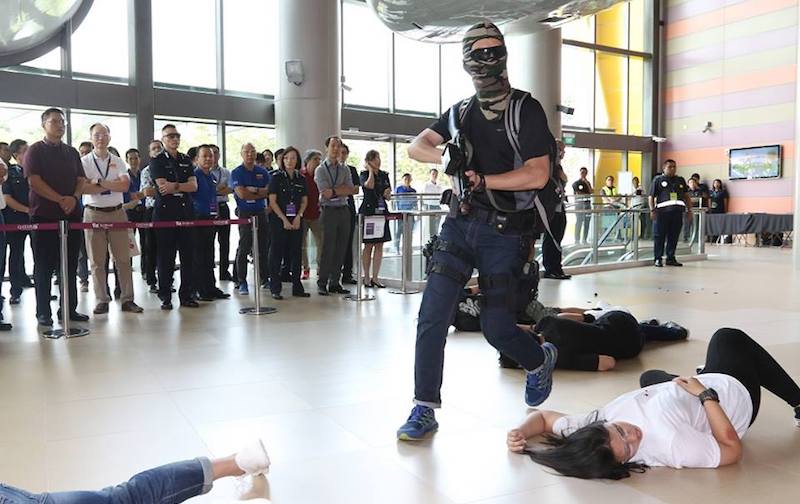

A proposal by Singapore to give police broad powers to block electronic communications at the scene of terror attacks was criticised Thursday by rights groups as stifling press freedom.
The interior ministry earlier this week supported a bill that would allow police to stop anyone within the vicinity of an incident from taking photos and video or communicating about police operations through text and audio messages.
They argued that during terror attacks elsewhere live broadcasts had unwittingly helped assailants to anticipate moves against them.
Fears are growing that the affluent city-state is a prime target for a militant attack, with the government warning it is a matter of when, not if.
However, activists said the proposal risked further damaging what they said was Singapore’s already poor record on press freedom.
“Singapore’s proposed ban on photographing or videoing terror attacks would black out the news precisely when the public needs to be accurately informed,” said Shawn Crispin, Southeast Asia representative of the Committee to Protect Journalists.
Media watchdog Reporters Without Borders (RSF) said there was no law like it in the world, with China’s anti-terrorism legislation the closest thing to it.
Daniel Bastard, from the group’s Asia-Pacific division, criticised the “poorly drafted bill”.
“It would be a serious breach in Singapore’s already poor record regarding freedom of the press,” he said.
Singapore’s domestic media is tightly controlled. RSF ranks the city-state 151st out of 180 countries in its World Press Freedom Index, with a number-one ranking being the country considered to be doing the best.
Singapore authorities defended the draft legislation.
“It is not meant to restrict press freedom or public access to information,” the Ministry of Home Affairs said in a statement.
It said restrictions would apply only at specific locations and when security operations are ongoing.
“There is no intention for the Communications Stop Order to be used widely,” the ministry added.