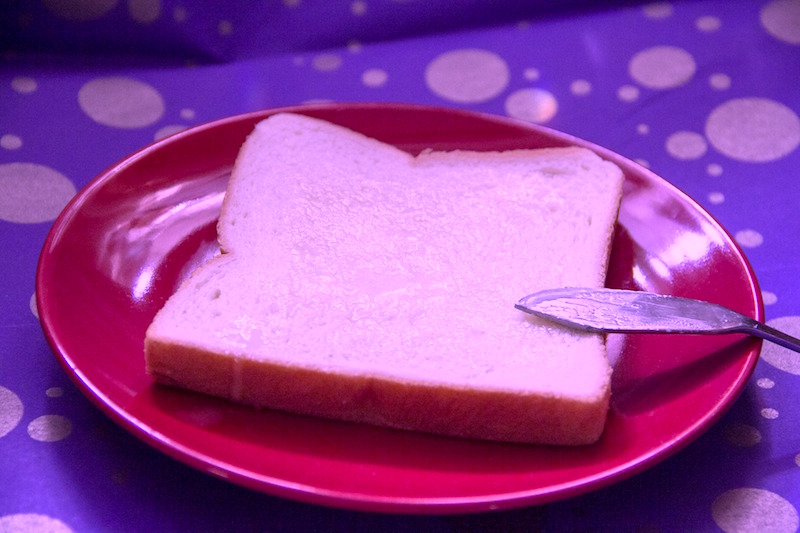

Health nuts unite — your many years of service staying away from the blasphemous carb-filled entity that is bread may be coming to an end thanks to one food scientist from the National University of Singapore.
Professor Zhou Weibiao might have found an end to our anti-gluten war against our puffy, wheaty staple. In what could be the first engineered super-food of the baked goods world, Zhou invented a new kind of bread that seems to be the greatest thing since sliced ones.
According to him, his newfangled purple bread (yep, literally purple in colour) is said to break down slower than regular milquetoasts; up to 20 percent slower in digestion rates. He claims that his purple bread is made entirely from natural compounds and is rich in cancer-fighting antioxidants, meaning we can enjoy stuffing our gobs without the bloat-y aftermath.
In contrast, most bread contains a high amount of rapidly digestible starch, which causes it to be absorbed into the bloodstream quickly — in turn causing a sharp increase in blood sugar levels. Rapid digestion of bread may also result in people consuming more bread than required, and excessive consumption could of course lead to obesity if kept unchecked.
Purple bread however is said to be anthocyanin-fortified; basically a healthier alternative to the standard ones.
How he manages to do it is by extracting anthocyanins from black rice and infusing them into bread, while still making the anthocyanins well preserved in the crust when baked. Also, the anthocyanins give the super-bread a distinctive purple colour as an odd bonus. Scientific studies have shown that anthocyanins are rich in antioxidant properties and may help prevent cardiovascular and neurological diseases, cancer, and inflammation.
“The challenge was to see if we could change the formula of bread, without changing the smooth texture of white bread that people really love,” said the professor to CNN.
Fair warning though, Zhou mentions that even though it may be healthier, you’re still consuming the same nutritional value as typical bread.
“You are eating the same amount of starch and wheat flour, so the nutritional value is the same,” he notes. “The key idea here is slowing down the energy release, so you use those calories over a longer period of time”.
While it’s not commercially available yet, Zhou and his team are exploring opportunities to work with industry partners to introduce purple bread to the market. One question remains though — will it taste the same when we slather on our various jams, sauces and meats on it? It better be, because if not, then it’s no use innit?