
Railing and complaining against transboundary haze may have led to some results (we haven’t seen prolonged periods of smoggy days so far this year) — but what if our true respiratory adversary is something under the radar?
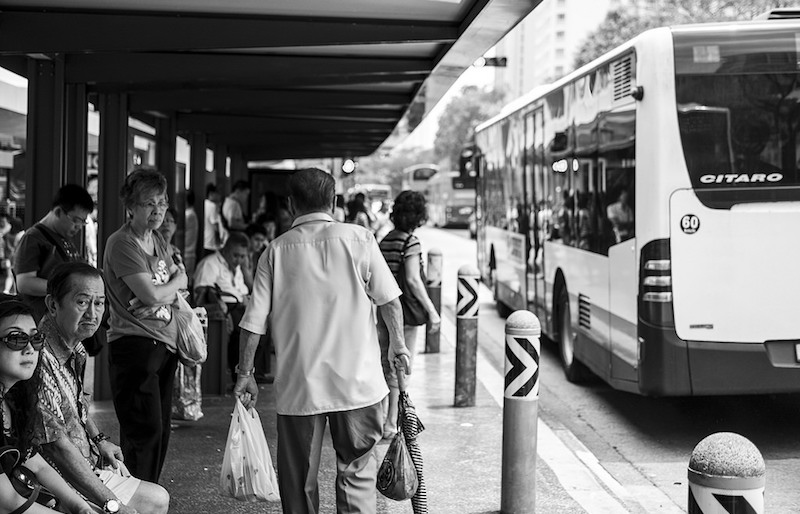
The invisible enemy, it seems, is none other than the toxic gases and particles we unknowingly breathe in at bus stops across the island.
Channel NewsAsia revealed the worrying findings of a study done by the students of the National University of Singapore and air pollution expert Dr Erik Velasco. What they found was that commuters could breathe in three-and-a-half times more toxic gases than at ambient levels when waiting at bus stops.
Bus stops are guilty of being hotspots of exposure to tiny particles from vehicle exhaust fumes — particles that permeate the bloodstream and can cause or worsen existing pulmonary and cardiovascular diseases such as lung cancer and asthma. Yeesh.
Measurements were taken over a period of two years at five bus stops across VivoCity, Little India, Bugis, One Raffles Quay and the National University of Singapore. Let’s just say you shouldn’t linger too long at the Bugis bus stop; it’s the one with the highest frequency of pollutant spikes. VivoCity’s comes in as the second-most polluted spot.
The research team suggests that commuters reduce waiting times at bus stops by checking bus arrival schedules ahead of your trip. Whatever you do, just don’t linger at bus stops too long if you want to keep your lungs clean.