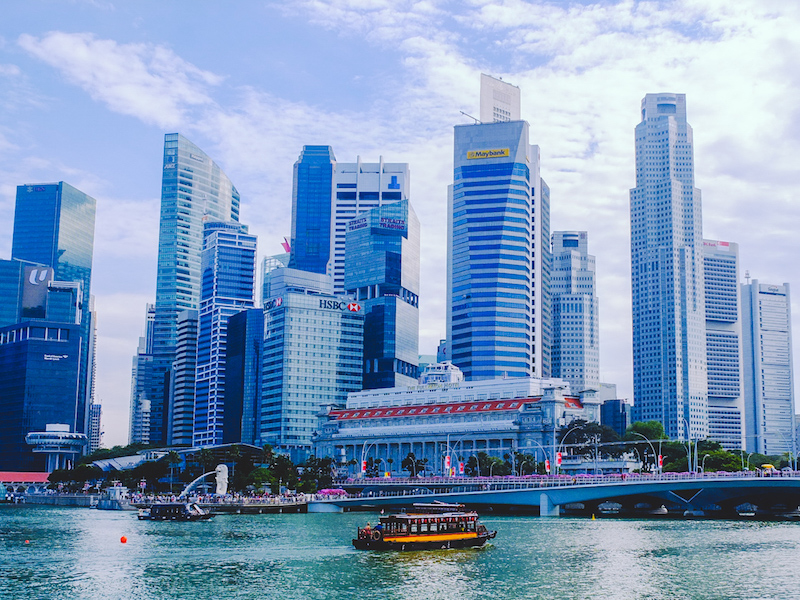

Despite its many laudable achievements, facets and merits to living in Singapore, there can still be a similar volume of reasons why it’s a relatively shitty place to be in.
The question of why people hate Singapore so much has been raised repeatedly for years, and it’s always the same answers — high costs of living, draconian laws, failing public transport systems, and so on.
The very same question recently popped up on curated Q&A website Quora, in which someone blatantly asks “Why do people hate Singapore?”
Enter self-proclaimed “foreign talent” and “angmoh” Theodore Shawcross, who moved here from the United States a decade ago with his family and has never looked back. Calling Singapore “the closest you can get to a near perfectly run country”, he hits back against the negative sentiment that Singapore is not a good place to live in a passionate discourse.
“Singapore has lived up to all my expectations of enabling my children to receive a world leading education, to grow up in a country bereft of violence, misconduct and disorder, and enabling me to work alongside one of the most highly educated and skilled pool of talent that happens to speak in my native tongue, to enable my wife and I to mingle with people from all around the world in a tight knit environment, to live in an essentially equal country without overt racism because to be Singaporean is to accept that anyone can be Singaporean, regardless or race and religion, now that’s priceless.”
You can read his whole argument for why the little red dot is the best on the Quora page. In case you can’t get through the whole wall of text, the highlights are below:
On the relatively better quality of Singapore’s public transport system

With the exception of Tokyo and maybe Sydney, most of the capital cities in the world are filthy, dangerous, crime-infested and their public transport systems are failing ALL THE TIME. And I do mean “all the time”, not the once a month kind of deal that we have to deal with SMRT.
On the cost of meals

It’s impossible to go out for a proper meal in London without having to spend more than 50 SGD on your meal, whereas I can take a train to any shopping mall with a food court and spend less than 10 SGD on a full meal, sitting in clean seats and an air-conditioned environment.
On why the cost of cars have to stay expensive

In America car ownership would be something of a necessity, because it is virtually impossible to travel without having a car. I drove an hour from where I lived to the Stanford campus every day for 5 years. However, you can only imagine the traffic congestion I have to deal with on the I-80 every day. Making cars affordable in Singapore is just going to make the roads more congested, at which point it’s not going to make sense to own a car anymore.
On the state of racial equality

Singapore is undoubtedly multiracial, and to maintain this heterogeneity comes at a huge price, it’s a price that the founders of this country felt it was worth paying, and it did pay off. Although I’ve never really experienced it firsthand on the tube or on buses, but everyone in England will always have that friend with a story to tell about racial conflict in public places. I’ve also lived for more than half a decade in the US, essentially a country still deeply ensconced in racial tensions, especially in southern states. Singapore is a country that has essentially solved that problem.
On how freedom of expression is regulated

Only the law can protect the rights of the people from being offended, racially or religiously. The question on whether the right of being protected from emotional harm or the right to be able to express our ideas freely has an obvious answer. People want to be able to say what they want, but they aren’t willing to bear the consequences that being emotionally fragile human beings, violence is just one step away from offensive remarks with racial or religious undertones. This brings us to the question of “is prevention better than cure”. Do we want to let loose the darkest sides of our psyches in hopes that Singapore will continue to be an inclusive society?
On how people should educate themselves when demanding for change

But people need to understand one thing, if you want to demand the government to do something about your problems, please make sure you’ve done enough academic research about whether or not your problems are essential problems, or are they problems that are just characteristic of a modern metropolitan city, for if they are, there’s really no solution to many of those problems.
On why people hate Singapore

Well my only answer is blame Hollywood, and blame ignorance. Young people are a pain in the ass, we’ve all been through that phase. They just need to grow up and realise that you cannot always get what you want, you should not always get what you want.
Such a passionate polemic however didn’t seem to sit well with the folks on the other camp, according to Shawcross who received quite a bit of hate for his answer.
“I’ve received a lot of abuse on the internet these past few days, so I felt that I had to clarify that I do not claim to know all about Singapore, or any at all, everything I said here are based on my observations living in the country,” he noted.
“I based my responses on my experiences in the US and UK, so it’s not mental to come to the conclusion that you have to have some level of control otherwise they can be no harmony. It’s nice to have so many people show their appreciation for my answer, but this whole questioning of my identity malarkey is getting out of hand, I do not work for the PAP, nor can I vote in elections, I’m sure if I was writing this as propaganda, there would be much more I should’ve said.”