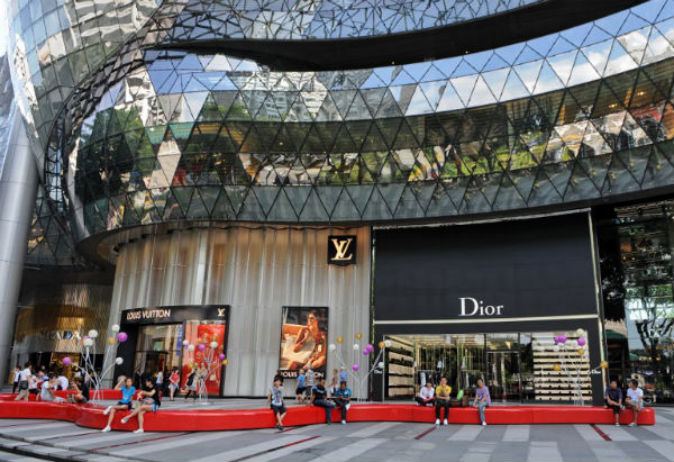

Chinese tourists are not shopping in, if not altogether avoiding, Singapore.
According to a Bloomberg report, the allure of the Great Singapore Sale (GSS), which supposedly sees retail prices slashed by up to 70 percent from June to July annually, has worn off, no thanks to the city-state’s strengthening currency and a 7 percent sales tax a Chinese tourist would not have to pay in neighbouring Hong Kong.
One visitor Zhu Liang told writer Brian Leonal, “We will never come here again to shop on purpose.” He said he’d purchased a Loewe handbag for his wife during the Sale and discovered he’d paid more than what it would’ve cost in Hong Kong, due to all the above-mentioned reasons.
Zhu’s also turned off by the way the Singapore dollar is strengthening against the Chinese currency: “If we change our renminbi to Hong Kong dollar, it seems like we have a huge amount of money. With Singapore dollar, you just feel like it is little money.”
And it’s clear this bleak attitude has impacted the local retail and tourism market.
Brian Leonal wrote, “visitors from China to Singapore dropped 27 percent in the five months through May from a year earlier amid slower economic growth on the mainland and the impact of a new Chinese law that clamed down on cut-price shopping tours”.
Kesri Singh Kapur, head of business in Asia at the All-Futtaim Group which operates Robinsons and Royal Sporting House in Singapore, offered that the city-state is also struggling in terms of regional differentiation and hotel pricing.
He said that Singapore used to have the advantage of being slightly different from its neighbours five or 10 years ago, but popular international brands are no longer unique to the city, thus the loss of ‘aura’.
“Hotels are a little more expensive,” said Kapur, who estimated the revenue during the GSS period to have shown a two to four percent decline from 2013.
Photo: AFP / Roslan Rahman