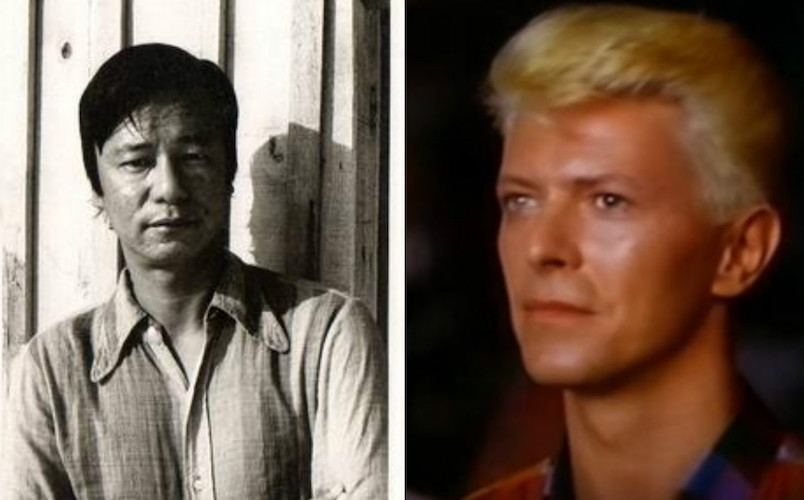

More stories of the late great David Bowie and his fondness for Singapore. Filmmaker Kagan Goh — the son of late cultural medallist Goh Poh Seng —recounted on Facebook about Bowie’s special relationship with his dad, who risked everything to bring the icon here.
In case you don’t know who Goh Poh Seng is, he was a bonafide Renaissance man. A doctor as well as a businessman, dramatist, novelist and poet, he was a major figure of cultural aspiration for Singaporeans, and that culminated when he received a Cultural Medallion in 1982 for his contributions to literature. He struggled from Parkinson’s Diseases in his later years and passed away in Vancouver, Canada on Jan 10, 2010.
One of Goh’s many achievements of course was the fact that he was the sponsor and promoter of David Bowie’s first ever concert here. Any other times, it would have been perfectly normal but in an era where Singapore was cracking down on rock & roll and other “socially undesirable” stuff (including long hair), it was pretty risky. Initially wanting to bring Duran Duran, Goh decided instead to bring Bowie to our shores, the biggest rock musician of the time.
Read on below from Kagan’s point of view, and how Bowie left a life-long impression in the Goh family.
Ziggy Stardust makes landfall in Singapore
My father and I were waiting in excitement for Bowie to arrive at the Singapore international airport. When he cleared customs, my high school friend, Bernice Heng, got the honor and privilege of presenting him with a bouquet of flowers.
Bowie was tall, towering over everyone. He was dressed in a baby blue three-piece suit and was smoking a cigarette. He bent down to kiss this short and rather shy and overwhelmed teenage girl on the cheek.
The photographers from the press and newspapers were banned from printing the photograph in the newspaper taken of Bowie kissing my teenage friend because he was smoking a cigarette, something which was frowned upon and discouraged by the government campaign urging Singaporeans to quit smoking.
Bowie meets Goh Peng Seng
My father invited Bowie and his musicians to our home to listen to a live performance by classical Chinese musicians. Bowie’s band came but the man himself declined, saying that he did not “fraternize with concert promoters.” My father sent David Bowie a message through his personal assistant, telling him to tell Mister Bowie that “he is only a rock star. I, however, am a poet.”
Bowie came to meet my father in person hat in hand to apologize for his rudeness. My father told Bowie that two of his songs had been banned from radio play. “This rock & roll business is more than just drugs, sex and rock and roll and making money, it is about freedom of speech. Perhaps people in the West take this freedom for granted. But I know poets and writers in Asia who have been imprisoned for their writing. Here, freedom of speech is something people are willing to fight for, even die for.”
David Bowie, live in Singapore
Fired up by my father’s words, Bowie kicked off his concert with the two banned songs, galvanized by his band attacking the stage like a squad of guerilla soldiers on the rampage.
This was the first big rock & roll concert to come to Singapore. Unfortunately, the concert was poorly attended. Singaporeans did not know what to make of this “rock & roll business.” Bowie played to a small but enthusiastic audience. Undeterred, Bowie sang with passion as if the stadium was packed to capacity. Bowie, the consummate professional went on with the show, no matter whether playing to a full stadium or an audience of three hundred, he gave his best in his performance.
Ricochet
He spent more time in Singapore than any other country on his tour. At the time, Bowie’s publicity and promotional team were making a documentary about his Serious Moonlight Tour in Singapore called Ricochet.

A documentary camera crew followed him around wherever he went. Bowie would be driven in a local taxi cab to visit different tourist attractions of the city. My brother Kajin and I were privy to the filming of one segment of his documentary. We witnessed the documentary crew film Bowie as he got out of the taxi and walked into the lobby of the famous Raffles Hotel. He did this once, twice, three times, then again and again until we lost count.
This was my first experience of documentary filmmaking. I was struck by how completely staged and false the set up was of the film shoot. Now I myself am a documentary filmmaker. Today I understand what I did not know back then, reality is subjective and often what seems natural is rehearsed and staged.
Bowie on his first Singapore show
In his Serious Moonlight Tour book, Bowie could have written about the whole tour or about any country but dedicated the entire foreword to his recollections of his time in Singapore. Here is an excerpt from the book:
“The Singapore authorities are not friendly toward rock & roll. Two of my songs, ‘China Girl’ and ‘Modern Love,’ were banned from radio play. “Restricted,” as they say.
Our wonderful and fearless promoter, Dr. Goh Poh Seng, risked his livelihood, bank balance, and even his freedom to get me and my band into his country. When the authorities heard I was going to do an impromptu guest appearance at his youth club two days before our major gig, they busted it, banned the resident band for indecent performance, and threatened Poh Seng with imprisonment if a guest of the club – (me) – should get up on stage and sing.
He also faced incredible local resistance in getting the staging and lights together. When he asked for three yards of cable, local suppliers – knowing it was for rock & roll – would only sell him a 100-yard drum. No one would lease him timber for the stage, so he ended up buying an architect-designed permanent structure at ten times the cost… and so it went, over and over. The lights were flown in from all over Malaysia. Many arrived broken, and those intact not much more powerful than a bedroom lamp. But, good god, he tried.”
Bowie’s return
My father and Bowie became friends. They talked about art, literature, music and poetry. Many years later in the ’90s when Bowie came to Vancouver for his Reality tour, my father and I attended the concert. We sent a message to Bowie that we would like to meet him. I showed the Serious Moonlight Tour book to the skeptical concert ushers to prove that we were legitimate acquaintances of David Bowie.
It was a long shot but our persistence paid off. To our surprise and delight, we were given permission to have an audience with the man himself after the concert. There was a huge lineup of the rich and famous, many of them well-known celebrities and millionaires, waiting to have an audience with Bowie. He shunned them all but allowed us to be the exception to see him.
You should have seen the shocked faces of these rich and famous socialites as we were ushered in to see Bowie. They protested asking why my father and I, two nobodies as far as they were concerned, were allowed to see Bowie, and they had been refused entry.

Bowie met us backstage and gave both my father and I a warm hug and embrace. Bowie was a consummate gentleman, kind, generous, affable, warm, friendly, courteous and polite. He was particularly concerned about my Dad’s health. He held onto my father’s hand to steady him, aware of my father’s Parkinson’s. My father introduced me to Bowie. I told him I was a huge fan. I also told him I was a filmmaker, writer and poet. He was genuinely interested in me and asked me to send some of my writing to him. He gave me his personal address on his business card. He invited my dad and I to come visit him and his wife Iman in their home in Switzerland. We had an open invitation to visit them any time we wanted.
I confided to Bowie that I had a bipolar condition. He shared with me that his brother also suffered from manic depression and had committed suicide. He said many of the greatest artists were thought to be insane and mad. He considered both of us to be in good company. We shared a good laugh at that. I did send him my manuscript Surviving Samsara about my journey of recovery from mental illness, as well as my memoir, Who Let In the Sky? about my father’s courageous struggle with Parkinson’s after my dad passed away in 2010.
David Bowie, 1947-2016
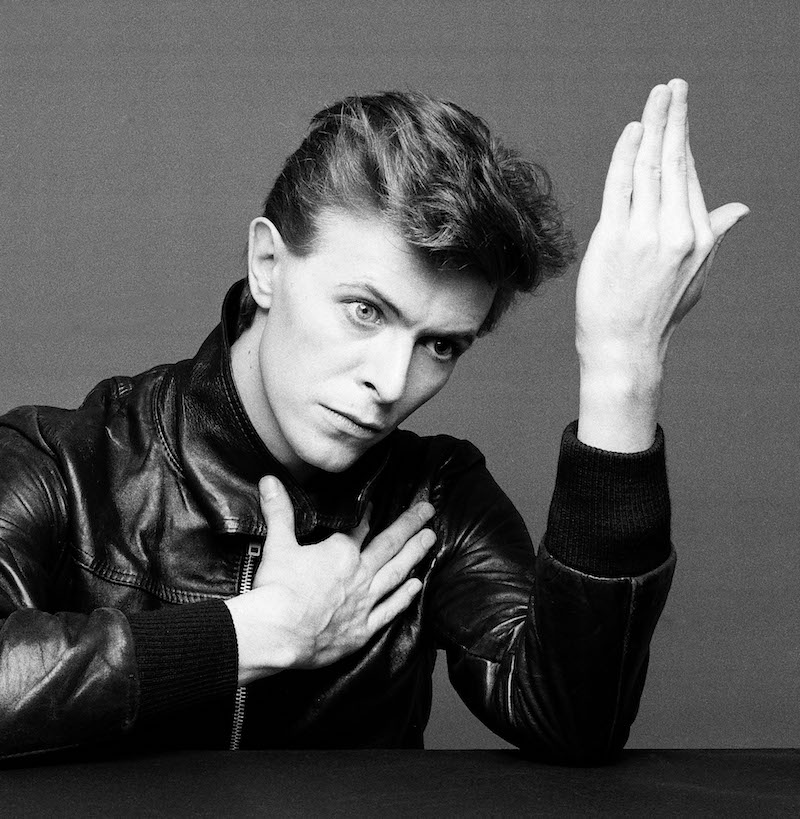
I am saddened to hear of the news of David Bowie’s death. He is one of the greatest musicians of all time – a pioneer and man ahead of his time.
I find it fitting that both David Bowie and my father, Goh Poh Seng, friends and kindred spirits, died on the same day – January 10th. David Bowie had many personas. He changes his chameleon-like looks and appearance just as his music evolved over his long and illustrious career. He was known as the Star Man, made famous by his first number one hit song “Space Oddity.” My father, Goh Poh Seng’s name in Chinese means Precious Star.
Both David and my father were bright stars, shooting across the heavens, illuminating the way for others.
David Bowie, you are an inspiration to us all. You will be missed. R.I.P.
With text by Kagan Goh via Facebook