
Got a tip? Send it to us at manila@coconuts.co.
According to the findings of the National Economic and Development Authority (NEDA) study — which was conducted with technical assistance from the Japan International Cooperation Agency (JICA) — it could take another 15 years and USD$65.3 billion (around PHP3 trillion or PHP3,048,825,000,000) worth of investments to solve Metro Manila’s traffic woes.
“The study recommended a roadmap for the implementation of a comprehensive Dream Plan by 2030 for Metro Manila and mega Manila to address the growing population and demand for better transport in the National Capital Region (NCR),” reports Christina Mendez in The Philippine Star.
The report noted: “At the time the study was conducted in 2014, the report described traffic congestion in Metro Manila and its peripheries as a major issue, which will become a major headache and nightmare if not acted on by the government.
At that time, “the demand was at 12.8 million trips in Metro Manila and six million in the adjoining cities of Bulacan, Rizal, Laguna, and Cavite.” The trips were made mostly through public transport at 69% share of total trips while the rest are through private transport.”
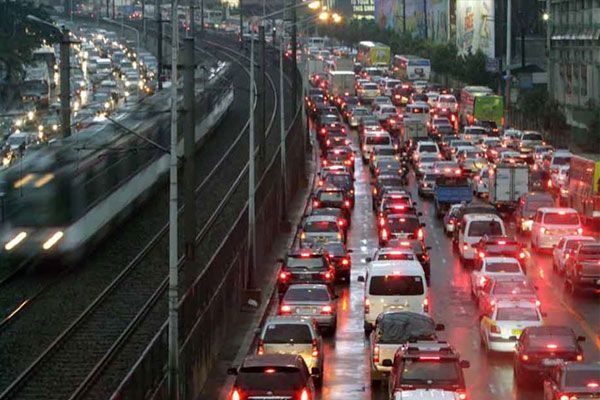
The study also pointed out that “traffic volume “already exceeds road capacities in most of the urban road sections and congestion is felt all throughout the day from 6am to 9pm.”
The study said, “Traffic congestion does not only reduce the travel speed of road users but also increases uncertainty to distinctions and punctuality in transport operation. If nothing is done, the situation in 2030 will become a nightmare. All roads will be saturated. Negative impact on economic, social and environmental aspects will be so large, deterring the function and livability of Metro Manila.”
It the very same report that pegged the transport cost of road users, including vehicle operating cost and time cost at PHP2.4 billion a day in Metro Manila. Based on the study’s projection, the amount will increase to PHP6 billion day by 2030 if the government and the private sector will not act on the problems today.