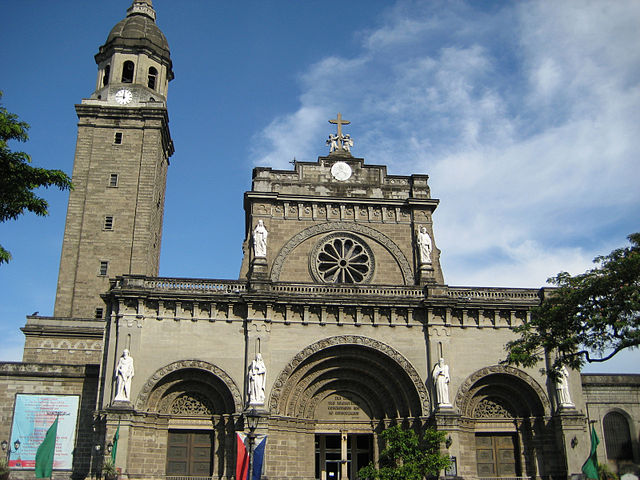

For the Catholic Church and a physicians’ group, the President’s annual address to the Filipino people needs a second look for all the successes it boasted of on Monday.
An official of the Catholic Bishops Conference of the Philippines was dismayed over President Benigno Aquino III’s State of the Nation Address (SONA), saying his report to Congress failed to provide an answer to problems faced by the commonfolk.
As Sorsogon Bishop Arturo Bastes called on the government for tangible programs and concrete solutions to combat poverty, the Philippine Medical Association wondered how Aquino and his speechwriters came up with figures on the number of Filipinos covered by the government’s universal health care program.
In an interview with Radio Veritas, Bastes said he looked for details on specific programs the Aquino administration intended to address poverty. He also pointed out that the President’s criticism of some underperforming agencies were merely the tip of the problem.
“It is still superficial for me. They should have thrown these people out long ago particularly those people in Irrigation and [Bureau of Customs]. Why did it take them three years?” he said.
Bastes said the President failed to recognize environmental issues brought about by illegal mining and logging, as well as the damage to nature caused by pollution coming from factories. He added these problems contributed to worsening poverty in the Philippines.
Echoing Bastes’ sentiments, activist-priest Joe Dizon, convenor of Solidarity Philippines and election watchdog Kontra Daya, assailed the President’s lack of attention to gut issues like the runaway increase of prices of basic goods.
“What will government do so that there will be more inclusive growth among our people?,” he said.
For its part, the Philippine Medical Association (PMA) questioned how the President –through the government-owned Philippine Health Insurance Corp.– came up with its claim of enrolling 81 percent of the population in the universal healthcare program.
In a statement, PMA president Dr. Leo Olarte recalled that PhilHealth staked its claim of “universal coverage” as early as 2010 when it said it provided cover for “86 percent” of the population that year.
The 86-percent figure seems to run contrary against the results of the 2008 National Demographic Health Survey, which showed that “only 38 percent of respondents were aware of at least one household member being enrolled in PhilHealth,” according to Olarte.
“If we assume the total population of the Philippines is 100 million, then 81 percent of all Filipinos who are supposedly enrolled in Philhealth count to around 81 million people. Therefore, if we follow this kind of logic, a total of 8 out of 10 hospital admissions across the country should be Philhealth cases. However, reports reaching us from various hospitals nationwide do not support this presumption,” Olarte said.
Olarte cited PhilHealth’s persistent problems in its information and communication system.
“If you go and enroll yourself today at Philhealth chances are you will be given a piece of paper (not an electronic ID) to represent as your identification card. It is very difficult to accurately track down members’ data when you don’t have an interconnected nationwide fail-proof ICT system starting from enrollment down to claims settlement,” he said.–MM
—
Photo: The Manila Cathedral/ RJ Ruiz III