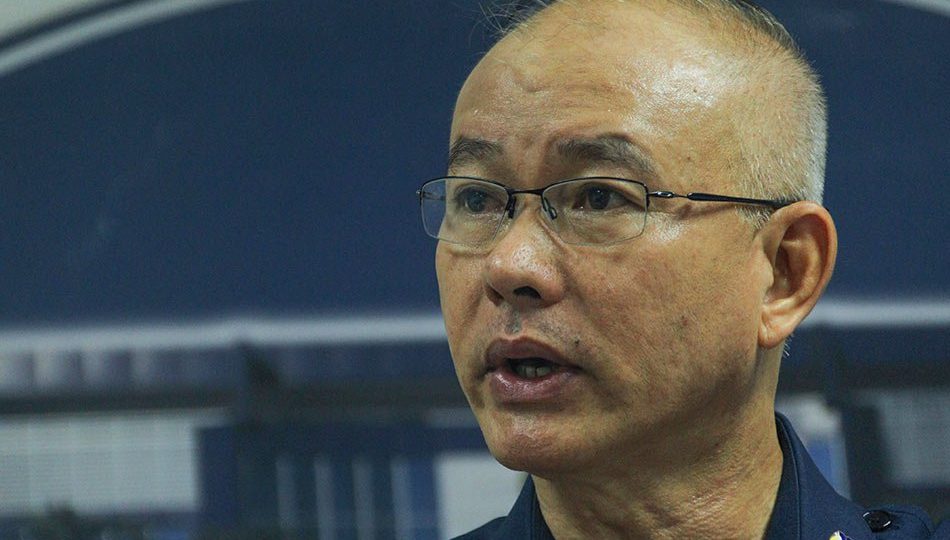

Philippine National Police (PNP) chief General Oscar Albayalde lost his cool today, right in front of a group of reporters.
Albayalde became visibly angry at his presser in Camp Crame in Quezon City when asked about his reaction to the Kilusang Mayo Uno’s (KMU) accusation that the PNP is an anti-worker agency because it allegedly violates laborers’ rights.
In retaliation, he accused the labor group of causing joblessness by encouraging laborers to protest, which allegedly led many foreign companies to abandon the Philippines.
The KMU released an “anti-worker matrix” on Saturday, where they tagged President Rodrigo Duterte, the PNP, the Armed Forces of the Philippines (AFP), and private companies as among those who allegedly contribute to the worsening labor conditions in the country. They also accused the PNP and the AFP of committing human rights violations, reported GMA News.
The “anti-worker matrix” follows another matrix created by Duterte himself, which accused several media organizations of plotting to oust him from office. The journalists tagged by the president denied that they were part of the plot.
The country’s top police initially laughed at the KMU’s accusations. He said in a mix of Filipino and English: “How can they say that we’re anti-workers? They’re the ones who are anti-worker. You know why? Why are [foreign] investors leaving us? The KMU will enter the picture, they will instigate the union, and they will hold rallies. These investors will lose their enthusiasm, they will go back to their own countries. Who will lose their jobs? Our fellow Filipinos.”
Looking miffed, Albayalde then said: “They instigate the workers, the workers will rally. They were working quietly, earning a steady income, they were able to feed their families, and then look at our investors [they’ve left]. And then it’s our (government) fault that investors left? How can you invest here?”
Albayalde also accused the KMU of engaging in propaganda.
“Let’s wake up. This is what’s happening. This is propaganda. It’s the conditioning of the [people’s] minds. Who’s the anti-worker now? Who’s the anti-Filipino now? Who’s the anti-poor now? Why are we poor? Why are a lot of Filipinos jobless? Before there were a lot of jobs, there were a lot of factories. Although the salaries were low at least our countrymen had jobs.”
Albayalde remained angry when a reporter told him that the KMU also accused the PNP of violating human rights. Duterte launched his bloody drug war in 2016, where thousands of drug suspects have been killed summarily by members of the PNP. The PNP insists that many of the killings occurred because the suspects fought back, an excuse that many Filipinos have become skeptical of.
The Commission on Human Rights has said that as much as 27,000 people have died from the PNP’s anti-drug campaign.
As far as the PNP chief is concerned, the KMU has to explain what these alleged violations are. At the same time, Albayalde called the KMU out for their alleged failure to condemn the New People’s Army (NPA) for allegedly committing their own human rights violations.
The NPA is the armed wing of the Communist Party of the Philippines (CPP). In December, Duterte accused the KMU of being a front of the CPP.
“They’ve been challenged by the AFP to condemn the NPA and yet until now, they haven’t condemned the NPA. We’re wondering why. It’s so easy [for them] to say the AFP, the PNP [are] violating human rights. What rights? Give specifics. Where?”
The KMU is a militant labor group that wants to promote “genuine, militant and patriotic trade unionism,” according to its official Facebook page. It was established on May 1, Labor Day, in 1980.