
The Philippines just topped a list, but not the good kind.
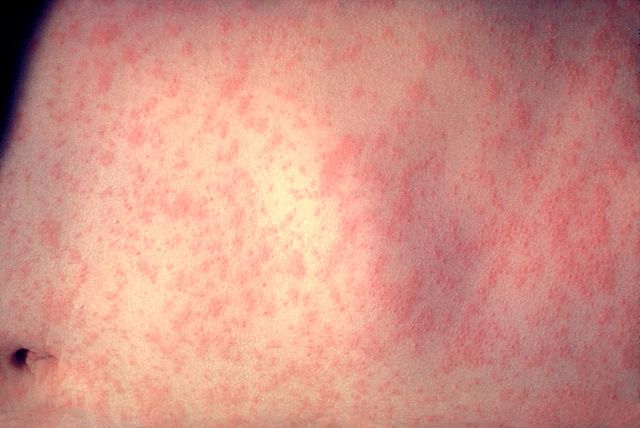
The United Nations International Children’s Emergency Fund (UNICEF) warned in a statement today that cases of measles are surging to alarmingly high levels in several countries including the Philippines.
According to UNICEF, there have been 12,736 measles cases and 203 deaths in the Philippines so far this year, compared to the 15,599 cases in 2018. The Philippines ranks second among the 10 countries with the largest increase in measles cases.
Other countries on the list are Ukraine, Brazil, Yemen, Venezuela, Serbia, Madagascar, Sudan, Thailand, France.
This is based on data from the World Health Organization.
Measles is highly contagious, more so than Ebola, tuberculosis or influenza. The virus can be contracted up to two hours after an infected person has left a room. It spreads through the air and infects the respiratory tract, potentially killing malnourished children or babies too young to be vaccinated. Once infected, there is no specific treatment for measles, so vaccination is life-saving, especially for children.
“This is a wake-up call. We have a safe, effective and inexpensive vaccine against a highly contagious disease – a vaccine that has saved almost a million lives every year over the last two decades,” said Henrietta H. Fore, UNICEF’s Executive Director.
“These cases haven’t happened overnight. Just as the serious outbreaks we are seeing today took hold in 2018, lack of action today will have disastrous consequences for children tomorrow,” Fore added.
The statement adds that UNICEF and its partners will conduct a campaign to vaccinate 9 million children in the Philippines against measles across 17 regions.
“Using social media, campaigners plan to encourage apprehensive parents, and health workers,” it reads.
Immunization rates in the country plunged to 40 percent last year from the average 70 percent in recent years, which many credited to the dengue vaccine Dengavia scare. This has led to the current measles outbreak in Metro Manila and in other regions of the country, which the Philippine Department of Health declared in February.