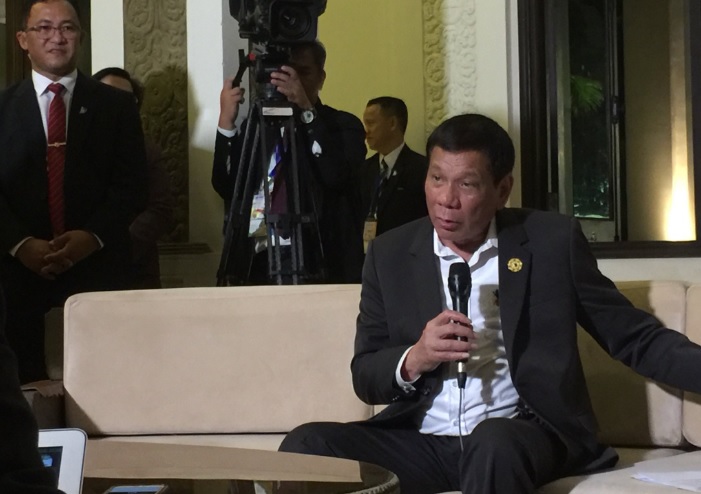

Today, Philippine President Rodrigo Duterte celebrates his 73rd birthday, making him the oldest president ever to hold office.
According to local media reports, the president is spending his birthday back at home in Davao City with his children and grandchildren.
Way too many things have happened since his last birthday, but we’ve picked out seven based on stories you were interested in since his birthday last year.
1. Killing of Kian delos Santos and other teenagers in drug war
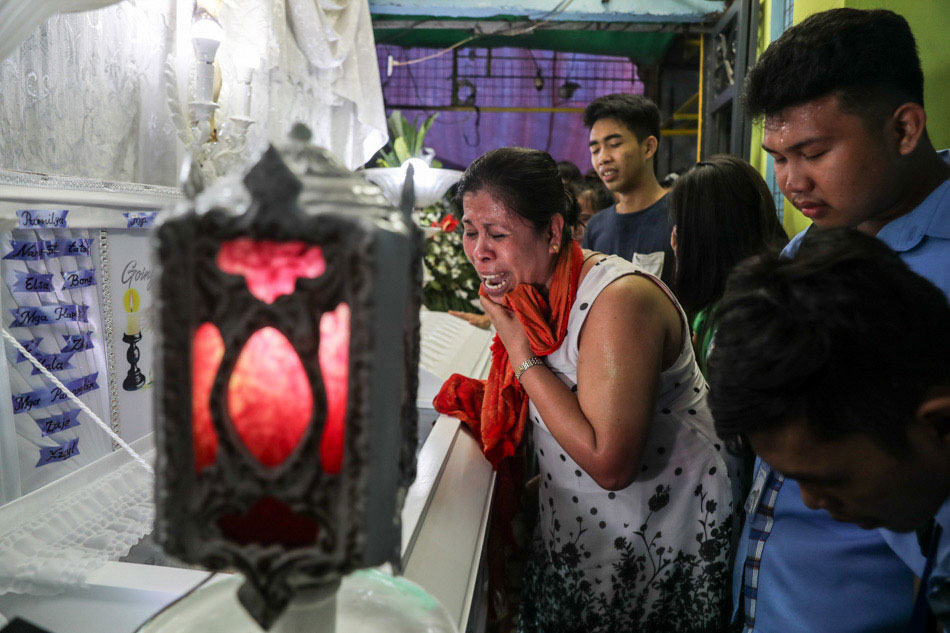
Dozens of teens, often living in slum areas, have been killed in drug operations or by masked vigilantes since the war on drugs began.
But it wasn’t until a CCTV camera captured footage of police dragging 17-year-old Kian Delos Santos into an alleyway that the issue came to light. Because of the video, it was found that Delos Santos was shot and killed by plainclothes police officers during a drug raid in his neighborhood that sparked larger protest movements against the war on drugs.
READ: Manila police say they shot a 17-year-old out of self-defense, CCTV shows otherwise
Two more teenagers, Carl Arnaiz and Reynaldo de Guzman, who were together the night they went missing, were found dead a few weeks after Delos Santos’ death. Arnaiz was killed by police officers after he was accused of firing at them first. De Guzman was found dead with 30 stab wounds on his body in Nueva Ecija, although a police connection wasn’t established with his death.
Weeks after the killings, Duterte told reporters that killing innocent people wasn’t state policy.
Although his speeches seem to contradict this.
He said in one speech in 2016: “So to the last man I said, to the law enforcer, to the military guys: Destroy the apparatus. And I said, ‘Oh, sir, if they are there, destroy them also. Especially if they put up a good fight. Oh, ‘pag walang baril, walang – bigyan mo ng baril (If he has no gun – give him a gun). Here’s a loaded gun. Fight, because the mayor said let’s fight.”
The speech seems to give police license to shoot anyone on mere suspicion they are a drug suspect, which is something normally determined through due process.
In October, Duterte removed the police as the agency in the drug war due to to the alleged human rights abuses and gave the responsibility to the Philippine Drug Enforcement Agency (PDEA), only to give it right back to the police two months later.
2. Terrorism: Inabanga Clash, The Marawi Siege
Last April, Abu Sayyaf bandits entered the popular tourist island of Bohol and engaged government troops in a 20-hour firefight that left six bandits and four government troops dead.
Little did we know, the clash on the previously uncharted territory for IS-linked terrorists was only a precursor to a bigger battle.
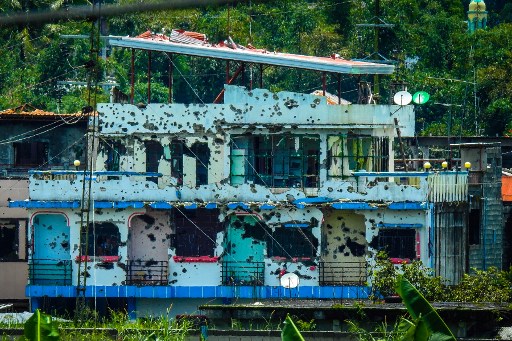
On May 23, the Islamic State-linked Maute group planned and successfully captured Marawi City in southern Mindanao and engaged the Philippine military in a firefight that would last for five months.
READ: Timeline: Maute attack in Marawi
The government declared martial law in Mindanao shortly after fighting began. By the time Duterte declared Marawi liberated in October, 1,009 had been killed including 160 government troops, 802 fighters of the local armed groups, and at least 47 civilians.
Over 400,000 were also displaced and the city nearly flattened.
Duterte then ordered the creation of a task force for the rehabilitation of Marawi with an initial allocation of PHP20 billion (US$390 million).
The government has estimated the rebuilding of the city might take two to three years.
3. Duterte goes after the press
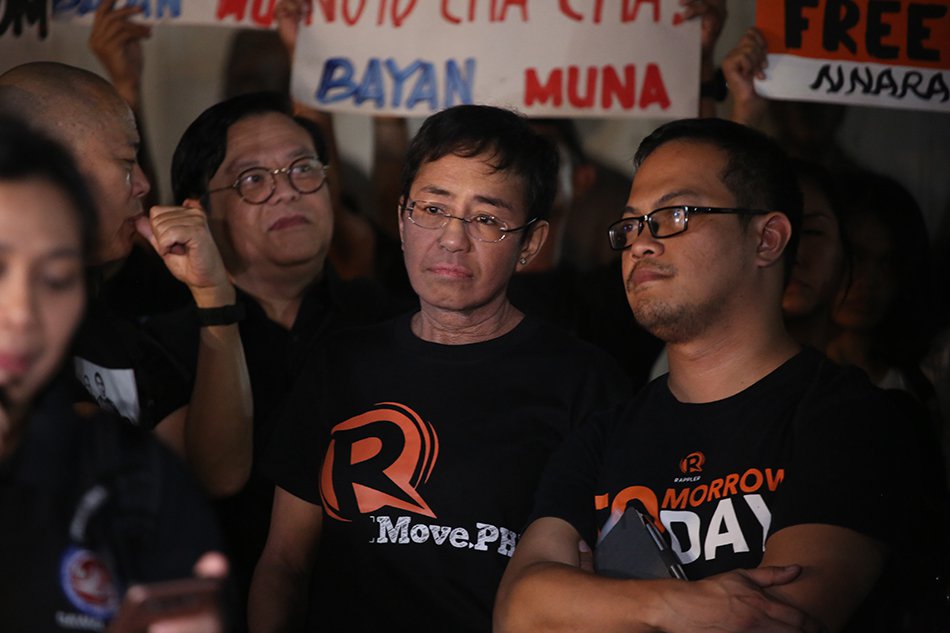
While the administration denies it is trying to muzzle free speech, the public has reason to be skeptical.
In July, it was announced that Duterte’s buddy Ramon Ang bought a majority stake in the Philippines’ biggest daily newspaper the Philippine Daily Inquirer. This was after the president had publicly accused the paper of “biased” coverage of his administration.
He also called broadcast network ABS-CBN’s coverage of him “vicious and virulent.” Last April, Duterte threatened to block ABS-CBN’s franchise renewal when it expires in 2020 for allegedly not airing commercials his campaign paid for in 2016.
In January, the Securities and Exchange Commission canceled news website Rappler’s business registration.
The Department of Justice also opened an investigation into a cyber libel complaint against Rappler related to a 2012 story, which was published months before the cybercrime bill became law.
Rappler’s Palace reporter Pia Ranada was also banned from entering Malacañang Palace last month after the president became angry at Rappler’s investigative report alleging that Special Assistant to the President Christopher “Bong” Go intervened in a PHP15 billion (US$288 million) frigate deal with the Philippine Navy.
READ: Rappler banned from covering Palace after reporter was barred from entering Malacañang
If that wasn’t enough, the Bureau of Internal Revenue slapped the news network with a tax case earlier this week, alleging that the company has PHP133 million in unpaid taxes to the government.
Rappler’s Chief Executive Officer Maria Ressa has said on several occasions that she believes that these moves are the administration’s attempt to muzzle the free press.
“The political nature of these attacks against Rappler by the government are very clear: one year statements from President Duterte against media, in particular, ABS-CBN, the Philippine Daily Inquirer, and now it’s our turn,” she said in January.
4. China completes militarization of islands in Philippine territory
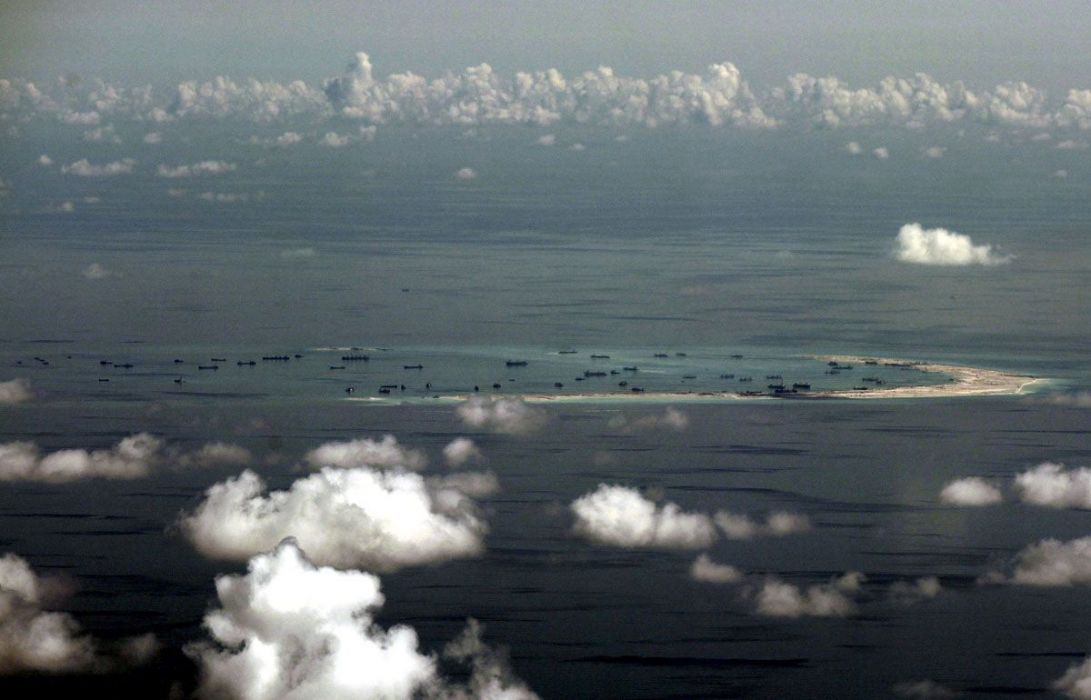
Duterte has said since the beginning of his presidency that he would improve ties with China and move away from the Philippines’ longstanding alliance with the United States, through what he calls an “independent foreign policy.”
This is a 180-degree turnaround from the policy of his predecessor Benigno Aquino III, who filed a case over the country’s sovereign right over the West Philippine Sea at the United Nations (UN)-backed Arbitral Tribunal at the Hague. The court ruled in favor of the Philippines in 2016.
This has done little to stop China’s reclamation and militarization of the islands, only a few hundred kilometers west of Palawan island.
Spokesperson Harry Roque’s statement on the matter pretty much sums up what seems to be the administration’s approach to dealing with China on the South China Sea issue. When asked by reporters for a statement on the militarization of islands in Philippine territory, Roque said: “what can we do?”
READ: Duterte’s spokesperson reacts to photos of militarized islands: ‘What can we do?’
5. Duterte announces withdrawal from International Criminal Court
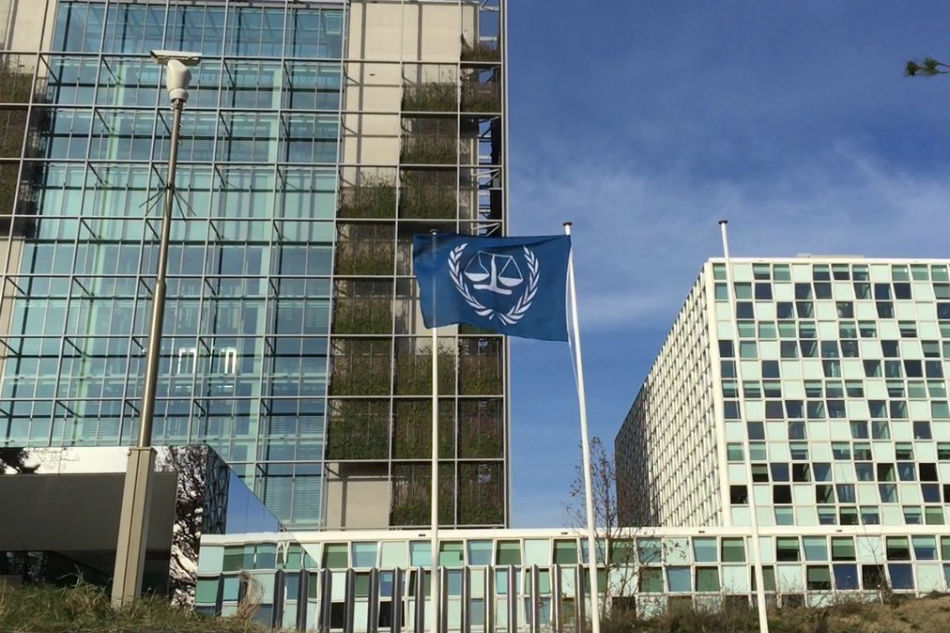
A month after the International Criminal Court (ICC) announced it was opening an investigation into Duterte’s war on drugs, the administration responded by saying it was going to pull out of the treaty that created the court.
According to the administration, they believe pulling out of the agreement would remove the court’s jurisdiction over investigating the drug war.
But legal experts say it won’t be that easy.
Read more about the process of leaving the ICC here.
6. Cussing, pettiness, and misogyny
Duterte is known for cussing in public and he probably made history at the annual State of the Nation Address (SONA) for cursing the most times during his speech in July last year.
His favorite Filipino curse phrase is still “putang ina,” which translates to “son of a bitch” but can also mean “screw you” or “f*** you.” He said the phrase a total of seven times during the SONA.
He used the Visayan curse word yawa, or “devil,” one time during the speech when cursing at miners. He also said gunggong, a Filipino word for idiot, once during the speech.
READ: By the Numbers: Duterte cursed nine times during State of the Nation
Duterte’s misogyny hasn’t toned down a bit either.
In May, he joked that soldiers can rape “up to three women” and he’d take responsibility for it.
He also joked in February that soldiers should shoot women rebels in the vagina, because “if there’s no vagina it would be useless.”
Despite being the president of a country that struggles with high maternal mortality rates and HIV rates, Duterte told Filipinos last month not to use condoms because “they don’t feel good” and use pills instead.
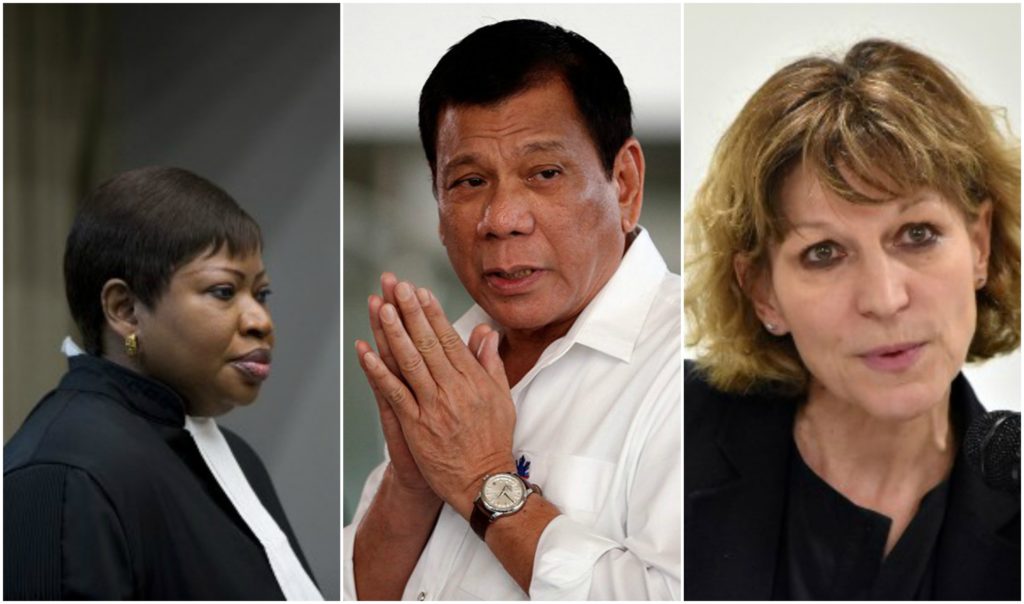
Oh, he also referred to ICC prosecutor Fatou Bensouda as “that black woman” and UN special rapporteur on extrajudicial killings Agnes Callamard “malnourished.”
Is that petty or is that petty?
7. Overseas Filipino worker protections
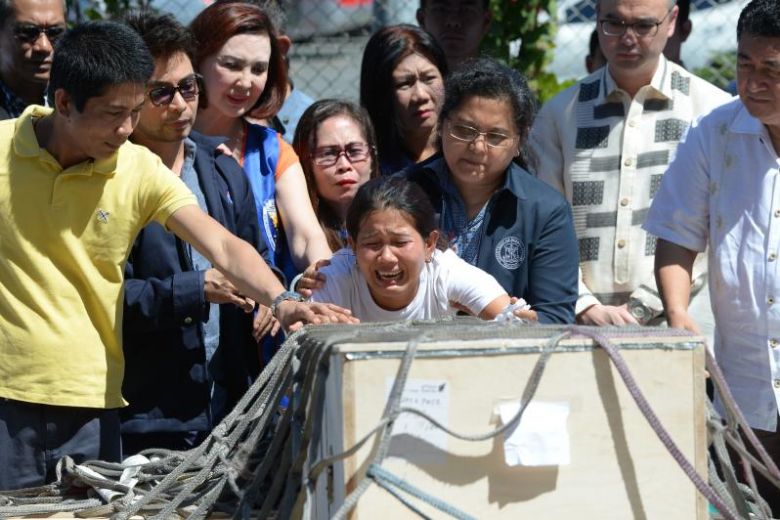
There are over 2.2 million overseas Filipino workers (OFW) spread across various countries who are working to send remittances back home to their families every month. Many of these workers are often exposed to harsh labor environments and very few rights to protect them from abuse.
It’s rare for a president to lay out and demand specific protections from another state, but Duterte did this last week, about a month after Filipino domestic worker Joanna Demafelis was found tortured and murdered, allegedly by her Kuwaiti employers.
Shortly after the murder, the Philippine government ordered a halt to the deployment of Filipino workers to Kuwait. Duterte told the public last week that he would ask Kuwait to submit to demands for OFW protections before the ban would be lifted.
READ: Duterte lays out demands for OFW protection in Kuwait
Are there other moments you think should be highlighted? Comment below.