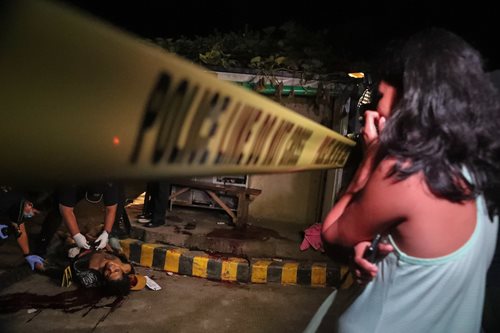

The government has already relaunched Tokhang — its house-to-house “knock and plead” anti-drug operation, but there’s a new stipulation: it can no longer happen past business hours.
According to a statement the Philippine National Police (PNP) released yesterday, Tokhang operations can only happen between 8am and 5pm, Monday through Friday.
This is to make sure that operations are done in accordance with the law and to prevent human rights abuses.
Aside from limiting operations until before sundown, the PNP also said that all anti-drug operations must be intelligence-driven and “founded on the fundamental principles of respect for human rights and strict adherence to the rule of law, with greater emphasis on transparency, accountability and command responsibility.”
“In the documentation of surrenderers, [the] taking of mug shots and fingerprints is voluntary and should not be mandatory for surrenderers,” the PNP said.
During operations, injured suspects must also be brought to the hospital for immediate medical treatment, while those killed should still be subjected to on-site inquest proceedings.
PNP Chief Ronald Dela Rosa earlier said the use of body cameras during anti-drug operations has yet to become mandatory as the government has not yet procured enough cameras for all police units.
“You cannot require what you do not provide. For now, we can’t provide everyone cameras because procurement is still in the pipeline,” Dela Rosa said in Tagalog.
He said the use of body cameras during anti-drug operations would be required as soon as the government procures enough equipment for all police stations nationwide.
READ: PNP chief: Body cameras on cops ‘only optional, not required’
The new guidelines on Oplan Tokhang were released as the police gears up to rejoin the government’s war on drugs later this month.
In October, President Rodrigo Duterte put the PNP in the backseat of the drug war amid reports of police abuses in anti-narcotics operations. He instead directed the Philippine Drug Enforcement Agency to take charge.
Two months later, Duterte rescinded the order and allowed the PNP to rejoin anti-drug efforts led by the Philippine Drug Enforcement Agency.
Human rights groups have claimed that at least 12,000 drug suspects have died since Duterte launched his bloody war on drugs in 2016, but data from the PNP only places the death toll at nearly 4,000.
with reports from ABS-CBN News