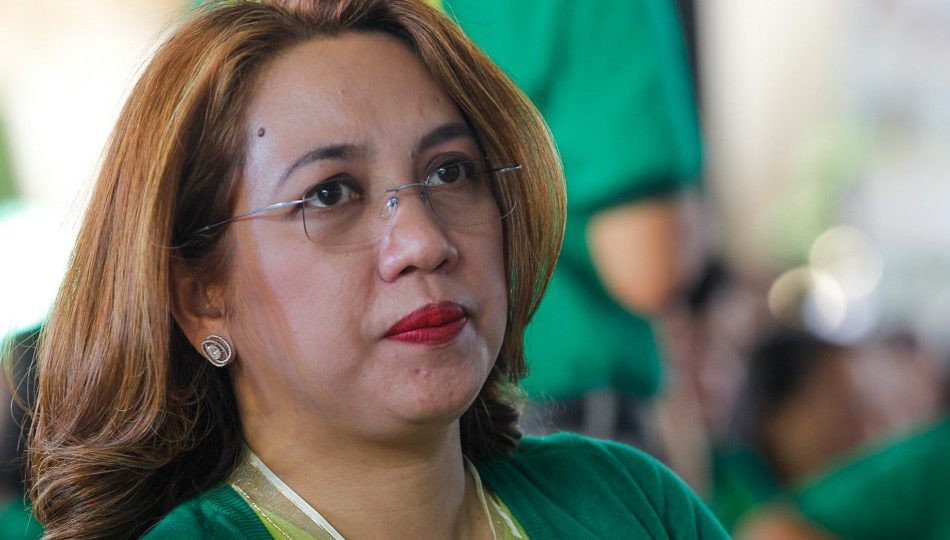

Former Health Secretary Janette Garin denied today that the PHP3.4 billion (US$67 billion) procurement of the controversial dengue vaccine Dengvaxia from French drug-maker Sanofi Pasteur was a “midnight deal.”
A “midnight deal” refers to alleged corrupt government deals made without going through the proper processes.
In a press conference earlier today, Garin said talks about the procurement of the vaccines began in 2010 during the term of her predecessor Enrique Ona.
“This is not corruption. There was no intention to rush the deal because dengue has been a long-discussed problem,” Garin said before attending a Senate probe into the vaccines.
In a press conference last Dec. 4, vaccine manufacturer Sanofi Pasteur admitted that despite the increased risk to those who haven’t been infected by dengue before, Dengvaxia is not even guaranteed to prevent the infectious tropical disease.
The manufacturer admitted their vaccine may cause “more severe dengue cases” on those who contract the disease for the first time. But according to a report on news website Rappler, manufacturers decided to release the vaccine because “clinical data showed it was safe and effective.”
Ona had earlier said that the Department of Health leadership is solely responsible for the dengue vaccine procurement after he left in December 2014, a year before the Philippines approved the sale of the vaccine.
Meanwhile, Garin insisted that there is no malice in her meeting with Sanofi officials in Paris in 2015, where the French drug-maker revealed the price of the vaccines to them.
“It’s not a midnight deal. Everything was above board. The integrity management committee report of the DOH will show that. I repeat. The report is there,” she said.
Sanofi earlier revealed that its dengue vaccine may cause more severe symptoms on those who had not been previously infected by the mosquito-borne disease.
830,000 children vaccinated
Government data show the vaccine has been given to about 830,000 children in Metro Manila, Southern Luzon, Central Luzon and Central Visayas, as of November.
A Reuters report earlier revealed key recommendations made by a Philippines Department of
Health (DOH) advisory body of doctors and pharmacologists were not heeded before the program was rolled out to 830,000 children.
While PHP3.5 billion of government funds were used in the purchase of the vaccines. But health officials who testified in a congressional inquiry last year failed to clearly identify the source of the fund.
Garin said those questioning Dengvaxia should wait for the recommendations of experts from the World Health Organization.
“We ask that you wait for what the experts in Geneva say because we’re pre-empting them,” she said.
with reports from ABS-CBN News