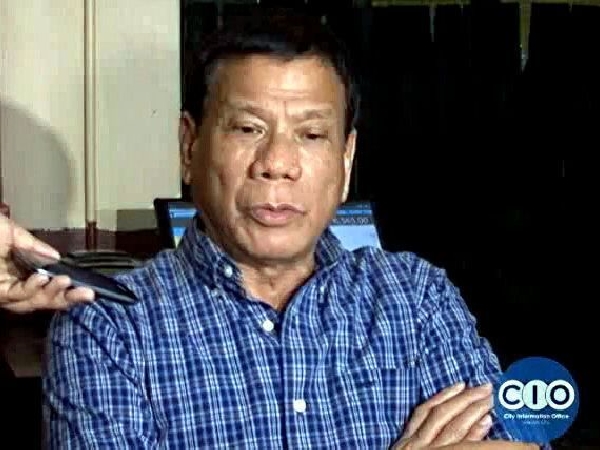

Classified information publisher Wikileaks recently posted a cable focusing on Davao City’s human rights woes.
Dated May 8, 2009, the cable was written by then-US ambassador to the Philippines Kristie Kenney and sent to the Secretary of State and the United States Pacific Commad (USPACOM).
The said cable also features quoted statements from Alberto Sipaco Jr, then the Regional Director of the Commission on Human Rights (CHR). “The CHR was at the time conducting public hearings in its investigation of the spate of extrajudicial killings in the city,” points out Asian Correspondent.
Here are some of the explosive passages from the cable exposed by Wikileaks:
(1)
“Sipaco at a private meeting affirmed that Mayor Duterte knows about the killings and permits them. Recounting a conversation he once had with Duterte, who is his close friend and former fraternity brother, Sipaco said he pleaded with the Mayor to stop vigilante killings and support other methods to reduce crime, like rehabilitation programs for offenders. According to Sipaco, the mayor responded, ‘I’m not done yet.'”
(2)
“Sipaco noted that Duterte’s visible rage against criminality and drugs stemmed from family history: Sipaco claimed that one of Duterte’s two sons previously abused drugs, and the Mayor channeled his anger over his son’s drug use not just against drug pushers, but also drug users, eventually leading him to embrace vigilante killings as a means to reduce crime.”
(3)
“Support for the Mayor’s overall policies come from a dynamic cross-section of influential Davao citizens whom the Mayor has recruited as advisors, including the Regional Chair of the Ulamas League and the leader of a prominent and wealthy Protestant sect, among many others.”
(4)
“While international attention on the killings had been elevated as a result of the Human Rights Watch Report, noticeably absent was public outrage among Davao residents. Combined with Mayor Duterte’s tight control, this public apathy prevented civil society groups from being more aggressive in tackling the issue.”
(5)
“With the police failing to make any progress on investigations, the CHR and civil society groups have become the primary advocates on the issue. The CHR’s effectiveness — and its ultimate success or failure — will be determined by its ability to cobble together enough witnesses to make strong cases. The CHR, in order to withstand Duterte’s anticipated attacks, must also successfully marshal support at the national level from the Department of Justice and the Philippine National Police in order to push cases forward to prosecution.”
It remains to be seen if the information revealed in the 2009 cable will make a difference in the current state of the country. In case anyone missed it, anyone who questions the administrations methods either gets cursed or is subjected to intense scrutiny that often strays below the belt.
Since President Rodrigo Duterte was officially installed in the highest position in the land, there have been so many explosive allegations about the extra-judicial killings in connection with his administration’s drug war.
Since Jun 30, reports say nearly 3,000 have been killed in the drug war.
Philippine National Police statistics reveal that an average of 44 people are killed each day in the so-called drug war encounters. Most of those killed, cops say, fought them off or tried to escape.
Duterte has always made it known that he is not above using force to curb crime in the country. Time and again, he has cited his accomplishments in Davao City, where he had served as mayor for two decades, as the template of the plan that he’s now executing on a national scale.
Along with Duterte’s supposed accomplishments, though, is a long list of alleged human rights violations.
Right now, all we can say is, it’s not for us to determine what’s truth or fiction. We got the message. These days, people ask questions at their own risk.