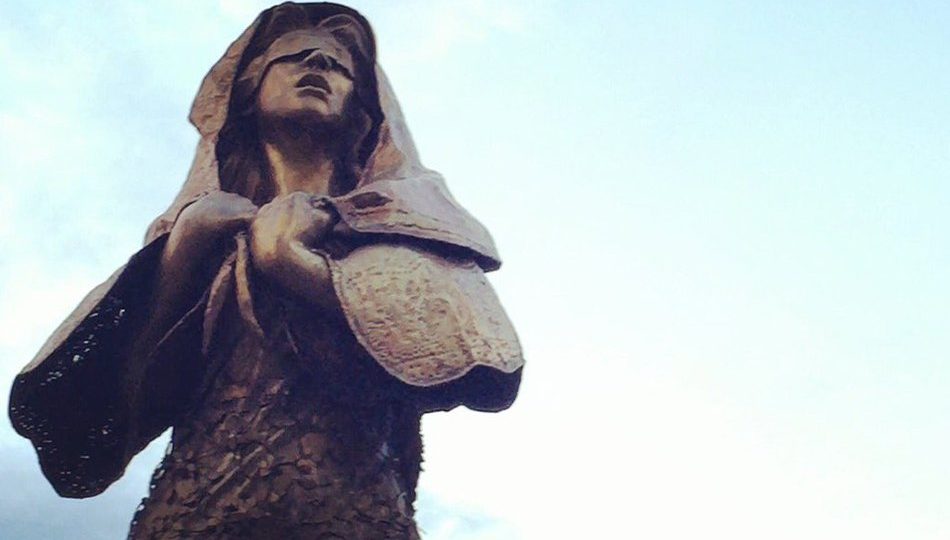

In a letter made public earlier this week, the Philippines’ Department of Foreign Affairs (DFA) requested that the Manila City government explain how and why a statue depicting a comfort woman was approved to stand on the city’s Roxas Boulevard.
“Taking into account the sensitive nature of the comfort woman issue both domestically and bilaterally with Japan, the department requests for background information regarding the monument,” the letter dated Dec. 12 and signed by DFA Assistant Secretary Millicent Cruz-Paredes reads.
The issue of comfort women, or girls who were forced into sexual slavery by Imperial Japan during World War II, continues to be controversial.
Just last month, the city of Osaka cut its ties with San Francisco after a statue depicting comfort women from China, Korea, and the Philippines was unveiled. The two had been sister cities for 60 years.
While speaking inata news conference about the San Francisco monument, Japan’s chief cabinet secretary, Yoshihide Suga, said: “Erecting comfort women statues in the United States and other countries is in conflict with our country’s stance and extremely regrettable.”
According to Inquirer, the statue in Manila, which stands 7-feet tall and is made out of bronze, was commissioned by Tulay Foundation, a group made up of Chinese-Filipinos.
It was unveiled on Dec. 8, the anniversary of Japan’s initial invasion of Manila.
The same story reported that it was the National Historical Commission of the Philippines that authorized the statue, and not the Manila City government.
Manila City administrator Jojo Alcovendaz also told Inquirer on Tuesday that the Japanese Embassy in Manila has asked about the statue.
The Philippines was under Japanese rule from 1942 to 1945, but the two countries have had relatively warm relations since the war.
A number of big government projects today are done in partnership with Japan, most notably the PHP300 billion (US$5.9 billion) Manila-Clark rail project funded by a loan from the Japanese government.