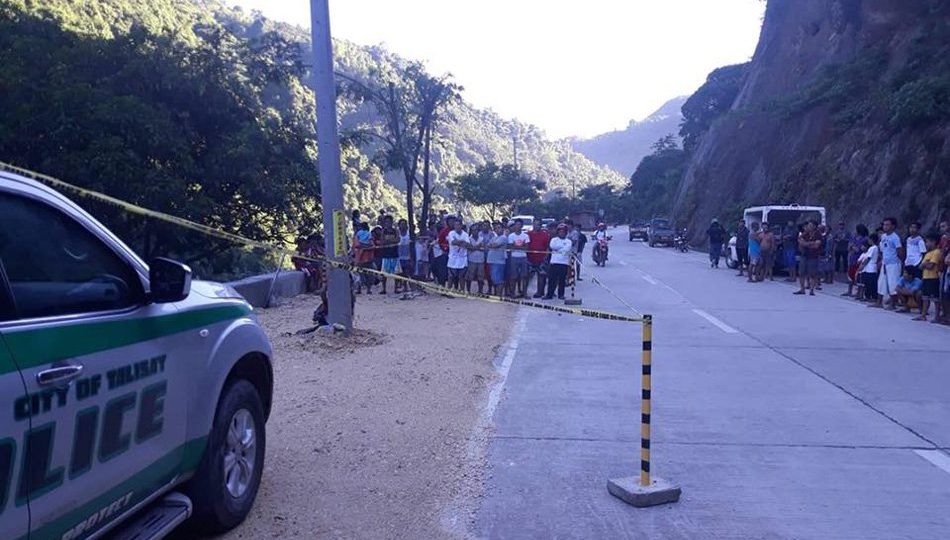

The corpse of a blindfolded man was found tied to a post in Talisay City, Cebu this morning, the latest in a string of cases of drug suspects being killed by unknown assailants.
Patrolman Dino Salazar of the Talisay Police told Coconuts Manila in a phone interview that the corpse has been identified as Jher Sigue. Sigue’s body was found at around 5am today in Barangay (village) Campo 4 with at least eight gunshot wounds.
Hanging on his neck was a piece of cardboard which had the following words written in Cebuano: “Stop what you are doing now. Or else, you’re next pushers, killers, and drug lords.”
Salazar said that Sigue has no drug-related cases but is out on bail for alleged frustrated murder. The police officer said they are still investigating who might be behind the killing and has not ruled out the possibility that Sigue’s assailants are the same people behind the deaths of two other men in Talisay City.
Prior to the discovery of Sigue’s body, the corpse of two other victims were discovered in the area. On Monday, the cadaver of Dante Autero, who had been in and out of jail for drug-related cases, was found with multiple gunshot wounds hanging from Mananga Bridge in the village of San Isidro, reported Rappler. Found on his neck was a piece of cardboard which said in Cebuano: “Don’t be like me, I’m a robber.”
Another drug suspect, Jimbo Gadiano, was found dead with multiple gunshot wounds in the village of Lagtang yesterday. Gadiano had both of his hands tied with a shoelace, reported The Freeman. His brother said that while the victim used illegal drugs, he is unsure if he sold them.
Autero and Sigue’s deaths are similar to cases that occurred in Metro Manila from 2016 to 2017. Victims of extrajudicial killings were often found with pieces of cardboard where their anonymous killers accused them of different drug-related crimes. The killers’ messages also warned that people should not imitate the victims’ allegedly illegal actions.
According to the Philippine National Police (PNP), 6,600 drug suspects have been killed in anti-drug operations from July 1, 2016 to May 31, 2019. However, some say that the deaths are underreported, with the Commission on Human Rights saying in December that drug war deaths could be as high as 27,000.
In a report published this month, human rights organization Amnesty International said that the victims of these drug-related killings are often those living in poor neighborhoods.