
Didn’t your professors ever tell you to “cite your sources?”
Government agency Intellectual Property Office of the Philippines (IPOPHL) reminded the Filipino public on Monday to properly cite sources of literary and artistic works they share online. And no, the popular “CTTO” or “credits to the owner” caption is not enough.
“‘CTTO,’ ‘photo not mine,’ ‘photo from Google’ etc., are not the proper way to attribute your sources,” the IPOPHL scolded netizens.
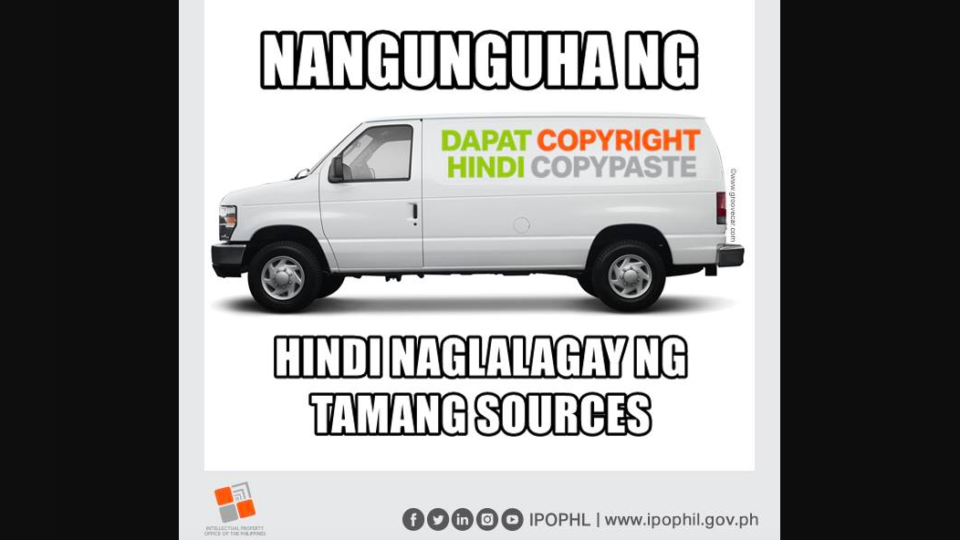
Their post shows a photo of a white van with text that says in Filipino: “[This van] kidnaps people who don’t cite proper sources.”
It also says on the van: “Copyright, not copypaste.”
This white van meme is common in the Philippines and is a reference to a Filipino movie trope wherein characters get abducted by criminals riding a similar van.
Various social media accounts have gotten into the habit of posting photos or videos that are not theirs. They include “CTTO” and other similar captions as a way to say that they don’t own the content without crediting a specific person.
IPOPHL went on to say: “When using/sharing a literary and artistic work from someone else, always ask permission from the owner before using their works. If granted permission to use, mention the owner’s full name and the site where you got it from.”
The agency explains on its website that copyright refers to the protection granted by law to the owner of the rights in an original work. Original work means anything produced in the literary, artistic, and scientific domain.
This includes works that are considered intellectual property such as books and other writings, musical works, films, paintings and other visual arts, architectural designs, computer programs, and other literary and artistic works.
IPOPHL explains that citing an original work for personal use or education is considered fair use. Republic Act 8293 or the Intellectual Property Code of the Philippines states that four factors should be considered to judge if something is fair use: the purpose and character of your use, the nature of the copyrighted work, the amount and substantiality of the portion taken, and the effect of the use upon the potential market.
“If you performed your favorite Aegis classic for your family last Christmas, and didn’t charge them a fee to hear you sing, that’s fair use,” the IPOPHIL website explains.
“If you’re delivering a keynote address to fellow dignitaries and borrowed the quote of your favourite philosopher or author, that’s fair use – so long as you credit the original creator whether in the written speech or in the delivery.”
Netizens had mixed reactions to IPOPHL’s Facebook post.
Mitch Ang argued that you can’t cite sources when you don’t know the actual owner of the photo.
“Also, the mere fact that one says CTTO is at least an acknowledgment that one isn’t claiming that he took the photo.”

Beau Anthony Cimafranca Valencia said in a mix of English and Filipino: “If y’all talking about memes, the least that you could do is cite the source. At least mention the url if you can’t really Google where it came from. Don’t just screenshot and [put] CTTO. You guys make me cringe.”

Elvin Villanueva said: “Chase all ‘copy-pasters’ then. Can’t wait to see one billion lawsuits filed.”

TAdo Nis sarcastically said: “CTTO is enough for likes and temporary fame.”

What’s your take on this? Leave a comment below or tweet us @CoconutsManila.