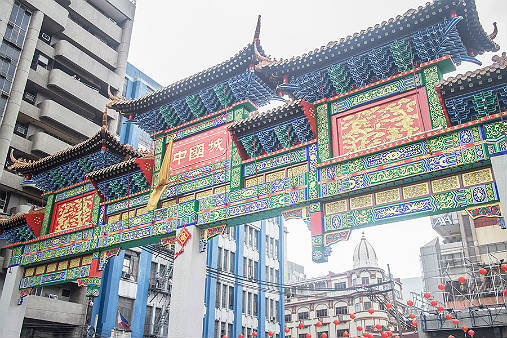

For most parts of Asia, this year’s Chinese New Year, which falls on Feb. 16, is a day of celebration and endless eating. But that date also happens to be the first Friday of Lent, and in a devoutly Catholic country like the Philippines, many Filipinos of Chinese ancestry weren’t even sure if they could hold their traditional feasts.
That was up until yesterday, when the Archdiocese of Manila announced that Chinese Filipinos are exempted from the required Friday abstinence.
“In view of the celebration of the Chinese New Year, its cultural and spiritual importance and the traditional practices associated with it, we therefore grant dispensation from the Lenten discipline of abstinence to our Chinese-Filipino and Chinese Catholics in the Archdiocese of Manila and their guests,” Cardinal Luis Antonio Tagle, the Archbishop of Manila said in a letter released yesterday.
The City of Manila is where Binondo, the metro’s Chinatown is located.
BASAHIN: Mga Filipino-Chinese sa Archdiocese of Manila, exempted sa pag-aayuno sa Chinese New Year, Feb. 16. | via @michael_delizo pic.twitter.com/mShPtZBBMX
— DZMM TeleRadyo (@DZMMTeleRadyo) February 4, 2018
Lent is a season of sacrifice observed for about 40 days in the Christian liturgical calendar. It starts on Ash Wednesday, the first Wednesday before the first Lenten Sunday. This year, Ash Wednesday falls on Valentine’s Day but no word yet if the Church will issue a dispensation allowing you to gorge on wine and chocolates (highly unlikely, sorry).
Filipino Catholics are required to fast (only have one full meal and snacks) on Ash Wednesday and Good Friday and are expected to abstain from meat on all Fridays of Lent.
This conflict that members of the Chinese community in the Philippines faced is just the most recent example of the unique mix of cultures in the country.
Binondo is said to be the oldest Chinatown in the world and it is a good place to see all the cultures that have influenced the Philippines. Its buildings are a mix of Spanish, American, and Chinese architecture. Its streets are lined with Chinese-style lamp posts and fast food restaurants like McDonald’s and the local chain Jollibee have signs in Chinese characters.
It, of course, has its own parish as well: the Binondo Church.
Unlike other parts of Asia, many Filipinos of Chinese descent are baptized in the Catholic Church. The first Filipino saint, San Lorenzo Ruiz, who was persecuted for his beliefs while in Japan, was part Chinese. Cardinal Tagle is also part Chinese. And private Catholic schools that cater to the Chinese community are very common.
But that does not mean Chinese Filipinos have let go of Chinese cultural and spiritual traditions.
While the Catholic church still teaches that it is the “one true church,” it has also recognized that other religions have teachings that can lead to salvation. In the Philippines, the church has been open to integrating eastern traditions with church-approved practices.
For example, Mary the Queen Parish in Metro Manila’s San Juan City has an altar for venerating ancestors similar to those found in Chinese temples (Complete with incense!). According to the parish, the altar is a way for them to evangelize the Chinese Filipinos who frequent the church.
But take note: the dispensation doesn’t mean they get to skip sacrificing altogether. Cardinal Tagle’s letter also states that those who do choose to not abstain should perform other forms of penance, acts of mercy, and charity.