
Got a tip? Send it to us at manila@coconuts.co.
It’s a government’s duty to think of the welfare of its people — but it’s not so cut-and-dried in the case of the Australian government and what it wants to do with an autistic boy who has been living in the country for eight years.
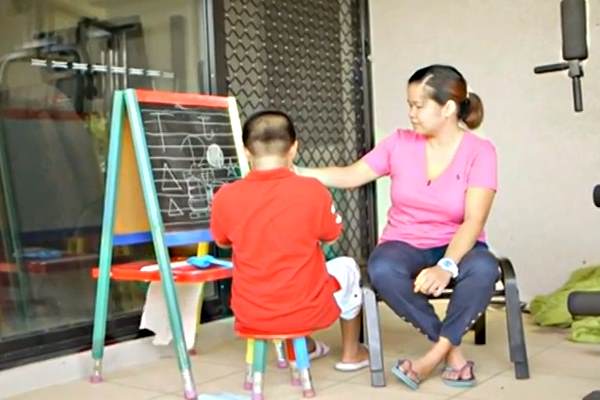
Maria Sevilla, a registered nurse in a Queensland hospital, arrived in Australia from the Philippines in 2005. She had also legally brought her son, Tyrone, who was then only around two years old. Maria is a single parent.
Tyrone was diagnosed with autism in 2008, a condition the Migration Review Tribunal said posed a “significant cost” to the Australian community in denying the family a visa extension, Maria told the Australian Broadcasting Corporation (ABC).
Maria claims that she was told that Tyrone would be considered “a burden to Australian taxpayers.”
Maria presented a petition Monday, April 27, signed by tens of thousands of people begging authorities to let Tyrone stay in the country.
It must be noted that Maria, who said she pays tax and has private health insurance, is in Australia via a work visa, which expired on Monday as well.
In any case, more than 120,000 people signed the petition presented to Immigration Minister Peter Dutton’s electoral office in Brisbane. The people hopes that the minister would give compassionate consideration to their cause.
“Australia is our home. Because we have been here for nearly eight years and we’ve been assimilated in the community,” Maria told the ABC.
She added, “I have my work here and I can actually provide for Tyrone. That’s why we’re considering Australia our home.”
The family said Tyrone did not speak Filipino or have any close relatives remaining in the Philippines, with his grandmother, grandfather, uncle, aunt and cousins all living in the Australian city of Townsville.
Maria Sevilla said being sent back to the Philippines would mean she would have to “start all over again”.
Dutton said the immigration department was preparing a report for him on the case, and in the meantime a bridging visa — which typically covers a 28-day period — would be issued for the mother and son.
“In this case we need to apply common sense,” Dutton told the ABC. “We’re a compassionate society and we want to help families in difficult situations.”
Dutton said a decision would likely be made within weeks, and it would take into account the fact that Sevilla was employed and could look after her son.
Story: Agence France-Presse (AFP)