
Got a tip? Send it to us at manila@coconuts.co.
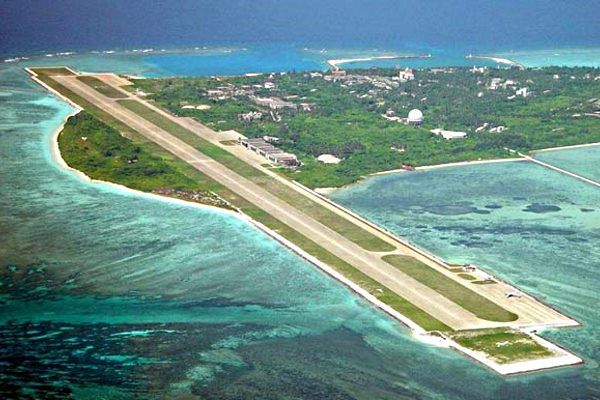
On Thu, Oct 29, the Permanent Court of Arbitration — the Hague-based international tribunal — ruled that it has jurisdiction to hear the case that the Philippines filed against China over disputed parts of the West Philippine Sea (other name: South China Sea). That means it rejected China’s claim that the row was beyond their jurisdiction.
“In its 151-page decision, the arbitration court found that it has jurisdiction to hear several of the Philippines’ submissions in the West Philippine Sea row. A statement issued by the Hague-based tribunal said additional hearings would be held to decide the merits of the Philippines’ arguments,” reports ABS-CBNnews.com.
The report noted the following (as quoted directly from the report):
1. In the case filed before the arbitral tribunal, the Philippines did not argue the issue of who owns the contested islands in the West Philippine Sea.
2. Instead, the Philippines has asked the arbitral tribunal to declare the features in the disputed sea as “rocks” and not islands.
3. Under the United Nations Convention on the Law of the Seas (UNCLOS), to which the Philippines and China are both signatories, rocks do not generate maritime entitlement beyond 12 miles.
With the aforementioned conditions in mind, “Manila said that a portion of the maritime territory being claimed by China sits within the Philippines’ 200-nautical mile exclusive economic zone (EEZ).”
As former Solicitor General and incumbent Supreme Court Associate Justice Francis Jardeleza said in a previous interview: “We’re not asking the court to say who owns Panatag Shoal. We are arguing that they are within our EEZ and therefore under the rules of UNCLOS, we have exclusive rights to fish within that area.”
The report pointed out that “territorial claims are the jurisdiction of another body, the International Court of Justice (ICJ), and the ICJ only entertains cases if all parties in the dispute participate.” However, China has refused to do so.
In any case, ABS-CBNnews.com editor Jojo Malig gave the best in-a-nutshell explanation on his Facebook page: “For clarity, the case is about maritime features, whether the disputed areas are really islands or just rocks. It’s a maritime (dispute), not a territorial dispute. If the (Permanent Court of Arbitration) says the disputed areas are just rocks, China can’t claim ownership, because these will fall under the EEZs of other countries. Rocks can’t have their own EEZs.”
Photo: News clip